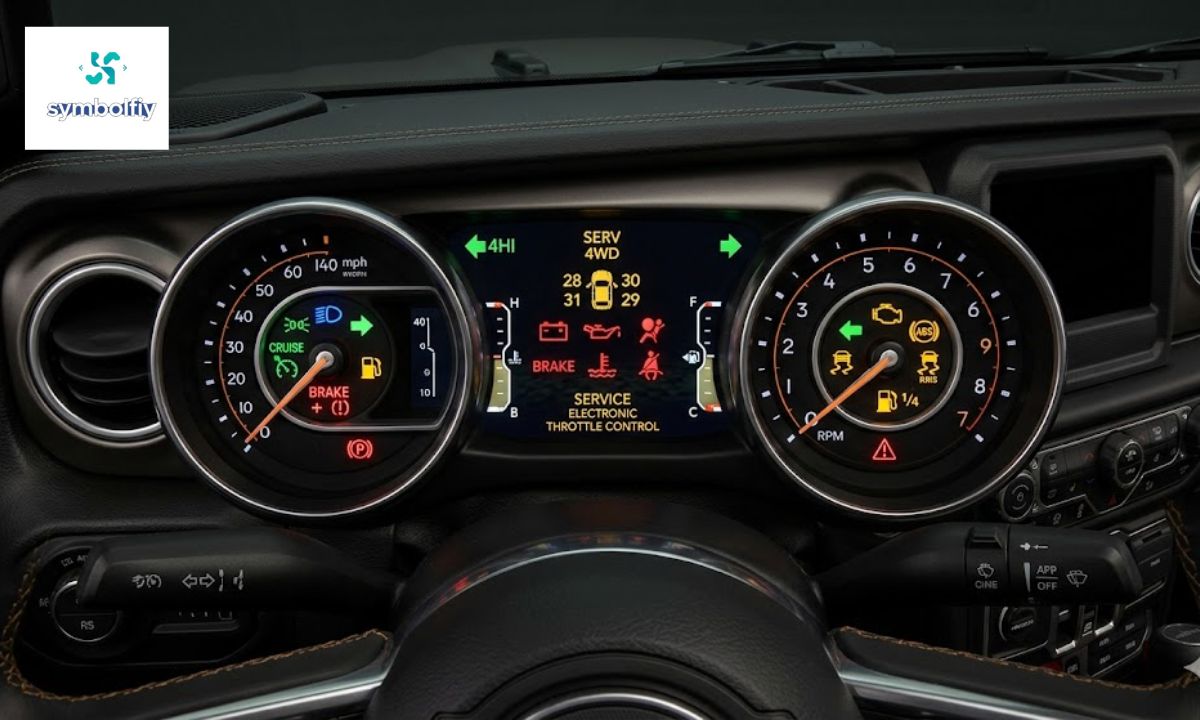
Symbols have always been one of the most powerful ways humans communicate. Long before we had words on a screen, we used visual signs to warn, guide, and protect each other. Your Jeep’s dashboard works the same way.
Those little icons are not random. They are a silent language your vehicle uses to talk to you every single time you drive. Knowing what they mean can protect your safety, save you money, and give you real peace of mind on the road.
Jeep dashboard symbols are more than technical alerts. They carry a deeper meaning rooted in human survival instinct. A red light triggers caution the same way a fire or a danger signal did for ancient peoples.
Colors and shapes have always carried emotional weight, and car designers use that same psychology to make sure you respond fast. On a personal level, these symbols represent trust between a driver and their machine.
When you understand what your Jeep is telling you, you feel more confident, more in control, and more connected to the road ahead. That is a small but real form of empowerment every driver deserves.
25+ Jeep Dashboard Symbols and Their Meanings
Red Warning Lights: Stop or Check Right Away
Red is the universal signal for urgency. In almost every culture, red means danger, stop, or pay attention now. On your Jeep’s dashboard, red lights follow that same rule.
🔴 Oil Pressure Warning Light (Oil Can Icon)
Your engine needs oil pressure to survive. Without it, metal parts grind against each other and overheat within minutes. This light looks like a small oil can or a dripping drop.
When it turns red, pull over safely as soon as you can and turn off the engine. Check your oil level first. If the level is fine and the light stays on, do not keep driving. Even a few minutes of low oil pressure can destroy an engine completely.
Urgency: Stop immediately
First step: Check oil level, then call for service if level is fine
🌡️ Engine Temperature Warning Light (Thermometer Icon)
This symbol looks like a thermometer sitting in water or waves. It tells you your engine is overheating. Pull over, turn off the engine, and let it cool for at least 30 minutes before checking coolant levels. Driving through this warning can warp cylinder heads and blow gaskets, which leads to a very costly repair.
Urgency: Stop immediately
First step: Pull over, do not open the hood right away, let it cool
🛑 Brake Warning Light (Exclamation Point in Circle)
This light can mean one of three things: your parking brake is still on, your brake fluid is low, or there is a fault in the brake system itself. Always check the parking brake handle first. If that is not the issue, have the brakes inspected before you drive further. Brakes are not something to guess about.
Urgency: Check parking brake first; if clear, stop driving
First step: Release parking brake or schedule service
🔋 Battery Warning Light (Battery Icon)
This light looks like a simple rectangle with a plus and minus sign, just like a battery. It usually means the charging system is not working right. It could be the alternator, a loose belt, or the battery itself starting to fail. Your Jeep may still run for a short time, but the power will drain. Get it checked the same day if possible.
Urgency: Service soon, same day if possible
First step: Head to a shop before the car loses power completely
🚪 Door Open Warning Light (Car with Open Door Icon)
A simple one. This light means one or more doors, the tailgate, or the hood is not fully closed. Check all doors and the rear latch before driving. Some models also include the swing gate and hood in this warning.
Urgency: Low; fix before driving
First step: Walk around the vehicle and close all doors and latches
💺 Seat Belt Reminder Light (Person with Belt Icon)
This light, sometimes paired with a chime, tells you a seatbelt is not buckled. It usually refers to the driver, but some models monitor passengers too. Buckle up. This one is both a safety issue and a legal one.
Urgency: Immediate; buckle the belt
First step: Make sure all occupants are buckled before moving
Yellow and Amber Warning Lights: Service Needed Soon
Yellow or amber lights mean your Jeep can usually still be driven, but something needs attention soon. Think of these as a heads-up before a problem gets bigger.
⚙️ Check Engine Light (Engine Outline Icon)
This is probably the most talked-about dashboard symbol on any vehicle. It monitors the engine and emissions system. A loose gas cap is one of the most common causes, so check that first. If the light is solid, you can often drive carefully for a short time.
If it is flashing, that is more urgent. A flashing check engine light usually means a misfire that could damage the catalytic converter. Get it scanned right away.
First step: Tighten the gas cap; if light stays on, get a diagnostic scan
🔵🟡 ABS Warning Light (ABS in a Circle)
ABS stands for Anti-lock Braking System. This system prevents your wheels from locking up during hard braking. When this light comes on, your regular brakes still work, but the ABS protection may not.
Common causes include a faulty wheel speed sensor, low brake fluid, or an ABS module issue. Schedule an inspection soon, especially if you drive in rain or snow.
Urgency: Drive carefully; schedule service soon
First step: Get the ABS module scanned at a shop
🔻 Tire Pressure Warning Light or TPMS (Flat Tire with Exclamation Mark)
This symbol looks like a horseshoe or a flat tire with an exclamation point in the middle. It turns on when one or more tires are underinflated.
Check all four tires with a gauge and inflate them to the pressure listed on the sticker inside your driver’s door. Low tire pressure affects fuel economy, handling, and tire life. In cold weather, it is normal to see this light pop on as air contracts.
Urgency: Check tires soon
First step: Use a gauge to check and inflate all four tires
⚡ Electronic Throttle Control Warning Light (Lightning Bolt Icon)
This lightning bolt symbol means there is a fault in the electronic throttle control system. Your Jeep may limit engine power to protect itself. Turn the engine off, wait a moment, and restart. If the light comes back, take it to a shop for a diagnostic scan. Do not ignore it if it keeps returning.
Urgency: Restart engine; if light returns, get it scanned
First step: Safe stop, engine off, restart; go to service if it persists
🔃 Electronic Stability Control (ESC) Light (Car with Squiggly Lines)
This symbol shows a car with wavy lines beneath it, like it is sliding. When it flashes, it means the ESC system is actively working to keep you stable on a slippery or uneven surface. That is normal.
But if it stays on solid, the system may be off or have a fault. On a Jeep, this system can sometimes be turned off for off-road use, so check if you accidentally disabled it.
Urgency: Flashing = normal; Solid = check system
First step: Check if ESC was manually turned off; if not, schedule service
🛡️ ESP/BAS Warning Light (Exclamation Mark with Skid Lines)
ESP means Electronic Stability Program. BAS means Brake Assist System. These two are often linked. When this light comes on and stays on, something in the stability or brake assist system needs attention. A scan tool will tell the shop which part is at fault.
Urgency: Schedule service
First step: Get a computer scan to identify the fault
🔁 Traction Control Light (TC or Car Skid Icon)
Traction control keeps your wheels from spinning freely on slippery ground. A flashing light means the system is actively helping you. A solid light often means the system is off or faulty. This is especially important for Jeep drivers who go off-road or drive in winter weather.
Urgency: Solid = check system before off-road or winter driving
First step: Check if traction control was manually switched off first
💡 Loose Gas Cap Warning (Gas Can with Cap Icon)
Some Jeep models have a specific symbol for a loose or missing fuel cap. It looks like a small gas can or a cap symbol. A loose cap lets fuel vapors escape, which can trigger the check engine light too. Turn it until it clicks.
Urgency: Low; fix before driving far
First step: Tighten the gas cap clockwise until it clicks
⚠️ Service 4WD Light (4WD with Wrench or SERVICE Text)
This light means there is a fault in the four-wheel drive system. It may say “SERV 4WD” directly on the dash. Do not use 4WD until it is checked, especially before serious off-road use. The fault could be in the transfer case, a speed sensor, or the 4WD control module.
Urgency: Avoid stressful off-road use; schedule service
First step: Get a computer scan to identify the 4WD fault code
🌀 4WD Overheat Warning (4WD with Temperature Icon)
This one appears on some models when the 4WD system gets too hot, often during heavy off-road use or towing. The system may temporarily limit the mode you selected. Let the vehicle cool and return to easier terrain. The light should clear on its own once temps drop.
Urgency: Ease off; let system cool
First step: Reduce load or trail intensity; wait for system to cool down
🚗 Transmission Temperature Warning (Thermometer with Gear Icon)
Your transmission fluid is overheating. This often happens when towing heavy loads or driving in extreme heat. Pull over safely, shift to park or neutral, and let the engine idle to cool the transmission. If this light appears regularly, your transmission fluid may need to be changed.
Urgency: Ease load; cool down
First step: Reduce speed or load; let vehicle idle; check fluid level soon
🔦 Low Fuel Warning Light (Gas Pump Icon)
This one needs no introduction. Your fuel is running low. On most Jeeps, you have roughly 30 to 50 miles left when this light appears, but that varies by model. Fill up as soon as you can. Running a tank completely dry can damage the fuel pump over time.
Urgency: Fill up soon
First step: Head to the nearest gas station
🛞 Sway Bar Fault Warning (Bar with Exclamation Mark)
Some Jeep Wranglers have a disconnecting front sway bar for off-road use. This warning means there is a fault in that system. If you see it on normal roads, have it checked. A faulty sway bar affects how your vehicle handles turns and uneven terrain.
Urgency: Schedule service before heavy off-road use
First step: Check owner’s manual; schedule inspection
Green and Blue Status Lights: Information Only
These lights are not warnings. They simply tell you a feature is active. No action needed unless they appear when you did not turn anything on.
💙 High Beam Indicator (Headlight with Lines Icon)
A bright blue light that means your high beams are on. Dim them when you see oncoming traffic. This is one of the oldest and most universally understood dashboard symbols in the world.
Urgency: None; informational
Action: Dim for oncoming traffic
🟢 4WD Active Light (4WD in Green)
This green light means your four-wheel drive system is engaged and working correctly. You will typically see it when you switch into 4WD High or 4WD Low. It is just confirming the system is on, which is exactly what you want to see.
Urgency: None; informational
Action: No action needed; system is working as intended
🟢 4WD Low Indicator (4L or 4WD LOW in Green)
This means 4WD Low range is active. This setting is for very slow, tough off-road situations like rock crawling or steep descents. It gives maximum torque at very low speeds. Not for highway driving.
Urgency: None; informational
Action: Switch out of 4L before returning to pavement
🔵 Cruise Control Active (Speedometer with Arrow Icon)
This tells you cruise control is set and holding your speed. It will usually show the set speed on your display too. On models with adaptive cruise control, a green car icon with radar lines confirms the system is tracking the vehicle ahead.
Urgency: None; informational
Action: Press brake or cancel button to disengage when needed
🟠 Adaptive Cruise Control Fault (ACC with Exclamation Mark)
When the ACC indicator shows orange or amber with an exclamation mark, the system has a fault. Often, a blocked sensor due to mud, ice, or debris on the front grille is the cause. Clean the sensor area first. If that does not fix it, schedule a service visit.
Urgency: Low to medium; schedule service
First step: Clean the front radar sensor area; restart the vehicle
✋ Stop/Start Active Light (A with Circle or Stop/Start Icon)
Some Jeep models have an auto stop/start system that shuts the engine at red lights to save fuel. This light confirms the system is active. If you see it with an amber fault indicator, the system may have a problem that needs checking.
Urgency: Green = normal; Amber = schedule service
Action: Check owner’s manual for your specific model
🔄 Forward Collision Warning Light (Car with Warning Lines Icon)
This symbol appears when your Jeep detects that you are getting too close to the vehicle ahead. Some systems will brake automatically. If this light comes on as a fault warning (usually amber), the sensor may be blocked or needs service.
First step: Clean front sensors; follow safe following distances
🛣️ Lane Departure Warning Light (Road with Dashed Lines and Car Icon)
This symbol appears when your Jeep detects you are drifting out of your lane without signaling. Some models vibrate the steering wheel or steer back gently. A version with an exclamation mark means the lane keep assist system has a fault.
Urgency: Normal alert = informational; Exclamation = schedule service
First step: Check camera sensors on windshield for dirt or obstructions
🔌 Electric Power Steering Fault (Steering Wheel with Exclamation Mark)
This warning means the electric power steering system has a fault. Steering may feel heavier than normal. This can happen if the battery voltage drops or there is a sensor issue. Do not ignore it, as it affects how easily you can steer, especially at low speeds.
Urgency: Schedule service
First step: Check battery voltage first; go to a shop for a diagnostic scan
🪑 Airbag Warning Light (Person with Circle in Front)
This symbol means the airbag or supplemental restraint system has a fault. If the airbags are not working correctly, they may not deploy in a crash, which is a serious safety issue. Schedule service as soon as possible. Do not attempt to repair airbag systems yourself.
Urgency: Schedule service soon
First step: Do not attempt DIY repairs; take to a qualified technician
🏕️ Tow/Haul Mode Indicator (Truck with Trailer Icon)
This green or amber indicator means your Jeep is in Tow/Haul mode. This adjusts the transmission shift points and helps manage heat when pulling a trailer or carrying heavy loads. It is an active mode, not a warning. Turn it off when you are not towing to restore normal driving behavior.
Urgency: None; informational
Action: Turn off when not towing for normal performance
Ancient Cultures That Used Symbols Like These
Symbols are as old as human communication itself. Long before dashboards, ancient civilizations used visual signs to communicate warnings, guidance, and status.
Egyptian culture: Used pictographic symbols called hieroglyphs to communicate complex ideas, warnings, and instructions. Many symbols represented natural forces like fire and water, similar to temperature and pressure warnings today.
Celtic traditions: Celts used knotwork and runic symbols to mark boundaries, dangers, and sacred spaces. The idea of a symbol marking something “off limits” or “proceed with caution” is deeply Celtic in spirit.
Greek mythology: The Greeks used specific symbols for each god and force of nature. Hermes, the messenger, carried a caduceus, a symbol of communication and guidance, much like how dashboard icons communicate between machine and driver.
Christianity: The cross, the fish, and other early Christian symbols were used as silent signals in dangerous times. They communicated identity and warning in a single glance, similar to how a red or amber light communicates urgency instantly.
Buddhism: Buddhist symbols like the wheel of dharma (Dharmachakra) represent cycles, balance, and awareness. The idea of staying aware of what is around you, including warning signals, is central to Buddhist mindfulness practice.
Native American traditions: Many tribes used visual symbols on pottery, clothing, and structures to communicate information about weather, danger, and spiritual meaning. Warning symbols were a form of community care.
Why Symbols Still Matter Today
In a world full of text messages and notifications, symbols remain one of the fastest ways to communicate. A red light, a skull and crossbones, or a simple checkmark all send a message in under a second.
Your brain processes images far faster than words, which is exactly why dashboard symbols work so well. Today, symbols also carry personal and spiritual weight outside the car. People use symbols in tattoos, jewelry, and art to express identity, faith, and values.
From a minimalist arrow tattoo to a religious pendant to an infinity symbol on a keychain, people surround themselves with visual meaning every day. Dashboard symbols are part of that same human tradition: using a simple image to say something important quickly and clearly.
Frequently Asked Questions
What does a red light on my Jeep dashboard mean?
Red means something urgent needs attention, often requiring you to stop driving.
What does a yellow or amber Jeep warning light mean?
Yellow means caution; your Jeep can usually still be driven, but service is needed soon.
What is the first thing to check when the check engine light comes on?
Check if your gas cap is loose; tighten it and see if the light clears.
Can I drive with the ABS light on?
Yes, your regular brakes still work, but the anti-lock protection may not; schedule service soon.
Why does my tire pressure light come on in cold weather?
Cold air contracts, which lowers tire pressure naturally; check and inflate your tires to the recommended level.
Conclusion
Your Jeep’s dashboard is not trying to stress you out. It is trying to help you. Every symbol carries a clear message: stop now, check soon, or all is good. Learning these symbols is one of the smartest things you can do as a driver.
It saves money, prevents breakdowns, and keeps you and everyone in your vehicle safe. The next time a light appears on your dash, you will know exactly what to do.