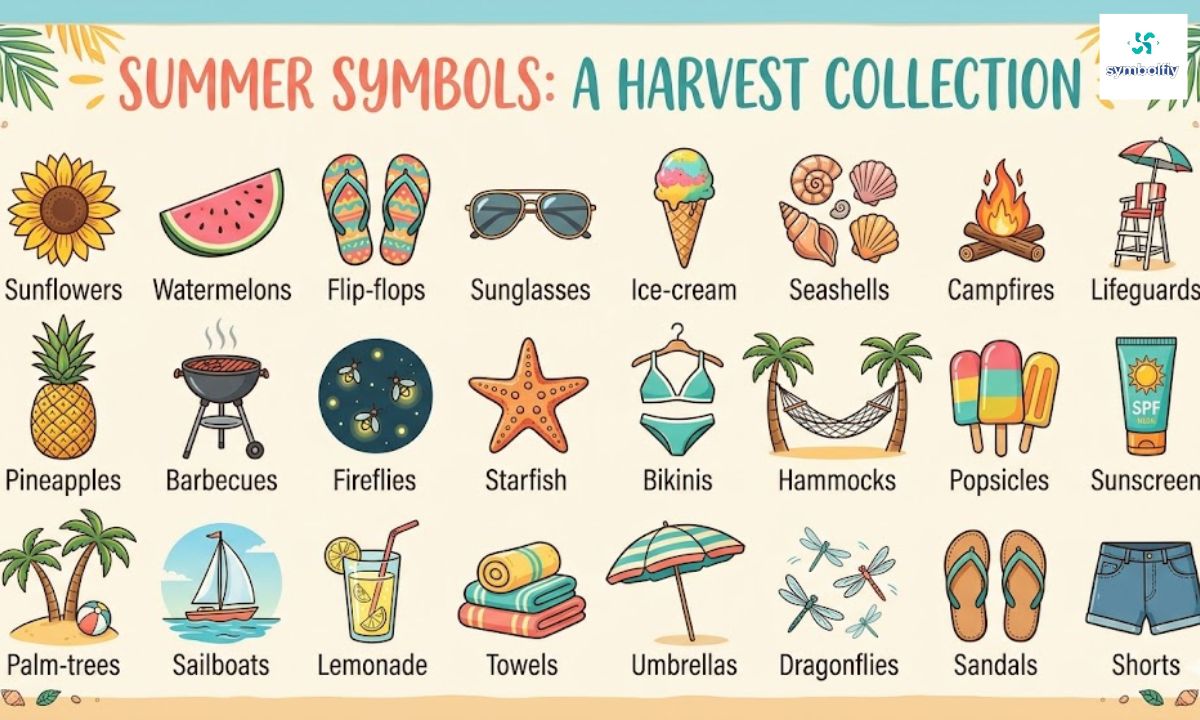
Summer is more than just hot days and school breaks. For thousands of years, people have used symbols to capture what this season truly means. These symbols carry deep meaning about life, growth, joy, and change.
From ancient sun worship to modern tattoo art, summer symbols connect us to something bigger than ourselves. They remind us to slow down, enjoy the moment, and celebrate the beauty of being alive.
Summer stands for the peak of life. It is the time when everything is growing, glowing, and full of energy. Spiritually, summer is linked to the solar plexus chakra, which represents confidence, willpower, and joy.
Many ancient people believed summer was when the gods were most active and the world was most alive. Emotionally, summer means freedom, happiness, and abundance.
It is a season tied to childhood memories, warm evenings, and a sense that anything is possible. Across cultures, summer has long been seen as a time to celebrate, reflect, and connect with nature and each other.
25+ Summer Symbols and Their Meanings
Nature Symbols of Summer
☀️ The Sun
The sun is the most powerful summer symbol in the world. Almost every ancient culture worshipped it in some way.
Origin: Ancient Egypt, Greece, Aztec, and Vedic traditions all honored the sun
Spiritual meaning: Light, divine energy, truth, and enlightenment
Historical background: The Egyptians worshipped Ra as the sun god who brought life each day
Cultural connection: In Hinduism, Surya is the solar deity representing soul and vitality
Modern use: The sun emoji ☀️ and sun symbols appear in jewelry, tattoos, and logos worldwide
Emotional symbolism: Warmth, hope, positivity, and the feeling that everything will be okay
🌻 Sunflower
The sunflower is one of the most recognized summer symbols. It literally turns its face toward the sun all day long.
Origin: Native Americans first cultivated sunflowers over 3,000 years ago
Spiritual meaning: Loyalty, adoration, and following divine light
Historical background: Spanish explorers brought sunflowers to Europe in the 16th century
Cultural connection: In Greek myth, Clytie was a water nymph who turned into a sunflower after loving Apollo
Modern interpretation: Sunflowers are popular in bouquets, art, and home decor as signs of happiness
Emotional symbolism: Joy, optimism, and the strength to keep growing no matter what
🦋 Butterfly
Butterflies appear in summer in full color and movement. They are one of nature’s most beautiful symbols of change.
Origin: Used as symbols in Greek, Roman, and Chinese traditions for thousands of years
Spiritual meaning: Transformation, rebirth, and the freedom of the soul
Historical background: The Greek word for butterfly, “psyche,” also means soul
Cultural connection: In Japan, butterflies represent departed souls visiting the living
Modern interpretation: Butterfly tattoos are among the most popular in the world
Emotional symbolism: Hope, personal growth, and the courage to change
🌊 Ocean / Waves
The ocean is a deep summer symbol tied to freedom, mystery, and emotional depth.
Origin: Sea worship dates back to ancient Mesopotamia, Greece, and Polynesia
Spiritual meaning: The subconscious mind, infinite possibilities, and emotional healing
Historical background: Poseidon in Greece and Neptune in Rome ruled the sea as powerful gods
Cultural connection: Many Pacific Island cultures trace their ancestry and identity to the ocean
Modern use: Ocean waves appear in meditation, art, and wellness brands
Emotional symbolism: Freedom, vastness, and letting go of what holds you back
🐝 Bee
Bees are a beloved summer symbol tied to community, hard work, and sweetness.
Origin: Ancient Egyptians called bees “tears of Ra” and kept them sacred
Spiritual meaning: Industry, teamwork, fertility, and divine connection
Historical background: Celtic cultures believed bees carried messages between the living and the spirit world
Cultural connection: In many folk traditions, you had to tell the bees important news like births and deaths
Modern interpretation: Bees appear in logos, tattoos, and jewelry as symbols of productivity
Emotional symbolism: Community, purpose, and the reward that comes from hard work
🌺 Hibiscus Flower
The hibiscus is a tropical summer flower full of color and cultural meaning.
Origin: Native to Asia and the Pacific Islands
Spiritual meaning: Beauty, femininity, delicate power, and fleeting joy
Historical background: In ancient Hawaii, women wore hibiscus flowers to signal their relationship status
Cultural connection: It is the national flower of Malaysia and South Korea
Modern use: Popular in summer drinks, leis, and tropical-themed art
Emotional symbolism: Enjoying beauty in the present moment before it fades
🌴 Palm Tree
The palm tree is a classic symbol of summer, warmth, and paradise.
Origin: Worshipped in ancient Middle Eastern cultures including Egypt and Mesopotamia
Spiritual meaning: Victory, immortality, and the eternal cycle of life
Historical background: In Christianity, palm branches were laid before Jesus on Palm Sunday
Cultural connection: The date palm was sacred in ancient Babylon as a tree of life
Modern use: Palm trees appear in logos, vacation ads, and tattoos to signal relaxation
Emotional symbolism: Escape, peace, and the dream of a simpler, warmer life
🐚 Seashell
Seashells are found on summer beaches and carry deep spiritual meaning across many cultures.
Origin: Used as sacred objects in Indigenous, Hindu, and Greek traditions for thousands of years
Spiritual meaning: Protection, beauty, the divine feminine, and transformation
Historical background: The conch shell is blown in Hindu rituals to call the gods and purify the space
Cultural connection: In ancient Rome, Venus, goddess of love, rose from the sea on a shell
Modern use: Seashells appear in summer jewelry, home decor, and tattoos
Emotional symbolism: Listening to the sea, inner voice, and carrying your home with you
🦗 Firefly / Lightning Bug
Few things feel more magical than fireflies blinking in the dark on a warm summer night.
Origin: Celebrated in Japan for over 1,000 years in Firefly Festivals called Hotaru-kai
Spiritual meaning: Hope, magic, brief moments of beauty, and the light within
Historical background: In Native American legends, fireflies were sparks from a fire carried by a tricky fox
Cultural connection: Japanese poets have written about fireflies in haiku as symbols of summer souls
Modern use: Fireflies inspire fairy lights, children’s books, and summer aesthetics
Emotional symbolism: Wonder, magic, and the reminder that small lights matter in the dark
🐉 Dragonfly
The dragonfly is a powerful summer symbol of change and spiritual awareness.
Origin: Ancient Japan and Native American tribes both held dragonflies as sacred
Spiritual meaning: Transformation, clarity, seeing through illusions
Historical background: Japan was once called “Akitsushima,” meaning Land of the Dragonflies
Cultural connection: In many Native American traditions, dragonflies symbolize swiftness and pure water
Modern use: Dragonfly tattoos are popular as symbols of personal change and new beginnings
Emotional symbolism: Living in the moment and seeing the truth beneath the surface
🍉 Watermelon
Watermelon is a fun and joyful summer symbol tied to abundance and refreshment.
Origin: First grown in Africa over 5,000 years ago
Spiritual meaning: Abundance, nourishment, and the sweetness of life
Historical background: Ancient Egyptians placed watermelons in tombs as food for the afterlife
Cultural connection: In West African traditions, watermelon was a sacred crop linked to ancestral blessing
Modern use: Widely used in summer branding, food festivals, and pop art
Emotional symbolism: Simple pleasures, sharing with others, and the sweetness of the present
🪁 Kite
Flying a kite in summer is an ancient tradition linked to freedom and higher thinking.
Origin: Invented in China about 2,500 years ago and later spread across Asia and the world
Spiritual meaning: Freedom, reaching for higher goals, and connection between earth and sky
Historical background: In parts of Asia, flying kites was a way to send prayers to heaven
Cultural connection: Kite festivals are held across India, Japan, and Afghanistan as celebrations of life
Modern use: Kites appear in summer festivals, children’s art, and motivational imagery
Emotional symbolism: Letting go, rising above problems, and the joy of childlike play
Summer Sky and Weather Symbols
🌈 Rainbow
A rainbow after summer rain is a symbol of promise and renewal across almost every culture.
Origin: Featured in ancient myths from Norse, Greek, Aboriginal Australian, and biblical traditions
Spiritual meaning: Divine promise, connection between heaven and earth, and hope after hardship
Historical background: In Norse mythology, the rainbow bridge Bifrost connected Asgard to Earth
Cultural connection: In the Bible, God sent a rainbow to Noah as a sign of peace after the flood
Modern use: A global symbol of diversity, inclusion, and optimism
Emotional symbolism: Hope, beauty after struggle, and the reassurance that storms pass
⛱️ Beach Umbrella
The beach umbrella is a modern summer symbol of rest, leisure, and the vacation mindset.
Origin: Umbrellas date back thousands of years in ancient Egypt and China where they signified royalty
Spiritual meaning: Protection, shelter, and permission to rest
Cultural connection: In ancient cultures, only royalty could use umbrellas as a sign of divine favor
Modern interpretation: Today, the beach umbrella means earned rest and the joy of doing nothing
Emotional symbolism: Permission to pause, relax, and simply enjoy life without guilt
☁️ Clouds
Summer clouds, especially dramatic storm clouds, carry rich symbolic meaning.
Origin: Ancient cultures worldwide saw clouds as messages from the gods
Spiritual meaning: Dreams, transition, divine presence, and the mystery of the unknown
Historical background: In many religious texts, gods spoke from within clouds
Cultural connection: In Chinese art, clouds are symbols of good luck and heavenly blessings
Modern use: Cloud imagery appears in art, music, and digital design as a symbol of openness
Emotional symbolism: Change, imagination, and the reminder that nothing stays the same forever
Summer Animals and Creatures
🐬 Dolphin
Dolphins jumping in warm summer waters are symbols of joy, playfulness, and intelligence.
Origin: Sacred to the ancient Greeks who saw them as messengers of Poseidon
Spiritual meaning: Joy, freedom, harmony, and emotional intelligence
Historical background: Greek sailors believed dolphins were good omens that protected ships at sea
Cultural connection: In Celtic tradition, dolphins represented the sacred power of water and guidance
Modern use: Dolphins appear in summer jewelry, ocean conservation logos, and tattoos
Emotional symbolism: Playfulness, community, and swimming through life with grace
🐦 Swallow
The swallow is a classic symbol of summer return and faithful love.
Origin: Used as a symbol by sailors throughout maritime history, especially in European culture
Spiritual meaning: Hope, safe return home, loyalty, and the promise of good things ahead
Historical background: Sailors tattooed swallows for every 5,000 miles sailed at sea as a mark of experience
Cultural connection: In ancient Egypt, swallows represented the stars and the souls of the departed
Modern use: Swallow tattoos remain popular as symbols of travel, freedom, and safe homecoming
Emotional symbolism: The feeling of coming home, the comfort of familiar love
🦈 Shark
The shark is a powerful and sometimes misunderstood summer symbol tied to strength and primal energy.
Origin: Sacred in Hawaiian and Pacific Island cultures where shark gods protected fishermen
Spiritual meaning: Power, focus, fearlessness, and survival instinct
Historical background: Hawaiians believed certain ancestors reincarnated as sharks called “aumakua”
Cultural connection: Maori warriors compared themselves to sharks as a symbol of courage
Modern use: Shark imagery appears in sports teams, summer branding, and motivational art
Emotional symbolism: Facing fears, moving forward without stopping, and trusting your instincts
🦩 Flamingo
The flamingo is a vibrant summer symbol tied to beauty, balance, and social joy.
Origin: Found across ancient Mediterranean, African, and Caribbean cultures
Spiritual meaning: Balance, grace under pressure, and embracing your unique nature
Historical background: Ancient Egyptians saw flamingos as a manifestation of Ra, the sun god
Cultural connection: In Caribbean culture, flamingos represent tropical beauty and communal living
Modern use: Flamingo decor is a staple of summer parties, pool floats, and vacation imagery
Emotional symbolism: Being unafraid to stand out and shine in your own colorful way
Summer Fruits and Foods as Symbols
🍍 Pineapple
The pineapple is a summer symbol of welcome, hospitality, and exotic sweetness.
Origin: Native to South America, brought to Europe by Columbus in the 15th century
Spiritual meaning: Warmth, welcome, and the spirit of generosity
Historical background: In colonial America, pineapples were so rare that hosting one at a dinner table meant extreme wealth
Cultural connection: In Caribbean and Pacific Island cultures, sharing fruit like pineapple is a sacred act of community
Modern use: Pineapple prints are everywhere in summer fashion, home decor, and drinks
Emotional symbolism: Generosity, hospitality, and making people feel at home
🥥 Coconut
The coconut is a powerful summer and tropical symbol tied to nourishment and paradise.
Origin: Grew across Southeast Asia and the Pacific for thousands of years
Spiritual meaning: Life, nourishment, purity, and the gift of nature
Historical background: In Hinduism, the coconut is a sacred offering broken open at temples to symbolize the human ego
Cultural connection: In many Pacific Island traditions, the coconut tree is called the “tree of life”
Modern use: Used widely in summer beverages, beauty products, and beach aesthetics
Emotional symbolism: Abundance, self-sufficiency, and the sweetness found inside what appears hard on the outside
Summer Sky Events as Symbols
🌅 Sunset
The summer sunset is one of the most emotionally powerful natural symbols we know.
Origin: Honored in nearly every culture that has ever existed
Spiritual meaning: Endings that are beautiful, rest after effort, and transition into the next phase
Historical background: Many Indigenous cultures held sunset ceremonies to give thanks for the day
Cultural connection: In ancient Japan, the setting sun in the west represented both endings and peaceful rest
Modern use: Sunset images appear in everything from social media posts to meditation apps
Emotional symbolism: Gratitude, the beauty of endings, and trust that the sun will rise again
☀️ Summer Solstice
The summer solstice is not just an astronomical event. It is one of the oldest sacred symbols on earth.
Origin: Celebrated since Neolithic times at sites like Stonehenge and Chichen Itza
Spiritual meaning: Peak energy, enlightenment, and the triumph of light over darkness
Historical background: Ancient pagans celebrated Litha, the solstice festival, with bonfires and dancing
Cultural connection: In Scandinavia, Midsommar is still celebrated with flowers, maypoles, and community
Modern use: Used in yoga retreats, spiritual ceremonies, and wellness practices around the world
Emotional symbolism: Personal peak, fulfillment, and the reminder to celebrate how far you have come
🌟 Stars (Summer Night Sky)
Summer nights bring clear skies and brilliant stars that have guided humanity for thousands of years.
Origin: Used for navigation and spiritual meaning in virtually every ancient civilization
Spiritual meaning: Divine guidance, destiny, and the soul’s journey
Historical background: The Egyptians built their pyramids aligned with specific star constellations
Cultural connection: In many African traditions, stars represent ancestors watching over the living
Modern use: Star symbols appear in tattoos, jewelry, and meditation practices
Emotional symbolism: Feeling guided, connected to something larger than yourself, and finding direction
More Summer Symbols
🪸 Coral Reef
Coral reefs represent the hidden abundance and fragile beauty just beneath the surface of summer seas.
Spiritual meaning: Community, diversity, and the importance of protecting what sustains us
Cultural connection: Many Pacific Island peoples consider reefs sacred ancestral ecosystems
Modern use: Coral imagery is used in ocean conservation movements and summer jewelry
Emotional symbolism: The beauty of working together and the fragility of precious things
🧃 Fresh Juice / Lemonade
Lemonade and fresh juice are everyday summer symbols of turning something sour into something sweet.
Spiritual meaning: Resilience, transformation, and finding sweetness in difficulty
Cultural connection: Lemonade stands are a rite of passage in American childhood culture
Modern use: Widely used in motivational culture, branding, and summer aesthetic content
Emotional symbolism: The ability to transform hard experiences into something good
🎑 Wind Chimes
Wind chimes hanging on a summer porch carry gentle spiritual meaning tied to peace and clarity.
Origin: Used for thousands of years in China and Japan to ward off negative energy
Spiritual meaning: Peace, communication with the spirit world, and mindfulness
Cultural connection: In Feng Shui, wind chimes activate positive energy in a space
Modern use: Wind chimes are used in meditation spaces, porches, and garden decor
Emotional symbolism: Slowing down, listening to the world around you, and finding peace in simple sounds
🧁 Ice Cream
Ice cream is a universal symbol of summer pleasure, childhood, and life’s small joys.
Spiritual meaning: Permission to enjoy life, sweetness, and the value of pausing
Historical background: Cold desserts date back to ancient China and Persia, made with snow and fruit juice
Modern use: Ice cream imagery is used in branding, pop art, and summer lifestyle content
Emotional symbolism: Joy, nostalgia, and the reminder that simple things often make us happiest
🏄 Surfboard / Surfing
Surfing is a modern summer symbol but its roots run deep into Pacific Island spiritual culture.
Origin: Born in Hawaii and Polynesia as a sacred practice tied to the ocean and the divine
Spiritual meaning: Riding the wave of life, balance, and surrendering to natural forces
Historical background: Ancient Hawaiian chiefs surfed as a display of spiritual power and royal status
Cultural connection: Surfing was used in rituals and prayer in pre-colonial Hawaii
Modern use: Surfboard symbols appear in summer fashion, travel brands, and youth culture
Emotional symbolism: Balance, courage, and the thrill of riding whatever life throws at you
🌿 Green Leaves
Lush green leaves are one of the quietest but most powerful summer symbols of all.
Spiritual meaning: Life at its fullest, renewal, and spiritual energy flowing freely
Historical background: In Celtic traditions, the Green Man was a deity of summer, covered in leaves and vines
Cultural connection: In Buddhism, the Bodhi tree’s leaves represent enlightenment and awakening
Modern use: Green leaves appear in wellness branding, yoga studios, and eco-conscious art
Emotional symbolism: Feeling alive, refreshed, and connected to the natural world
🔥 Bonfire
The summer bonfire is one of the oldest communal symbols humans have shared.
Origin: Central to pagan Midsummer celebrations across Europe, especially Scandinavia and the British Isles
Spiritual meaning: Purification, protection, transformation, and community
Historical background: Ancient Celts jumped over bonfires on summer solstice to ensure good harvests
Cultural connection: In many world traditions, bonfires mark sacred gatherings and spiritual transitions
Modern use: Bonfires remain central to summer camping, beach parties, and seasonal festivals
Emotional symbolism: Warmth shared with others, letting go of the old, and welcoming the new
Ancient Cultures That Used These Symbols
Summer symbols were not invented recently. Ancient peoples around the world created them to explain nature, honor the gods, and mark the passing of time.
Egyptian culture: Worshipped Ra, the sun god, as the source of all life. Summer flooding of the Nile was sacred and celebrated.
Celtic traditions: Celebrated Litha at the summer solstice with bonfires, greenery, and rituals of purification and abundance.
Greek mythology: Demeter governed summer harvests. Apollo drove the sun chariot. Poseidon ruled summer seas.
Native American traditions: Held the Sun Dance and Vision Quests in summer. Sacred ceremonies marked personal and community growth.
Japanese culture: The firefly festival Hotaru-kai honored summer beauty. Dragonflies represented the warrior spirit.
Norse mythology: The rainbow bridge Bifrost connected worlds. Summer solstice was tied to the gods Odin and Freyr.
Hindu traditions: Surya the sun god was honored daily. The coconut and sunflower were sacred offerings.
Pacific Island cultures: The ocean, shark, coral reef, and coconut tree held deep ancestral and spiritual meaning.
Why Symbols Still Matter Today
We live in a fast world full of screens and information. Yet people still use summer symbols in tattoos, jewelry, home decor, and art more than ever. This shows a deep human need to connect with meaning beyond the everyday.
A sunflower on your wall, a shell on your shelf, or a wave tattoo on your arm each tells a story about who you are and what you value.
Spiritually, summer symbols remind us to stay present, enjoy growth, and embrace change. They connect us to millions of people across history who stood under the same sun, watched the same fireflies, and felt the same pull toward the sea.
That connection is powerful. It tells us we are part of something much older and much larger than ourselves.
Frequently Asked Questions
What is the most common symbol of summer?
The sun is the most universal summer symbol, representing warmth, life, and positive energy across every culture.
What does the butterfly symbolize in summer?
The butterfly symbolizes transformation, freedom, and the fleeting beauty of the season.
Why is the sunflower a summer symbol?
The sunflower follows the sun across the sky and blooms in summer, making it a natural symbol of loyalty, joy, and vitality.
What do summer symbols mean spiritually?
Spiritually, summer symbols represent peak energy, enlightenment, abundance, and the celebration of life at its fullest.
Can summer symbols be used in meditation or spiritual practice?
Yes. Many people use summer symbols like the sun, ocean, firefly, and dragonfly in meditation, altar work, and intention setting.
Conclusion
Summer symbols have spoken to the human heart for thousands of years. From the ancient sun temples of Egypt to the beach umbrella on your back porch, they remind us what matters. Life is short. Seasons change.
Each summer symbol carries a quiet message: grow while you can, shine while the light is here, and share the warmth with everyone around you.
Whether you wear a sunflower necklace, watch fireflies blink in your yard, or simply pause to feel the sun on your face, you are taking part in a tradition as old as humanity itself.