DEZYour coffee bag says “light roast.” But it tastes nothing like the last one you bought. Something’s missing from how most guides explain this roast level. This guide fixes that.
Light roast beans stop cooking early. Roasters pull them at or just after first crack.
First crack happens around 350°F. It’s the audible pop that signals sugars and oils are just starting to change. Stopping here locks in delicate aromas that heat destroys later.
Light roast beans look pale brown. They have no oily sheen on the surface. That’s a visual clue you can use in any store.
Other names for this roast level include:
Blonde roast
Cinnamon roast
Light City roast
New England roast
Starbucks popularized “blonde” as a marketing term. It means the same thing as light roast in practice.
How to Measure Roast Level Objectively
Most guides describe roast level with words like “light” or “medium.” That’s subjective. Professionals use a number instead.
Roasters use an Agtron score to measure bean color precisely. Lower numbers mean darker roasts. Higher numbers mean lighter roasts.
Agtron Range
Roast Level
75–95
Very light
65–75
Light
55–65
Medium
45–55
Medium-dark
Below 45
Dark
Ask your roaster for this number if you want consistency between bags. Not every brand publishes it, but specialty roasters often will if you ask directly.
Why Light Roast Tastes So Different From Dark Roast
Heat-sensitive aroma compounds survive short roasts. Long roasts break these compounds down and replace them with roast-driven flavor instead.
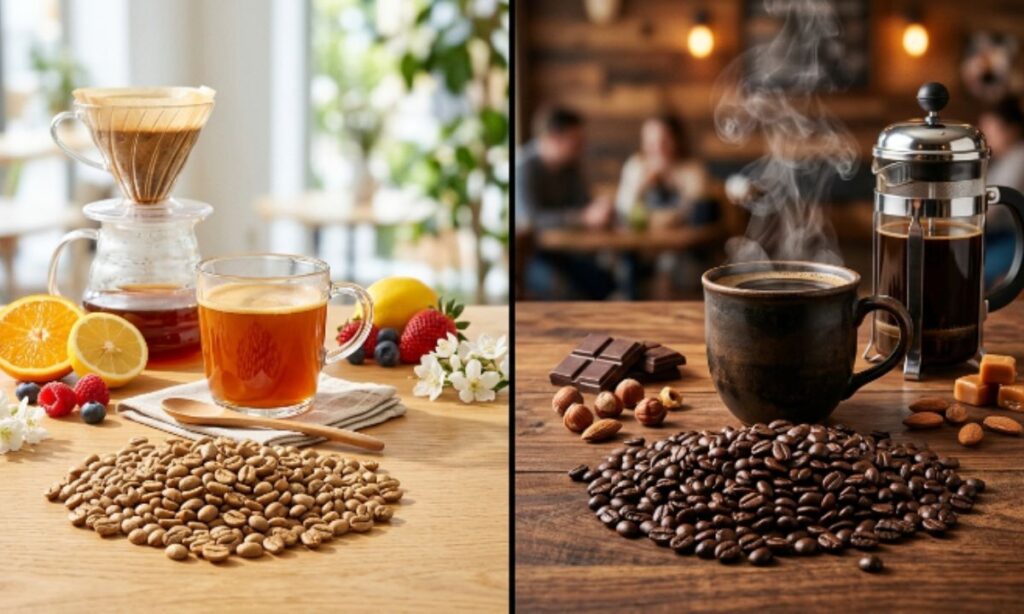
That’s why light roast tastes fruity, floral, and bright. Dark roast tastes smoky, bitter, and heavier. The bean’s origin matters more in light roast because roasting hasn’t masked it yet.
Flavor by Roast Level
Light roast: floral, citrus, berry, stone fruit, tea-like clarity
Medium roast: chocolate, caramel, balanced acidity
Dark roast: smoky, bittersweet, less origin character
How Origin Shapes the Cup
Origin drives flavor more in light roast than any other factor. Two beans roasted the same way can taste completely different based on where they grew.
Origin
Typical Flavor Notes
Ethiopia / Burundi
Floral, berry, jasmine
Kenya
Citrus, stone fruit, bright acidity
Colombia
Stone fruit, sweetness
Guatemala
Bright citrus
Costa Rica / Honduras
Clean, nutty, mellow
If you love citrus notes, start with Kenya or Guatemala. If florals excite you, try Ethiopia first.
How to Brew Light Roast Coffee at Home
Light roast needs a different approach than dark roast. The wrong method flattens its brightness.
Best Brewing Methods
Pour-over (V60 or Chemex): highlights clarity and origin flavor best
Drip machine: works fine with a slightly finer grind than usual
Espresso: possible, but needs a fine grind and careful dial-in
French press: muddies delicate notes, not ideal for light roast
Water and Recipe Basics
Water quality changes flavor more than most people realize. Use filtered water with moderate mineral content, not distilled water.
Use a 1:16 coffee-to-water ratio as a starting point
Brew with water between 195°F and 205°F
Bloom the grounds for 30 seconds before the full pour
Grind slightly coarser than you would for medium roast
Adjust grind size first if your cup tastes sour or weak. That single change fixes most brewing mistakes.
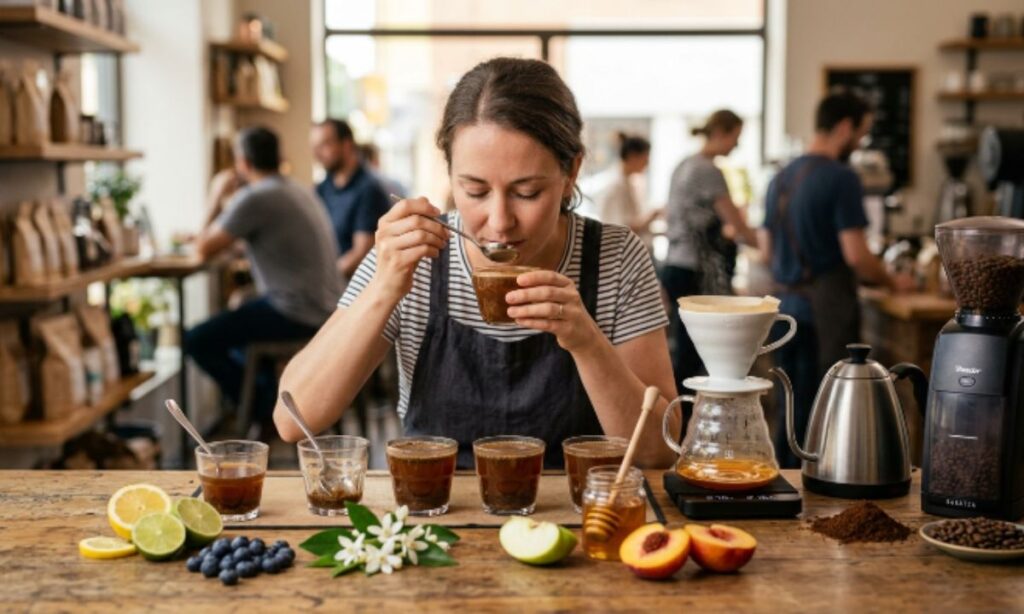
How to Taste Light Roast Like a Pro
Tasting light roast is a skill. Most people rush through it and miss the point entirely.
Follow these steps for your next cup:
Smell the dry grounds before adding water
Note the first aroma that hits you after brewing
Take a small sip and let it coat your tongue
Identify one dominant flavor, then a secondary one
Notice how the aftertaste changes after 30 seconds
Acidity in light roast should feel bright, not sour. If it tastes sour, your brew ratio or grind size probably needs adjusting.
Freshness and Storage Rules
Light roast fades faster than dark roast. Fresh beans matter more here than in almost any other coffee category.
Drink light roast within 2 to 10 days of the roast date
Buy whole beans, not pre-ground
Grind immediately before brewing, not hours ahead
Store beans in an airtight, opaque container
Keep beans away from heat, light, and moisture
Should You Freeze Light Roast Beans?
Freezing works if you buy in bulk. Portion beans into small airtight bags first, then freeze. Thaw only what you’ll use that week.
Light Roast vs Dark Roast: Quick Comparison
Factor
Light Roast
Dark Roast
Flavor
Fruity, floral, bright
Smoky, bitter, bold
Acidity
Higher
Lower
Body
Lighter
Heavier
Caffeine (by weight)
Roughly equal
Roughly equal
Origin character
Strong
Muted
Freshness window
2–10 days
2–3 weeks
Caffeine content is nearly identical by weight between roast levels. Light roast beans are denser, so a scoop by volume holds slightly more caffeine.
Best Light Roast Picks by Drinker Type
Not every light roast fits every palate. Match your pick to your taste preference below.
For the Fruit-Forward Drinker
Look for Ethiopian or experimental Colombian beans. Expect notes like fig, strawberry, or blueberry.
For the Floral, Tea-Like Palate
Choose Ethiopian or Kenyan beans with jasmine or bergamot notes. These cups feel closer to tea than coffee.
For the First-Time Light Roast Drinker
Pick a blend with honey and caramel sweetness alongside gentle fruit. This softens the jump from dark roast.
For the Budget-Conscious Buyer
Single-origin light roasts under $20 exist and taste great. Skip rare micro-lots and Geisha varieties if price matters most.
Is Light Roast Coffee Healthier?
Some brands market light roast as the “healthier” choice. The real picture is more nuanced.
Light roast retains slightly more chlorogenic acid, an antioxidant compound
Roasting time affects acrylamide levels, though amounts stay low in both roasts
Beans tested for mold and mycotoxins matter more than roast level alone
No roast level makes coffee a health food on its own
Choose beans from roasters who test for contaminants if that matters to you. That practice affects safety more than roast color does.
Pairing Light Roast With Food and Time of Day
Light roast fits certain moments better than others. Its brightness works with lighter foods and earlier hours.
Morning: pairs well with fruit, yogurt, or light pastries
Afternoon: works alongside citrus desserts or shortbread
Best avoided: heavy, smoky, or overly sweet foods that clash with its acidity
Save dark roast for rich breakfasts. Save light roast for anything bright or fresh.
The Light Roast Market in 2026
Light roast isn’t a niche trend anymore. Demand keeps climbing across specialty coffee.
The global coffee market is projected to reach roughly $300 billion in 2026
Whole bean coffee makes up close to a third of total product value
Specialty coffee in the US alone is valued near $11.5 billion this year
Single-origin and light roast beans lead much of this specialty growth
This growth means more small roasters, more traceable origins, and more transparency about roast dates than ever before.
Frequently Asked Questions
Is blonde coffee the same as light roast?
Yes, blonde is simply a marketing name for light roast coffee.
Does light roast have more caffeine than dark roast?
Caffeine content is roughly equal by weight between the two roast levels.
What does light roast coffee taste like?
Expect fruity, floral, and bright flavors with a lighter body than dark roast.
Can light roast coffee work for espresso?
Yes, but it needs a fine grind and careful dialing in to avoid sourness.
How fresh should light roast coffee be before brewing?
Brew light roast within 2 to 10 days of its roast date for the best flavor.
Conclusion
Light roast coffee rewards attention to detail, from origin and freshness to grind size and brew ratio. Once you understand how roast level, origin, and brewing method work together, picking the right bag stops feeling like guesswork. Start with one origin you’re curious about, brew it fresh, and let the fruit and florals speak for themselves.