Humans have always needed shortcuts to express big feelings fast. Before the internet, we used hand signals, facial expressions, and punctuation marks.
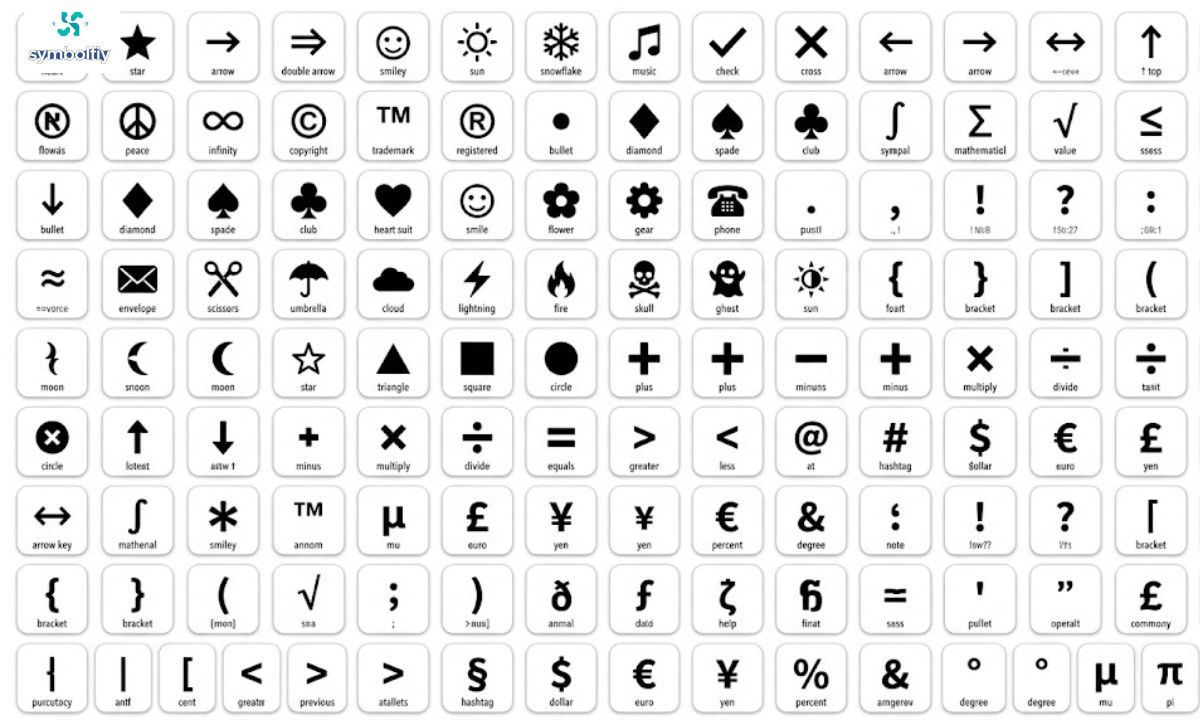
Today, we have an entire language built out of tiny characters — text symbols that can show love, laughter, shock, or sarcasm in a single keystroke.
These symbols matter because they carry emotion that plain words often miss. Once you understand what they mean, everyday digital conversations start to make a lot more sense.
Text symbols are more than typing shortcuts. They carry emotional weight, social meaning, and sometimes cultural significance that go far deeper than their simple appearance.
A heart made from two keyboard keys, or a smiley face built from punctuation, can communicate warmth and connection the same way a handwritten note once did. In that sense, these small symbols are the modern version of something ancient: the human need to express what we feel.
Many of today’s text symbols also have roots in history that most people never think about. The ampersand existed before the internet by nearly 2,000 years. The asterisk was used in ancient Greek manuscripts.
The hashtag started on a Roman scribe’s desk. Understanding where these symbols come from gives them a richer meaning and shows how communication has always adapted to its tools.
25+ Text Symbols and Their Meanings
Emotional Emoji Symbols 😊
Emojis are the most widely used text symbols today. They evolved from simple typed emoticons into colorful pictographs that appear in texts, social media captions, emails, and even business messages. Each one carries a clear emotional message.
😊 Smiling Face with Smiling Eyes
This is the warmest smiley in the bunch. It signals genuine happiness, not just politeness. The smiling eyes make it feel more sincere than a standard smile. People use it to show appreciation, contentment, or to soften a message so it doesn’t come across as cold.
😂 Face with Tears of Joy
One of the most used emojis in the world. It means something is so funny it made you tear up laughing. It replaced “LOL” for a lot of people because it actually shows the feeling rather than just naming it. Use it when something genuinely cracks you up.
😍 Heart Eyes
This one is about adoration. It says “I love this” in the most enthusiastic way possible. People use it for crushes, food, places, outfits, or anything that triggers that instant “wow” feeling. It carries a strong positive emotional charge.
😉 Winking Face
A wink changes everything. This emoji turns a simple statement into something playful, sarcastic, or flirtatious. It signals that the sender is being cheeky or that the message is not entirely serious. Context matters a lot with this one.
🙏 Folded Hands
This symbol means different things depending on the culture. In Western use, it most often signals gratitude or a plea for help — the digital equivalent of saying “please” or “thank you.” In Hindu and Buddhist traditions, it is a gesture of prayer or respect called “namaste.”
And In Japanese culture, it is used to say “I’m sorry” or “please.” One small symbol, several completely different messages.
😱 Shocked / Screaming Face
This is the emoji equivalent of “OMG.” It expresses shock, disbelief, or extreme surprise. People use it when something blows their mind, when news is unexpectedly bad or good, or just for dramatic effect when they want to seem more reactive than they actually feel.
😛 Tongue Out
This is a playful, slightly teasing symbol. It signals that someone is joking around or being silly. It often softens a message that could otherwise come across as mean-spirited. In texting, it frequently pairs with a funny comment or gentle teasing between friends.
🤣 Rolling on the Floor Laughing
A step above the tears of joy emoji. This one says the laughter is so intense it is physically overwhelming. It tends to get used for the jokes that are genuinely ridiculous rather than just funny. Often shows up alongside the ROFL abbreviation.
Keyboard Emoticons 🙂
Emoticons are the grandparents of emojis. They were built entirely from standard keyboard characters long before smartphones existed. They still work everywhere, on any device, in any app, which is why many people still use them.
🙂 Smile
The original text smile. Created in 1982 by computer scientist Scott Fahlman to mark online jokes so people would not mistake them for serious statements. It literally changed how humans communicated digitally. Today it still signals happiness and friendliness, though it carries a slightly retro charm compared to its emoji successors.
<3 Heart
Two keystrokes. One of the most powerful emotional symbols in digital communication. The less-than sign and the number three together form a sideways heart that means love, affection, or strong positive feelings. It predates emoji hearts and is still widely used because it works in every text environment and carries a nostalgic warmth.
😉 Wink
The typed version of the winking emoji. It signals sarcasm, flirting, or a joke. The semicolon represents one closed eye. This emoticon was a staple of early internet chat rooms and instant messaging platforms, and it still does the same job today.
😀 Laughing Face
A big, open-mouthed grin. This emoticon means genuine joy or amusement, a step up from the simple smile. The capital D represents the mouth stretched wide open with laughter. It is the emoticon equivalent of the 😄 emoji.
🙁 Sad Face
The mirror of the smile. It communicates disappointment, unhappiness, or a bad day. It is one of the oldest and most universally understood text symbols in digital communication. Simple and direct, it gets the emotional message across without any ambiguity.
XD Laughing Hard
The eyes are squeezed shut from laughter and the mouth hangs open. XD signals extreme amusement, the kind where you cannot keep a straight face. It is commonly used in online gaming communities and casual chat, and it has stayed relevant even as emojis became the dominant format.
T_T Crying Face
Two tears running down. This emoticon expresses sadness, frustration, or emotional exhaustion. It originated in East Asian internet culture, particularly in Japanese and Korean online communities, and spread globally through anime fan communities and gaming chat.
O_O Shocked Face
Wide-open eyes. This one expresses surprise or disbelief, usually at something unexpected or absurd. It is a clean, readable emoticon that works across all text environments and communicates shock more vividly than just typing “wow.”
Special Character Symbols &#
These symbols come from keyboards and have histories stretching back centuries. They moved from ink and parchment into typewriters, then computers, then smartphones. Each one carries meaning that most people use every day without knowing where it came from.
& Ampersand
This symbol means “and.” Its origin goes back to the first century AD, when Latin scribes writing quickly began to link the letters E and T together. Those linked letters eventually evolved into the & shape we use today.
The word “ampersand” itself came from the phrase “and per se and,” which schoolchildren recited at the end of the alphabet. By the early 1800s that phrase had blurred into a single word. Today it shows up in brand names, shorthand texting, and formal business writing.
@ At Sign
Originally a commercial symbol meaning “at the rate of,” used in trade invoices as far back as the 16th century. It sat quietly on typewriter keyboards for decades before 1971, when programmer Ray Tomlinson chose it to separate usernames from domain names in email addresses.
That one decision turned the @ symbol into one of the most important characters in modern communication. Today it also tags people on social media platforms.
# Hashtag
The # symbol has had many lives. It started as a Roman abbreviation for “libra pondo,” meaning pound in weight. It appeared on typewriters as a number sign, then moved to telephone keypads in 1968 when Bell Labs needed extra buttons.
In 2007, Twitter user Chris Messina proposed using it to group related tweets by topic. That idea stuck and completely transformed how people organize and discover content online. It is now one of the defining symbols of social media culture.
* Asterisk
The name comes from the Greek word “asteriskos,” meaning “little star.” Ancient Greek scribes used it in manuscripts to mark corrections and annotations.
In modern text, it does several different jobs: it flags a footnote, it replaces letters in censored words, it adds emphasis around a word, and it serves as a bullet point in plain text lists.
In messaging, wrapping a word in asterisks like this shows it should be read with stress or emphasis.
$ Dollar Sign
The exact origin of the dollar sign is still debated, but the strongest theory traces it back to the Spanish “peso” currency, which was often abbreviated as “Ps.” Over time, the P and s were written on top of each other and simplified into the familiar $ shape.
In texting and social media today, people use it casually to refer to money, success, or financial topics, and it often appears in slang like “chasing the $.”
% Percent Sign
This symbol came from the Italian “per cento,” meaning “per hundred.” Medieval merchants used various shorthand versions to record percentages in accounts.
The modern % shape evolved from those scribblings over centuries. In texting, it appears mostly in its original role: expressing proportions, discounts, or data.
? Question Mark
The question mark likely evolved from the Latin word “quaestio” (meaning inquiry), which scholars would abbreviate as “qo.” Written quickly, the q above the o eventually transformed into the curved mark with a dot we use today.
In texting, a standalone ? has taken on extra meaning. Sent alone as a reply, it often signals genuine confusion or a request to repeat something. Multiple question marks together ??? signal disbelief or dramatic surprise.
! Exclamation Mark
This punctuation mark signals emphasis, energy, or urgency. In texting, it has taken on a social function beyond grammar. Ending a sentence with a period instead of an exclamation mark can now feel cold or passive-aggressive to some readers.
Many people use exclamation marks in texts specifically to signal warmth and enthusiasm, even when they are not particularly excited. Its absence is sometimes read as a mood.
Text Abbreviations (Acronyms)
Text abbreviations saved time in the days of limited SMS character counts. Many of them have outlasted the problem they solved and are now just part of everyday language.
LOL — Laugh Out Loud
The most well-known text abbreviation in the world. It started in the 1980s on early online bulletin boards and took over digital communication through the 1990s and 2000s.
Interestingly, many people now use LOL not to signal actual laughter, but as a softener that reduces the sharpness of a statement. Saying “that was bad LOL” is softer than saying “that was bad.” The meaning has quietly shifted.
OMG — Oh My God
Used to express shock, surprise, or disbelief. It jumped out of texting into everyday spoken language, and even into brand names and headlines. People of all ages and backgrounds use it, and it now covers everything from genuine surprise to mild amusement depending on context and tone.
BRB — Be Right Back
A simple logistical message that says the sender is stepping away temporarily but will return. It came from early chat room culture when people needed a quick way to signal they had not disappeared permanently. It is still widely used in gaming and group chats.
TTYL — Talk to You Later
A gentle conversation ender. It signals that the conversation is wrapping up but the relationship is not. It carries a warmer tone than just going silent, which makes it a socially considerate abbreviation.
IDK — I Don’t Know
Clean and direct. It signals uncertainty without any negative tone attached. People use it to avoid committing to an answer when they genuinely are not sure, or to stay neutral on a sensitive topic.
SMH — Shaking My Head
Expresses disappointment, disbelief, or frustration with something that should have been better. It often signals that the sender has given up trying to understand or fix something. It shows up in responses to bad decisions, obvious mistakes, or frustrating news.
TBH — To Be Honest
A signal that a genuine opinion is coming. It often precedes something slightly critical or vulnerable that the sender normally would not say. It creates a brief moment of directness in a conversation.
DM — Direct Message
A practical term that crossed from social media jargon into everyday language. “Slide into someone’s DMs” has become a phrase that describes starting a private conversation, often with a romantic implication.
Ancient Cultures That Used These Symbols
Modern text symbols feel brand new, but most of them have surprisingly old roots.
Roman scribes wrote the letters E and T together so often that they blended into the & symbol we still use today. This happened in the first century AD.
Ancient Greeks invented the asterisk as a correction mark in manuscripts, giving it the name “little star.” It appeared in scholarly texts long before it ever appeared on a keyboard.
Medieval European merchants used early versions of the percent sign in their account books to record fractions and proportions, laying the groundwork for the symbol we type today.
Roman traders used the “lb.” abbreviation for weight so quickly that it eventually became the # symbol, centuries before it became a hashtag.
Spanish colonial merchants likely gave us the dollar sign through their “Ps” shorthand for the peso, which slowly transformed into $ as writing styles evolved.
Early telephone engineers at Bell Labs locked the # and * symbols into mainstream use in 1968 when they added both to the touch-tone telephone keypad, connecting ancient symbols to modern technology.
Why Symbols Still Matter Today
Text symbols have done something remarkable. They took human emotion and compressed it into a single character. A ❤ in the right moment carries as much weight as a long message.
A 😂 tells someone they made you laugh without you having to type a word. This compression of meaning is not laziness. It is efficiency. And in a world where attention is short and messages are constant, that efficiency is deeply valuable.
Beyond messaging, these symbols have become part of personal identity. People choose specific emojis as their signature. Brands build social media presence around hashtags. Artists use Unicode characters in their work.
Tattoos of simple symbols like the @ or ❤ appear on people who want to mark something meaningful with a universal shorthand. The symbols that started as typing shortcuts have become genuine cultural markers, as meaningful and personal as any traditional symbol from centuries past.
Frequently Asked Questions
What does <3 mean in a text?
It is a sideways heart made from keyboard characters, used to show love or strong positive feelings.
What is the difference between an emoticon and an emoji?
Emoticons are made from keyboard characters like :-), while emojis are actual pictograph images like 😊.
What does SMH mean in texting?
It stands for “Shaking My Head” and expresses disappointment or disbelief about something.
Where did the hashtag symbol come from?
It originated as a Roman abbreviation for weight, moved to typewriters, then telephone keypads, and became a social media tool in 2007.
What does the asterisk mean in a text message?
It can mark emphasis around a word, serve as a footnote marker, or replace letters in a censored word.
Conclusion
Text symbols are a living language. They carry history, emotion, and cultural meaning packed into the smallest possible space. From a Roman scribe’s shorthand to a trending hashtag, these symbols have always reflected how people communicate when they need to be fast, clear, and human at the same time. The more you know about what they mean, the more intentional and connected your own messages become.