Symbols have always been one of the oldest ways humans share what they feel and believe. For Native Americans, symbols were not just art — they were language, history, and prayer all in one. Each mark on a rock, hide, or piece of pottery carried deep meaning.
These symbols connected people to nature, to their ancestors, and to the spirit world. Understanding them helps us respect a culture that is still alive today.
Native American symbols carry spiritual, emotional, and historical weight. They were used to record stories, guide warriors, mark sacred places, and teach younger generations about life.
A single symbol could mean protection, balance, strength, or rebirth — depending on the tribe and the context.
It is important to know that these symbols are not universal. There are hundreds of Native nations across North America, and each one has its own traditions.
A symbol that means one thing to the Cherokee may mean something different to the Navajo or the Lakota Sioux. Always look at tribal context before drawing conclusions.
25+ Native American Symbols and Their Meanings
Native American Symbols for Family, Strength, and Identity
Native American symbols can represent family, strength, protection, nature, and spiritual connection. However, there is no single system of meaning shared by every Native nation. Different communities developed their own traditions, stories, artistic styles, and ceremonial practices.
When people search for American Indian symbols or native Indian symbols, they may be looking for images connected with family, courage, protection, or heritage. These terms are commonly used in searches, but the most respectful approach is to identify the specific Native nation connected to a symbol.
Native American Symbols for Family
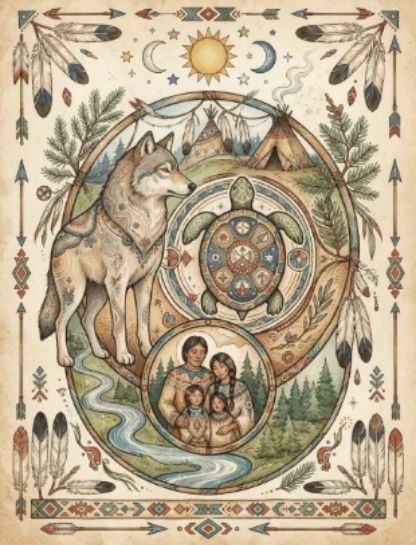
Some animals and natural images can represent family and community in Native traditions. The wolf, for example, is associated with family, loyalty, teamwork, and community in the article’s examples. Its behavior in a pack makes it a natural image for cooperation and strong social bonds.
This makes the wolf one possible choice for people researching Native American symbols for family. Still, its meaning should not be treated as universal. A symbol may carry a different meaning among another Native nation.
The turtle can also connect with ideas of protection, stability, long life, and the earth. Its strong shell provides a useful image of safety and endurance. These qualities can make the turtle meaningful when exploring a Native American symbol for family, especially when the focus is on protection and lasting connection.
People may also search for an American Indian symbol for family when looking for a tattoo, artwork, jewelry design, or personal emblem. Before using one, it is important to research where the image comes from and whether it has a sacred or ceremonial role.
American Indian Symbols for Strength
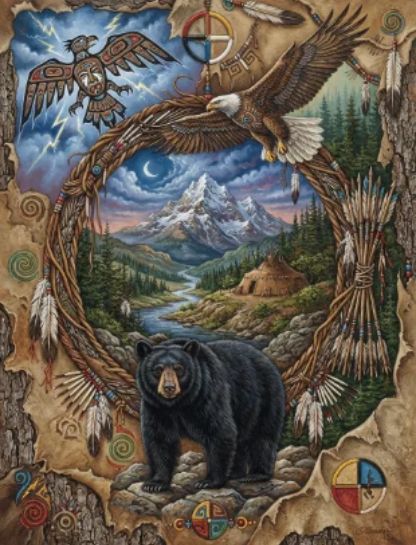
Strength appears throughout many examples of Native American symbolic traditions. The bear represents courage, authority, and physical strength. While the eagle represents vision, strength, and spiritual power. The Thunderbird is also described as a powerful figure associated with strength, transformation, and great natural forces.
For this reason, searches for an American Indian symbol for strength often lead people toward animals such as the bear or eagle. Yet these meanings should always be connected to their particular cultural context rather than presented as a universal Native American code.
The arrow can also represent strength through unity. In the article, a bundle of arrows symbolizes strength in unity, showing how several individual parts can become stronger when joined together. This idea can be meaningful when studying American Indian signs associated with protection, friendship, or community.
Native American Writing Symbols and Signs
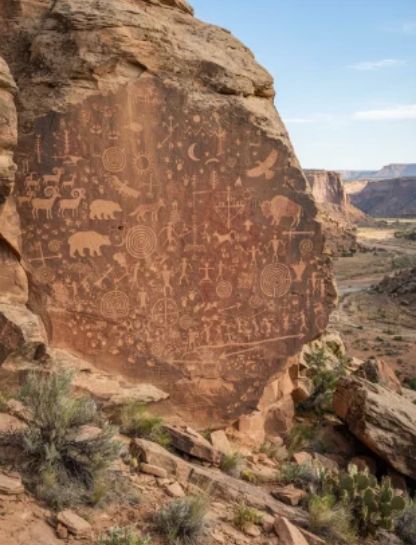
Another common search is Native American writing symbols. Native nations used many forms of visual communication, including pictographs, petroglyphs, designs, and symbolic imagery. These were not one universal written language. Instead, visual traditions developed differently across regions and communities.
It is also useful to distinguish symbols from Native American signs. A symbol can represent an idea such as strength, protection, or renewal, while a sign may communicate information, direction, identity, or a specific message. Their meanings depend heavily on the culture and situation in which they appear.
The term native American symbols is therefore broad. It can include animal imagery, natural elements, sacred objects, geometric designs, and other forms of cultural expression. There is no single list that accurately explains every Native symbol.
Sonora Yaqui Tribe Symbols
People researching Sonora Yaqui tribe symbols should take particular care to look for information specifically connected to the Yaqui people of Sonora, Mexico. Native nations have distinct histories and traditions, so a symbol associated with another nation should not automatically be presented as Yaqui.
The same principle applies when searching for a native American symbol in general. A design may look similar to imagery from another Indigenous community while having a completely different meaning or cultural role.
Understanding these differences helps prevent Native American symbols from being treated as a single universal system. Instead, each symbol should be viewed through the history, traditions, and cultural context of the Native nation with which it is connected.
Native AmericanAnimal Symbols
Animals were seen as spiritual guides in many Native traditions. They represented the qualities humans wanted to carry — courage, wisdom, freedom, and loyalty.
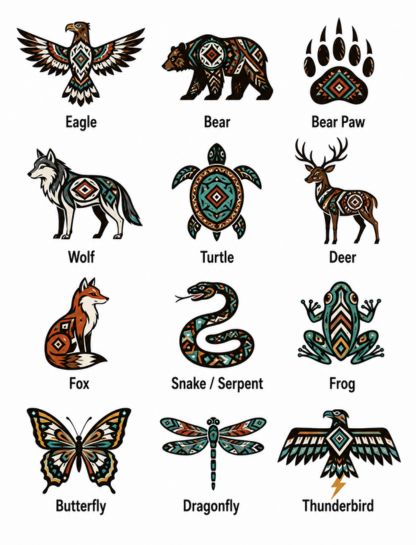
🦅 Eagle
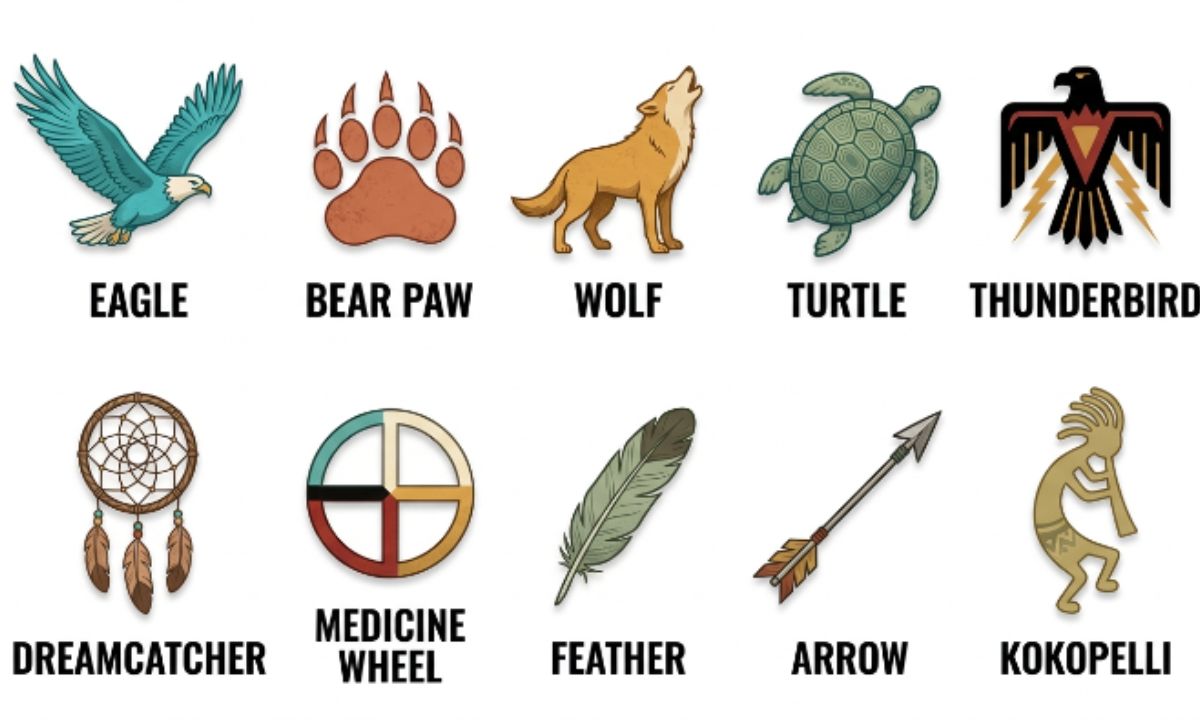
The eagle flies higher than any other bird. In many Native cultures, it is the messenger between humans and the Creator. Its feathers are considered sacred and are used in ceremonies and healing rituals. The eagle represents vision, strength, and spiritual power.
🐻 Bear
The bear is a symbol of courage, authority, and physical strength. Many tribes believed the bear had healing powers. Bear prints specifically represent leadership. Seeing a bear in a vision was considered a strong spiritual sign.
🌫️ Bear Paw
The bear paw is slightly different from the bear itself. It marks a trail or path. It stands for leadership and guidance. Some tribes wore it as a protective sign during travel or battle.
🐺 Wolf
The wolf stands for family, loyalty, and community. Wolves live and hunt in packs, which made them a symbol of teamwork and communication. Many tribes saw the wolf as a teacher and a protector of the tribe.
🐢 Turtle 🐢
The turtle lives for up to 150 years in the wild. Because of this, it represents long life, good health, and stability. The hard shell stands for protection and perseverance. The turtle is also linked to the earth in many creation stories.
🦌 Deer
The deer is a gentle symbol of love, grace, and sensitivity. Some tribes associate the deer with intuition and the ability to sense danger. It often appears in healing ceremonies and is connected to compassion and peace.
🦊 Fox
The fox represents cleverness and quick thinking. It is the trickster in some traditions but also the wise advisor. The fox teaches people to think before they act and to use intelligence over brute force.
🐍 Snake / Serpent
The snake is connected to transformation and rebirth because it sheds its skin. In many tribes, the snake is also linked to rain and water. It carries both positive and cautionary meanings — a symbol of healing but also of danger if disrespected.
🐸 Frog
The frog is closely tied to rain and water. It represents cleansing, renewal, and fertility. Many tribes believed frogs brought rain to dry lands. They were seen as a bridge between the human world and the spirit world.
🦋 Butterfly
The butterfly is a universal symbol of transformation. In Native American traditions, different butterfly colors carry different meanings. Yellow means hope and guidance. White brings good luck. Black is a warning of illness or bad news. The butterfly reminds people that change is a natural part of life.
🐛 Dragonfly
The dragonfly stands for swiftness and illusion. It is associated with water and healing in Pueblo traditions. The dragonfly teaches people not to be fooled by appearances and to see beyond the surface of things.
🦅 Thunderbird ⚡
The Thunderbird is one of the most powerful and widespread symbols in Native American culture. According to legend, the beating of its enormous wings creates thunder, and its eyes flash lightning. It represents power, strength, and transformation.
Different tribes call it by different names — the Lakota call it Wakíya, meaning “sacred winged one.” It appears on totem poles, shields, and ceremonial objects across many nations.
Nature and Element Native American Symbols
Nature was not separate from spiritual life in Native cultures — it was the heart of it. Every element in the natural world had meaning.
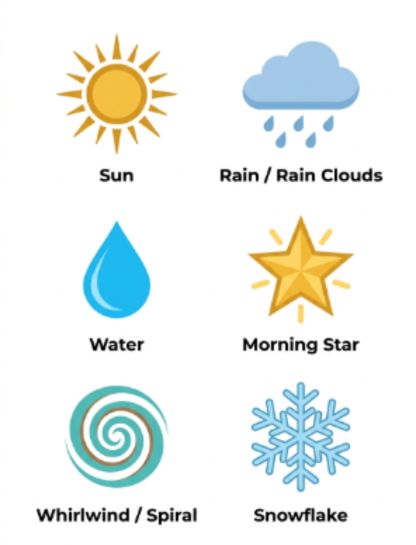
☀️ Sun
The sun is one of the most universal Native symbols. It represents life, warmth, and abundance. The Navajo associate sunshine with good cheer and harmony. The sun is often shown as a circle with rays pointing outward, symbolizing the life force that touches all living things.
🌧️ Rain / Rain Clouds
Rain was essential to survival, especially in desert regions. Rain symbols appear in pottery, blankets, and jewelry. They represent renewal, fertility, and the gift of life. Calling for rain through ceremony and prayer was a sacred act for many agricultural tribes.
💧 Water
Water is the symbol of life and constant change. Many tribes believe water connects the spiritual world with the physical one. The Navajo say water shows the ever-changing nature of existence. Without water, there is no balance.
⭐ Morning Star
The Morning Star appears just before sunrise. It is a symbol of guidance, hope, and new beginnings. Many tribes used it in ceremonies to welcome the new day and ask for blessings.
🌀 Whirlwind / Spiral
The spiral or whirlwind represents the cycle of life — birth, growth, death, and renewal. It also symbolizes the movement of seasons and time. In Pueblo art, spirals often appear near the sun to show the path of the seasons.
❄️ Snowflake
The snowflake is a symbol of purity and the quiet power of winter. It reminds people that stillness is just as important as action. Winter was a time for storytelling, rest, and preparation.
Spiritual and Sacred Native American Symbols
Some symbols were used only in sacred ceremonies. They were not decorative — they were prayers made visible.
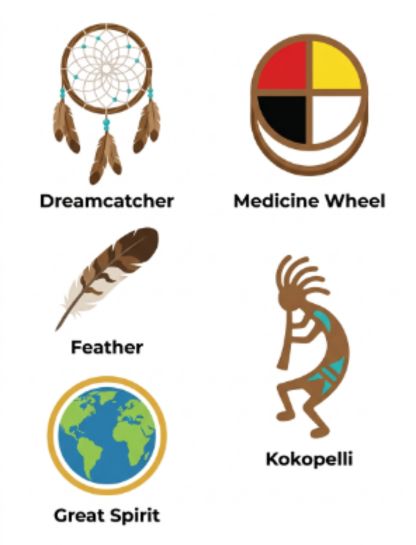
🕸️ Dreamcatcher
The dreamcatcher comes from the Ojibwe (Anishinaabe) people of the Great Lakes region. According to their tradition, the Spider Woman, called Asibikaashi, protected the people, especially children.
As the Ojibwe spread across a wide territory, she could not reach every child. So mothers and grandmothers began weaving web-like charms to catch bad dreams and let good ones pass through. The dreamcatcher is a symbol of protection, love, and spiritual connection.
⚙️ Medicine Wheel
The Medicine Wheel is a sacred symbol used by many Plains tribes. It represents the four directions — North, South, East, and West — and the balance of life. Each direction carries different spiritual lessons. The wheel shows that everything in life is connected and that harmony comes from balance. It is still used in healing ceremonies today.
🪶 Feather
Feathers — especially eagle feathers — are deeply sacred in Native culture. They are given as honors, worn in ceremonies, and treated with great care. A feather connects the person who holds it to the spirit world and to the Creator. Eagle feathers in particular cannot legally be owned without tribal membership in the United States.
🏺 Kokopelli 🎶
Kokopelli is one of the most recognized figures in Native American art. He is shown as a hunchbacked flute player, often dancing. Kokopelli is linked to fertility, music, agriculture, and joyful mischief. His image appears in ancient petroglyphs dating back over a thousand years, mostly in the Southwest. According to some traditions, his flute music called the rain and brought crops to life.
🌍 Great Spirit
The Great Spirit is not so much a single symbol as a concept that many tribes honor. It represents the supreme creative force behind all things. Symbols connected to the Great Spirit show up in prayer, ceremony, and sacred objects. It is the force that connects humans, animals, nature, and the cosmos.
Journey and Life Native American Symbols
These symbols marked the important moments of a person’s life — travel, home, protection, and growth.
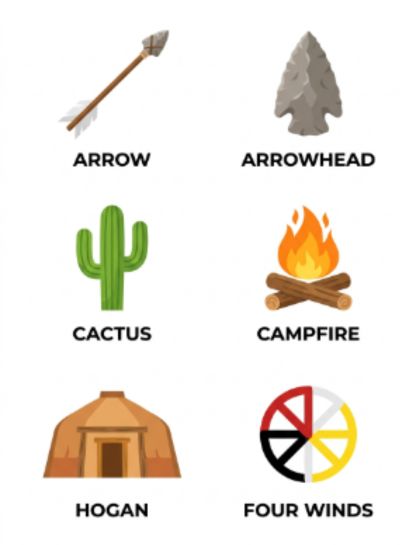
➡️ Arrow
The arrow was one of the most important tools in Native American daily life. As a symbol, it carries layered meaning. An arrow pointing left wards off evil. An arrow pointing right means protection. Arrow pointing downward means peace. Two crossed arrows mean friendship. A bundle of arrows means strength in unity. The broken arrow means war is over and peace has come.
🔺 Arrowhead
The arrowhead is the sharpened tip of the arrow. Many Native Americans wore arrowheads as talismans for protection. The symbol stands for alertness, vigilance, and the ability to stay sharp in difficult situations. It was believed to block evil spirits.
🌵 Cactus
The cactus grows in harsh desert conditions where few other plants survive. It represents warmth, endurance, and a mother’s unconditional love. The cactus does not need much to thrive — it is a symbol of resilience and the ability to find life in hard places.
🔥 Campfire
The campfire is a symbol of community and temporary shelter. It marks a place where people gathered to share stories, eat, and rest. It also represents the nomadic life of tribes that moved with the seasons, always carrying their culture with them.
🏠 Hogan
The hogan is a traditional Navajo dwelling. As a symbol, it means home, permanence, and community. The word “hogan” comes from the Navajo word hooghan, meaning “the place home.” Even when the Navajo traveled, the idea of the hogan was their spiritual anchor.
➿ Broken Cross / Four Winds
This symbol is sometimes called the four winds or the symbol for the four seasons. It represents the cycle of time and everything that revolves and returns. It is related to the Medicine Wheel idea — that life moves in cycles, not straight lines.
Ancient Cultures That Used Similar Symbols
Native American cultures were not alone in using symbolic imagery to record beliefs and history. Many great civilizations did the same:
Ancient Egypt — Used hieroglyphs and sacred symbols like the Ankh (life), Eye of Horus (protection), and the Scarab (rebirth) to connect the living with the divine.
Celtic traditions — Decorated objects and sacred sites with knotwork, triskeles, and tree symbols that represented the connection between this world and the spiritual world.
Greek mythology — Used animals and natural forces as symbols for gods and virtues — the owl for wisdom, the eagle for Zeus’s power, the laurel for victory.
Buddhism — Used symbols like the lotus flower (purity), the Dharma wheel (the path of life), and the endless knot (interconnectedness) in art and architecture.
Hinduism — Sacred symbols like the Om, the lotus, and the swastika (originally a symbol of good fortune) appear in spiritual texts, temples, and rituals dating back thousands of years.
Indigenous cultures worldwide — From the Aboriginal Australians to the Maori of New Zealand, many indigenous peoples independently developed symbolic art tied to land, ancestors, and spirit.
Why Symbols Still Matter Today
Symbols do not lose their power just because time passes. People still turn to these images when words are not enough. You see Native American symbols in tattoos, jewelry, home decor, and art around the world.
For many people, they represent a desire to connect with nature, history, and something bigger than daily life. But symbols also matter for a deeper reason — they keep cultural memory alive.
For many Native communities, using these symbols in ceremony, art, and education is an act of resilience. After centuries of suppression, reclaiming these images is an act of identity. When outsiders engage with these symbols thoughtfully and respectfully, they take part in honoring that history.
Frequently Asked Questions
Are Native American symbols the same across all tribes?
No. Meanings vary greatly from nation to nation. Always check the tribal origin before assuming a meaning applies everywhere.
What does the arrow symbol mean in Native American culture?
It depends on direction — left for warding off evil, right for protection, down for peace, and a broken arrow means war is over.
What is the difference between pictographs and petroglyphs?
Pictographs are symbols painted on rock surfaces. Petroglyphs are carved or etched directly into the rock.
Is it respectful to use Native American symbols in tattoos or fashion?
Many sacred symbols are considered inappropriate to use without understanding their origin. Research the specific symbol and its tribal context before using it.
What does the eagle feather mean in Native American tradition?
Eagle feathers are sacred honors representing spiritual connection, bravery, and a direct link to the Creator. They are not decorative items.
Conclusion
Native American symbols are not just interesting images — they are living pieces of history and faith. Each one tells a story about how a people understood the world, protected themselves, and connected with something greater.
Treating these symbols with care and curiosity is the best way to honor the cultures they come from. Learn the tribal context, respect the sacred ones, and approach all of it with humility.