Humans have used symbols to make sense of war for thousands of years. Before written language, before maps or newspapers, people drew pictures. They carved shapes into stone, painted signs on shields, and wore emblems into battle.
War symbols are more than art. They carry history, emotion, grief, pride, and belief all at once. Understanding them helps us see how different cultures thought about conflict, death, power, and survival.
War symbols carry deep meaning that goes far beyond the battlefield. They represent strength, courage, sacrifice, and mortality. Some symbols honor the fallen. Others warn enemies.
Many connect soldiers to their gods or ancestors, giving them courage in moments of fear. On a spiritual level, war symbols reflect the human struggle between life and death, order and chaos.
Almost every culture in history has used them in some form — from Egyptian pharaohs to Native American warriors to modern military forces. They speak a universal language that words sometimes cannot.
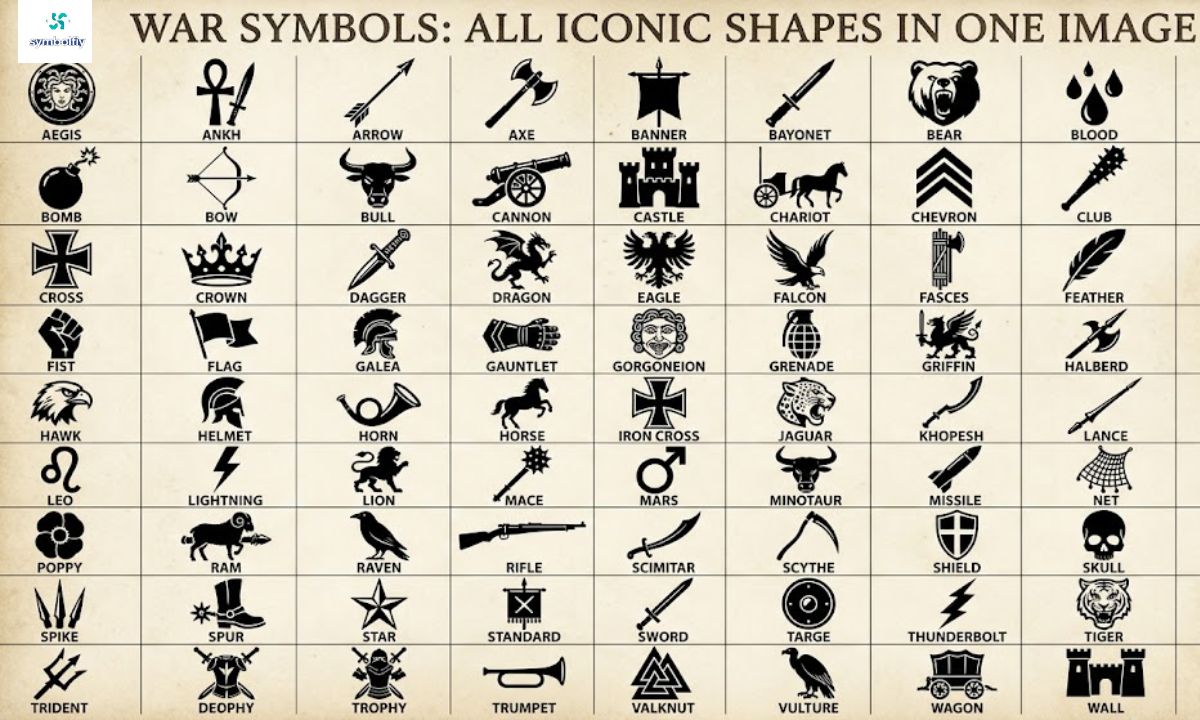
25+ War Symbols and Their Meanings
Ancient and Classical War Symbols ⚔️
These are some of the oldest symbols tied to battle, warriors, and military power across early civilizations.
⚔️ Sword
The sword is one of the most universal war symbols in history. It stands for power, justice, and the warrior’s duty. In Christianity, it represents divine judgment. In heraldry, a raised sword signals war readiness, while a lowered sword can mean peace.
🛡️ Shield
More than defense, the shield represents protection, identity, and loyalty. Greek and Roman warriors painted symbols on their shields to identify their unit and invoke divine favor. Today, the shield appears in coats of arms and police badges worldwide.
🦅 Eagle
The eagle is a symbol of military power used by ancient Rome, Nazi Germany, the United States, and many others. It represents dominance, vision, and courage. Rome’s Aquila (golden eagle standard) was the heart of every legion — losing it in battle was the greatest shame.
🦁 Lion
The lion stands for nobility, bravery, and ferocity in war. It was a key symbol in European heraldry, appearing on the shields of kings and kingdoms. Richard I of England was nicknamed “the Lionheart” for a reason. The lion still appears in military crests and national emblems worldwide.
🐉 Dragon
In Chinese and Byzantine cultures, the dragon represented imperial military authority. It was both feared and revered. The Red Dragon of Wales is one of the oldest national symbols in Europe and remains on the Welsh flag today. In war, the dragon meant unstoppable power.
⚡ Lightning Bolt
The lightning bolt was the weapon of Zeus and Jupiter, the sky gods of Greece and Rome. Warriors who carried this symbol believed they fought with divine backing. In modern times, the lightning bolt appears in military insignia and was used by the Nazi SS — which turned it into a symbol of terror.
🏹 Spear and Crossed Spears
Crossed spears appear in ancient African, Roman, and Greek military symbolism. They represent readiness for war and combined military strength. In heraldry, two crossed spears on a shield signaled a household or nation prepared to defend itself at any time.
🪖 Helmet (Greek Corinthian)
The Greek helmet was more than armor. It was a mark of honor and warrior status. The Corinthian helmet, with its full face guard, became an iconic symbol of Greek military pride. Today it still appears in logos and emblems tied to strength and discipline.
🦅 Roman Aquila
The Aquila was a golden eagle mounted on a pole, carried at the front of every Roman legion. Losing the Aquila in battle brought lasting disgrace. Recovering one was a celebrated triumph. It represented Rome’s might, sovereignty, and the divine favor of the gods.
🐍 Serpent/Snake
In many war cultures, the snake represented danger, cunning, and hidden power. Medusa’s snake hair was used on Greek shields to frighten enemies. The rattlesnake on early American military flags (“Don’t Tread on Me”) carried the same meaning — a warning, not just a symbol.
Medieval and Heraldic War Symbols 🏰
The Middle Ages gave us some of the richest war symbolism, much of it tied to religion, chivalry, and noble identity.
✝️ Cross (Crusader / Jerusalem Cross)
The Jerusalem Cross — a large cross surrounded by four smaller ones — was the symbol of the Crusades. It stood for Christian holy war and the protection of the Holy Land. Today it remains controversial because of its adoption by some far-right groups, though it has centuries of religious meaning behind it.
💀 Skull and Crossbones (Memento Mori)
The skull and crossbones began as a “memento mori” — a reminder that death comes for everyone. Medieval knights had it carved on tombs. By the 1700s, it was on pirate flags. Prussian cavalry units used it as a badge of fearlessness. The Nazi SS later adopted it, which made it a hate symbol in that context.
🗡️ Dagger
The dagger symbolizes assassination, swift justice, and covert military action. In heraldry, a dagger pointed downward means death. Pointed upward, it means victory and readiness to defend. Many special forces units around the world still use the dagger in their insignia.
🔥 Burning Flame
Fire and war have always gone together. A burning flame symbolizes destruction, conquest, and the consumption of everything an enemy holds dear. It also carries a spiritual meaning in many traditions — fire purifies and transforms. Warriors who carried this symbol saw themselves as agents of change.
🦁 Heraldic Lion Rampant
Different from a simple lion, the lion “rampant” — standing on its hind legs — is a heraldic war pose. It means active aggression and readiness to fight. And It appears on the flags and shields of Scotland, England, Belgium, and dozens of other nations. It has never lost its association with military power.
Modern War Symbols (1800s–Present) 🎖️
These symbols came out of the industrial age of war — mass armies, national identity, and global conflict.
🌺 Red Poppy
The red poppy is one of the most emotionally powerful war remembrance symbols in the world. It became iconic after Lieutenant Colonel John McCrae wrote “In Flanders Fields” in 1915, describing poppies blooming over the graves of fallen WWI soldiers.
The British Legion adopted it in 1921. Today it is worn every November 11th across Commonwealth countries to honor the war dead.
✡️ Iron Cross
The Iron Cross is a German military decoration for bravery, first issued by Prussia in 1813. It was awarded in WWI and WWII. Today it is still used by the German Bundeswehr (armed forces) in a modified form. While it carries Nazi associations in some contexts, it predates that era by over a century.
☠️ Totenkopf (Death’s Head)
The Totenkopf — a skull symbol — was first used by Prussian Hussar cavalry in 1741 to show fearlessness in the face of death. It was later adopted by the Nazi SS, where it became associated with concentration camp guards and war crimes. Because of this history, it is now widely regarded as a hate symbol.
☮️ Peace Symbol (CND)
The peace symbol — a circle with a downward-pointing broken cross — was created in 1958 by British artist Gerald Holtom for the Campaign for Nuclear Disarmament. It combines the semaphore signals for “N” and “D.” It became the global symbol of the anti-war movement during the 1960s and beyond.
🔨 Hammer and Sickle
The hammer and sickle became the military and political emblem of the Soviet Union after 1922. The hammer represented industrial workers; the sickle represented farmers. Together they stood for communist military and political power. It appeared on Soviet military uniforms, flags, and weapons throughout the Cold War.
➡️➡️➡️ Three Arrows
The Three Arrows symbol was created in 1931 by the German Iron Front — a coalition of Social Democrats fighting fascism. The three arrows represented opposition to Nazism, monarchy, and communism. Today the symbol is used by anti-fascist groups worldwide as a badge of resistance.
🟦 NATO Friendly Unit Symbol (Blue Rectangle)
NATO tactical symbols are used on military maps to track unit positions. A blue rectangle means a friendly unit. These symbols are highly specific and functional — not decorative. They were developed in the 1950s so allied forces from different countries could read the same battlefield map.
🔴 NATO Enemy Unit Symbol (Red Diamond)
A red diamond on a NATO map marks an enemy unit. Combined with other codes, it can show the size, type, and location of hostile forces. These symbols are standardized across all NATO member nations and remain in active military use today.
✌️ V for Victory
Winston Churchill made this sign famous during WWII as a symbol of Allied resistance and determination. The V-sign was also used by resistance fighters in occupied Europe. It appeared on walls, leaflets, and broadcasts as a quiet act of defiance. It remains one of the most recognized symbols of wartime hope.
⭐ Gold Star
In the United States, a Gold Star is displayed by families who have lost a member in military service. A Blue Star means someone is currently serving. The Gold Star Flag dates to WWI and is one of the most personal and grief-laden war symbols in American culture.
💜 Purple Heart
The Purple Heart is a U.S. military decoration awarded to those wounded or killed in action. It is one of the oldest military awards in the country, established by George Washington in 1782. Today it is a deeply respected symbol of sacrifice and physical courage.
🌿 Olive Branch
The olive branch is unique — it is both a war symbol and a peace symbol. In ancient Greece, it was offered to warriors who had won without excessive bloodshed. The Romans put it on coins as “Pax” (peace).
The United Nations adopted it as the centerpiece of its emblem. On the U.S. Great Seal, an eagle holds olive branches in one talon and arrows in the other — the choice between peace and war.
Ancient Cultures That Used These Symbols
Many of the world’s oldest civilizations developed rich war symbolism that still influences modern military imagery.
Egyptian culture — Pharaohs marched under the vulture goddess Nekhbet and the cobra goddess Wadjet. The ankh combined with a sword represented life and death in battle.
Greek mythology — Greek warriors used the owl (Athena’s symbol for wisdom), the spear, the olive branch, and the helmet to connect military action with divine favor.
Roman civilization — Rome’s Aquila eagle, the sword (Gladius), and laurel wreaths all carried deep military meaning tied to imperial authority and divine right.
Celtic traditions — Celtic warriors used animal symbols — particularly wolves, ravens, and bulls — to invoke strength and connection to nature spirits before battle.
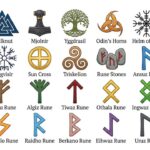
Norse/Viking culture — Vikings used the Valknut (three interlocked triangles) as a symbol connected to Odin and fallen warriors. Ravens and wolves represented the god’s presence on the battlefield.
Native American traditions — Many tribes used the Thunderbird — a powerful spirit depicted as a giant eagle — as a symbol of war power and divine protection in battle.
West African traditions — The Akoben, a war horn symbol from the Akan people of Ghana, represents readiness, loyalty, and the call to defend the community.
Chinese imperial culture — The dragon was the primary symbol of imperial military authority in China for thousands of years. Only the emperor could display the five-clawed dragon.
Why Symbols Still Matter Today
War symbols have not faded. They show up in tattoos, jewelry, military insignia, national flags, street art, and protest movements.
When a veteran gets a Purple Heart tattooed on their arm, it is not decoration — it is identity, grief, and pride all in one image. When protesters carry an olive branch, they are using a symbol that has meant the same thing for 3,000 years.
People also use war symbols as tools for personal meaning. The sword tattoo can mean inner strength. The eagle can mean freedom.
The skull can mean that the wearer has faced death and kept going. These ancient signs keep finding new life because the emotions behind them — fear, courage, loss, loyalty — never change.
Frequently Asked Questions
What is the most well-known war symbol?
The sword is arguably the most universal war symbol across all cultures and time periods.
What does the red poppy represent?
It honors soldiers who died in WWI and is worn on Remembrance Day, November 11th.
Is the skull a war symbol?
Yes, the skull has been a symbol of death in war since the Late Middle Ages.
What does the olive branch mean in a war context?
It represents peace, reconciliation, and the end of conflict.
Are NATO military symbols the same as historical war symbols?
No — NATO symbols are tactical map markers for battlefield use, not symbolic emblems with cultural meaning.
Conclusion
War symbols are some of the oldest and most powerful images in human history. They carry grief and pride, warning and honor, faith and fear all at once.
Whether it is a poppy on a lapel or an eagle on a flag, these symbols connect us to the people who came before us — people who fought, suffered, remembered, and hoped. Understanding them helps us understand ourselves.