Humans have used symbols for thousands of years. Long before written language, people drew pictures to express what words could not capture. Spiritual symbols carry deep meaning — they connect us to something bigger than ourselves.
They show up in temples, tattoos, jewelry, and dreams. Whether you follow a religion or walk your own spiritual path, these symbols speak a universal language that crosses borders, cultures, and centuries.
Spiritual symbols represent truths that are hard to put into words. They point to things like love, protection, rebirth, balance, and the divine. Every culture on earth has created symbols to make sense of life, death, and everything in between.
These symbols also carry emotional weight. Wearing a cross, meditating on a mandala, or carrying a Hamsa hand is not just decorative. It is a daily reminder of what you believe and who you are. That is the power of spiritual symbols — they hold meaning without needing a single word.
25+ Spiritual Symbols and Their Meanings
Religious Spiritual Symbols
These symbols come from the world’s major faith traditions. Each one represents the core beliefs of millions of people across the globe.
✝️ The Christian Cross
Origin: Used by early Christians in the Roman Empire
Spiritual meaning: Represents Christ’s death, resurrection, and the promise of eternal life
Historical background: Became the central symbol of Christianity after Emperor Constantine’s conversion in 312 CE
Religious connection: Used in churches, prayer, baptism, and blessing rituals worldwide
Modern interpretation: Worn as jewelry, displayed in homes, tattooed as a mark of personal faith
Emotional symbolism: Represents hope, sacrifice, and the belief that death is not the end
The cross is the most recognized religious symbol on earth. It tells the story of Christianity in a single shape — suffering that leads to resurrection, and love that overcomes death.
☪️ The Crescent Moon and Star
Origin: Used in the Ottoman Empire and adopted widely as an Islamic emblem
Spiritual meaning: Represents the light of faith guiding believers through darkness
Historical background: The crescent moon marks the Islamic lunar calendar and the start of Ramadan
Religious connection: Appears on mosques, Islamic flags, and in Muslim art and architecture
Modern interpretation: A symbol of Muslim identity and community worldwide
Emotional symbolism: Represents guidance, time, and the faithful rhythm of spiritual life
The crescent and star together suggest a sky lit by faith. For Muslims around the world, this symbol signals belonging and shared belief.
✡️ The Star of David
Origin: Became a major symbol of Judaism in the 17th century in Prague
Spiritual meaning: Represents the connection between God and humanity — the divine reaching down, humans reaching up
Historical background: Two overlapping triangles form a six-pointed star; each triangle carries spiritual meaning
Religious connection: Central to Jewish identity, appears on the Israeli flag and synagogues worldwide
Modern interpretation: Worn as a sign of Jewish pride, faith, and memory of the Holocaust
Emotional symbolism: Carries both joy and grief — celebration of identity and memory of persecution
The Star of David is a symbol that holds history. It represents survival as much as faith.
🕉️ Om (Aum)
Origin: Found in ancient Hindu Vedic texts, over 3,000 years old
Spiritual meaning: The sacred sound of the universe — the vibration from which all things come
Historical background: Used in Hindu prayer, meditation, and yoga for millennia
Religious connection: Sacred in Hinduism, Buddhism, and Jainism; chanted at the start of prayers and rituals
Modern interpretation: Widely used in yoga studios, meditation practices, and wellness culture globally
Emotional symbolism: Creates a sense of calm, grounding, and connection to something larger than the self
When you chant Om, you are not just making a sound. You are joining a vibration that practitioners believe runs through all of existence.
☸️ The Dharma Wheel (Dharmachakra)
Origin: One of the oldest Buddhist symbols, dating back to the 3rd century BCE
Spiritual meaning: Represents the Buddha’s Noble Eightfold Path — the way to end suffering and reach enlightenment
Historical background: The eight spokes correspond to the eight steps of the Buddhist path to liberation
Religious connection: Used in Buddhist temples, art, and flags across Asia
Modern interpretation: A symbol of spiritual progress, ethical living, and the ongoing cycle of learning
Emotional symbolism: Represents the idea that life keeps moving, and so does our growth
The wheel never stops. That is the point. The Dharma Wheel reminds practitioners that the spiritual journey is continuous, not a destination.
🪯 The Khanda (Sikhism)
Origin: Central symbol of Sikhism, developed in the Mughal era
Spiritual meaning: Represents the three pillars of Sikh faith — one God, community, and spiritual sword of knowledge
Historical background: Consists of a double-edged sword, a circular Chakkar, and two single-edged swords
Religious connection: Appears on the Sikh flag (Nishan Sahib) and in every Gurdwara
Modern interpretation: A mark of Sikh identity worn on clothing, jewelry, and as tattoos
Emotional symbolism: Stands for courage, justice, and the duty to protect the weak
The Khanda is one of the most powerful symbols in world religion. Every element has a meaning — and together they describe a complete spiritual life.
🔯 The Menorah
Origin: Ancient Hebrew symbol described in the Book of Exodus
Spiritual meaning: Represents divine light, wisdom, and the presence of God
Historical background: A seven-branched candelabrum used in the Temple of Jerusalem
Religious connection: Central to Jewish worship and the Hanukkah celebration
Modern interpretation: Lit in Jewish homes during Hanukkah as a public declaration of faith
Emotional symbolism: Represents the miracle of light surviving against all odds
The Menorah is light that refuses to go out. That is why it matters so deeply — it is a symbol of spiritual persistence.
Universal Spiritual Symbols
These symbols belong to no single religion. They appear across dozens of traditions, cultures, and centuries because they point to truths everyone recognizes.
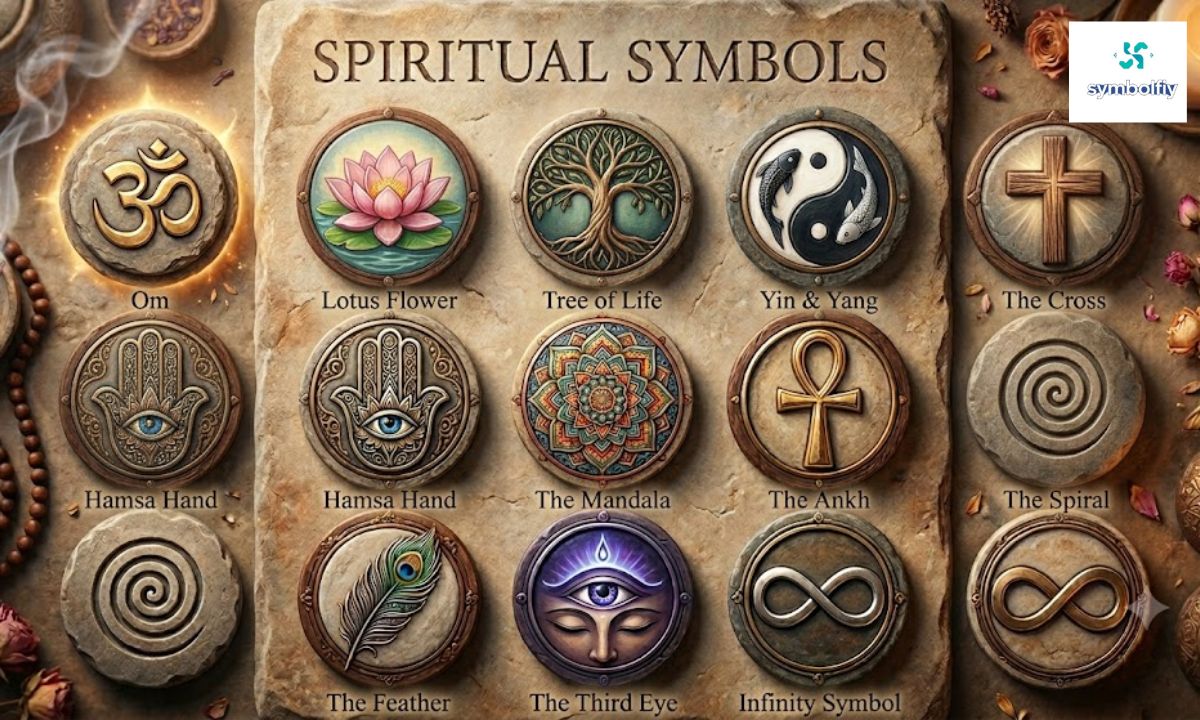
🪷 The Lotus Flower
Origin: Rooted in ancient Egyptian, Hindu, and Buddhist traditions
Spiritual meaning: Purity and enlightenment — it grows from muddy water but blooms perfectly clean
Historical background: Used in Egyptian burial art, Hindu deity iconography, and Buddhist temple design
Religious connection: Associated with the goddess Lakshmi in Hinduism and with the Buddha in Buddhism
Modern interpretation: One of the most popular spiritual tattoo symbols in the world
Emotional symbolism: Represents the human capacity to rise above difficult circumstances and find beauty
The lotus does not pretend the mud does not exist. It grows through it. That is exactly why people connect with this symbol on a personal level.
☯️ The Yin-Yang
Origin: Ancient Taoist symbol from China, thousands of years old
Spiritual meaning: Opposite forces — dark and light, feminine and masculine — are not enemies; they complete each other
Historical background: Central to Taoist philosophy and Traditional Chinese Medicine
Religious connection: Core symbol of Taoism; also used in Chinese Buddhism and martial arts philosophy
Modern interpretation: Widely recognized as a symbol of balance in wellness, art, and popular culture
Emotional symbolism: A reminder that struggle and peace, sadness and joy, all exist together and need each other
The small dot inside each half is the key. Even in darkness, there is light. Even in light, there is darkness.
🌳 The Tree of Life
Origin: Found in almost every ancient culture — Egyptian, Celtic, Norse, Mesopotamian, Mesoamerican
Spiritual meaning: Represents the connection between all living things and between earth, sky, and the underworld
Historical background: In Norse mythology it is called Yggdrasil; in Kabbalah it maps the structure of the divine
Religious connection: Appears in Christianity, Judaism, Islam, Celtic paganism, and indigenous traditions worldwide
Modern interpretation: One of the most popular symbols in jewelry, tattoo art, and home decor globally
Emotional symbolism: Represents family roots, personal growth, and the feeling that all life is connected
No symbol is more universal than the Tree of Life. Every culture seems to arrive at it independently, which suggests it speaks to something deeply human.
𓋹 The Ankh
Origin: Ancient Egypt, used for over 3,000 years
Spiritual meaning: Eternal life — the cross-like shape with a loop at the top represents the key to immortality
Historical background: Carried by Egyptian gods and pharaohs as a symbol of divine power and life-giving energy
Religious connection: Used in Egyptian religious art, burial objects, and temple carvings
Modern interpretation: Popular in spiritual communities, gothic subculture, and as a tattoo representing eternal perspective
Emotional symbolism: A reminder that life does not truly end — it transforms
The Ankh looks like a cross with a handle. Some say it looks like a key — and that is exactly what it is meant to be.
🔮 The Mandala
Origin: Sanskrit word meaning “circle”; used in Hindu and Buddhist practice for over 2,000 years
Spiritual meaning: Represents the universe — a geometric map of existence, balance, and wholeness
Historical background: Used in Tibetan Buddhist sand art, Hindu temple floor designs, and Native American sand paintings
Religious connection: Used as a meditation tool in Buddhism and Hinduism; also present in Carl Jung’s psychological work
Modern interpretation: Used in art therapy, meditation apps, coloring books, and mindfulness practices
Emotional symbolism: Creates a sense of order and calm in a chaotic world
Drawing or coloring a mandala is itself a meditative act. The repetition pulls the mind into stillness.
🐦🔥 The Phoenix
Origin: Ancient Greek and Egyptian mythology; also appears in Chinese, Persian, and Native American traditions
Spiritual meaning: Rebirth — the bird burns completely and rises again from its own ashes
Historical background: Associated with the sun cycle, seasonal renewal, and the soul’s journey after death
Religious connection: Used as a symbol of resurrection in early Christianity; also tied to the Egyptian Bennu bird
Modern interpretation: One of the most tattooed symbols worldwide, especially after personal hardship or transformation
Emotional symbolism: Represents surviving the worst and becoming stronger because of it
The phoenix does not just survive. It transforms completely. That is why people who have been through hard times choose this symbol.
🐍 The Ouroboros
Origin: Ancient Egypt, dating back to around 1600 BCE; also found in Norse and Greek traditions
Spiritual meaning: A snake eating its own tail — eternal cycles, infinity, and the idea that endings create new beginnings
Historical background: Found in the tomb of Tutankhamun and in ancient Greek alchemical texts
Religious connection: Used in Gnosticism, Hermeticism, and Norse mythology (as the serpent Jörmungandr)
Modern interpretation: Used in alchemy-inspired art, philosophy, and as a symbol of cyclical time
Emotional symbolism: Represents the comfort that nothing truly ends — it all comes around again
The Ouroboros is one of the oldest symbols ever recorded. It asks a simple question: where does a circle end?
Protection Spiritual Symbols
These symbols have one shared purpose — keeping harm away and bringing safety to those who carry them.
🖐️ The Hamsa Hand
Origin: Middle Eastern and North African traditions; used in both Jewish and Islamic cultures
Spiritual meaning: Protection from the evil eye, negative energy, and harmful intentions
Historical background: Used in amulets across the Mediterranean and Middle East for thousands of years
Religious connection: Called the Hand of Fatima in Islam and the Hand of Miriam in Judaism
Modern interpretation: One of the most popular protective symbols in global jewelry and home decor
Emotional symbolism: A feeling of being watched over — shielded from what you cannot see coming
The Hamsa is an open hand. It says: stop. What means to harm you cannot pass.
👁️ The Evil Eye (Nazar)
Origin: Mediterranean, Turkish, and Middle Eastern cultures; over 3,000 years old
Spiritual meaning: Absorbs negative energy and jealousy directed at the person who carries it
Historical background: Blue glass evil eye amulets have been made in Turkey for over 3,000 years
Religious connection: Referenced in ancient Greek and Roman texts, Islamic tradition, and Jewish folklore
Modern interpretation: Worn as bracelets, hung in homes and cars, extremely popular in global fashion
Emotional symbolism: Gives a sense of protection against envy and the harm that can follow unwanted attention
The evil eye does not create bad luck — it absorbs it so the wearer does not have to.
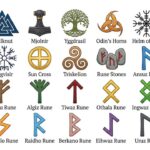
🔨 Thor’s Hammer (Mjölnir)
Origin: Norse mythology; weapon of Thor, god of thunder and protection
Spiritual meaning: Strength, protection, and the power to fight back against chaos and evil
Historical background: Norse people wore Mjölnir amulets during the Viking Age for protection and blessing
Religious connection: Sacred in Norse paganism and the modern Asatru faith revival
Modern interpretation: Worn by people of Norse heritage and those drawn to strength-based spiritual symbolism
Emotional symbolism: Represents the courage to face what frightens you and the power to protect those you love
The hammer does not just destroy. In Norse tradition, Thor used it to hallow — to bless and protect.
⚡ The Vajra
Origin: Ancient India; used in Hinduism and Tibetan Buddhism
Spiritual meaning: Indestructibility and spiritual power — a thunderbolt that cuts through illusion
Historical background: The weapon of Indra, the Hindu god of thunder; later adopted in Buddhist ritual practice
Religious connection: Used by Tibetan Buddhist monks in ceremonies alongside the bell (ghanta)
Modern interpretation: A symbol of spiritual authority, clarity of mind, and the ability to cut through confusion
Emotional symbolism: Represents the kind of mental and spiritual strength that nothing can shake
The Vajra is called the “diamond thunderbolt.” Both diamonds and lightning share one quality — they cut through everything.
🌀 The Pentagram
Origin: Ancient Greece, Babylonia, and early Christianity; later adopted in Wicca and ceremonial magic
Spiritual meaning: Protection, balance of the five elements — earth, water, fire, air, and spirit
Historical background: Used as a protective symbol by early Christians and Pythagorean mathematicians
Religious connection: Sacred in Wicca, Paganism, and Western occultism; also found in early Christian art
Modern interpretation: Often misunderstood — in most traditions it is a symbol of harmony and protection, not evil
Emotional symbolism: Represents the feeling of being in alignment — all parts of yourself working together
Context matters with the pentagram. Point up means balance and protection. The symbol itself is ancient and positive in its original use.
Awakening and Transformation Symbols
These symbols describe the inner journey — the shift in awareness that comes when a person begins to grow spiritually.
👁️🗨️ The Third Eye
Origin: Hindu and Buddhist traditions; associated with the sixth chakra (Ajna)
Spiritual meaning: Inner vision, higher awareness, and the ability to see beyond the physical world
Historical background: Depicted on the forehead of Shiva and the Buddha in ancient religious art
Religious connection: Central to Hindu chakra philosophy, Buddhist meditation, and New Age spiritual practice
Modern interpretation: Used in meditation, psychic arts, and as a tattoo symbol for awakening
Emotional symbolism: Represents the moment a person begins to see things differently — to question, feel, and perceive more deeply
The third eye is not a physical eye. It is the part of you that notices what others miss.
🌀 The Spiral
Origin: One of the oldest symbols in human history — found in Neolithic cave art, Celtic stones, and indigenous art worldwide
Spiritual meaning: Transformation, growth, and the journey inward toward truth
Historical background: Carved into the Newgrange megalithic tomb in Ireland around 3200 BCE
Religious connection: Used in Celtic spirituality, Native American traditions, and Maori culture as a symbol of life’s journey
Modern interpretation: Popular in spiritual tattoos and meditation imagery as a symbol of personal evolution
Emotional symbolism: The spiral never goes backward. It always moves forward, even when it circles back.
Life feels like a spiral sometimes. You revisit the same challenges — but from a higher, wiser place each time.
🎡 The Chakras
Origin: Ancient India; described in Hindu Vedic texts as early as 1500 BCE
Spiritual meaning: Seven energy centers in the body, each governing a different aspect of physical and spiritual health
Historical background: Detailed in the Yoga Upanishads and later in Tibetan Buddhist teachings
Religious connection: Central to Hindu and Buddhist spiritual practice; also adopted in modern yoga and wellness culture
Modern interpretation: Used in energy healing, Reiki, yoga, meditation, and holistic health practices worldwide
Emotional symbolism: Each chakra represents a layer of human experience — from survival and safety to love and divine connection
The chakra system is a map of the inner life. When one is blocked, everything else feels off.
🦅 The Eagle
Origin: Found as a spiritual symbol in Native American, Aztec, Egyptian, and Norse traditions
Spiritual meaning: Spiritual power, freedom, and the ability to see the full picture from above
Historical background: The eagle flies highest of all birds — so it was seen as the messenger between humans and the divine
Religious connection: Sacred messenger in many Indigenous traditions; associated with Zeus in Greek mythology and Jupiter in Roman
Modern interpretation: Used in spiritual imagery, national symbolism, and as a tattoo representing vision and freedom
Emotional symbolism: Reminds you to rise above day-to-day noise and see your life from a higher perspective
The eagle does not fly low. It climbs until it can see everything. That is its spiritual teaching.
☀️ The Solar Cross
Origin: One of the oldest known symbols — found in cave art across Europe and Asia
Spiritual meaning: Sun energy, the cycles of the year, illumination, and divine warmth
Historical background: Used in ancient Bronze Age Europe, Celtic traditions, and Native American sun worship
Religious connection: Found in pre-Christian Celtic spirituality, Hinduism, and various indigenous solar religions
Modern interpretation: Used in pagan and neo-pagan practice as a symbol of seasonal cycles and solar energy
Emotional symbolism: A reminder that light always returns, even after the darkest season
The solar cross divides the circle into four — like the four seasons, four directions, four elements. Balance built into geometry.
Ancient and Cultural Spiritual Symbols
☘️ The Celtic Triskelion
Origin: Found carved in Neolithic Ireland; central to Celtic spiritual art
Spiritual meaning: Triple motion — forward movement, spiritual progress, and the power of three
Historical background: Carved into the entrance stone of Newgrange, Ireland, around 3200 BCE
Religious connection: Represents the triple nature of the Celtic goddess — maiden, mother, crone — and later the Holy Trinity
Modern interpretation: Popular in Celtic heritage tattoos and jewelry; widely used in Irish and Breton cultural identity
Emotional symbolism: Life keeps moving — past, present, future — and so do you
Three is a sacred number across almost every culture. The Triskelion makes three into motion.
🏺 The Scarab Beetle
Origin: Ancient Egypt, over 4,000 years old
Spiritual meaning: Resurrection, transformation, and the self-creating power of the divine
Historical background: The scarab rolls dung into a ball — Egyptian priests saw this as a symbol of the sun rolling across the sky
Religious connection: Sacred to Khepri, the Egyptian god of the rising sun and rebirth
Modern interpretation: Used in Egyptian-inspired jewelry and art; a symbol of personal transformation and new beginnings
Emotional symbolism: Even the humblest creature can carry divine meaning — you do not need to be grand to be sacred
The Egyptians saw the sacred in a beetle rolling dirt. That perspective alone is a spiritual lesson.
🪶 The Feather of Ma’at
Origin: Ancient Egypt; central to the Egyptian concept of the afterlife
Spiritual meaning: Truth, justice, and the moral weight of a life well-lived
Historical background: In Egyptian belief, the soul was weighed against Ma’at’s feather after death — a heavy heart meant an unlived truth
Religious connection: Ma’at was the goddess of truth, balance, and cosmic order
Modern interpretation: Used in spiritual art and tattoos as a symbol of living honestly and with integrity
Emotional symbolism: Asks the question: is your heart light? Are you living truthfully?
The feather is a scale. Your whole life is being weighed against it. That is not a threat — it is an invitation to live well.
🐄 The Om Mani Padme Hum Symbol
Origin: Tibetan Buddhism; the most recited mantra in the Buddhist world
Spiritual meaning: Compassion, wisdom, and the jewel of enlightenment within the lotus of the human heart
Historical background: Engraved on rocks, prayer wheels, and mani stones across Tibet and Nepal
Religious connection: Associated with Avalokiteshvara, the bodhisattva of compassion in Mahayana Buddhism
Modern interpretation: Printed on prayer flags, jewelry, and meditation items worldwide
Emotional symbolism: A reminder that compassion — for yourself and others — is the heart of spiritual practice
You do not have to speak Tibetan to feel this mantra. The sound carries something beyond language.
🏯 The Torii Gate
Origin: Shinto Japan; marks the boundary between the ordinary world and sacred space
Spiritual meaning: The threshold — the moment you step from everyday life into something holy
Historical background: Found at the entrance of every Shinto shrine in Japan; some line up in famous corridors like Fushimi Inari
Religious connection: Sacred to Shinto practice as a marker of the divine presence of kami (spirits)
Modern interpretation: A powerful symbol of transition and spiritual entry; popular in Japanese-inspired art and tattoos
Emotional symbolism: Represents the act of crossing over — leaving the ordinary behind and entering a sacred space of attention
Every time you walk through a Torii, you are choosing to pay attention. That is a spiritual act.
Ancient Cultures That Used Spiritual Symbols
Ancient Egypt — Used symbols like the Ankh, Eye of Ra, Scarab, and Feather of Ma’at to guide the soul through life and the afterlife
Celtic traditions — Carved spirals, triskelions, and solar crosses into sacred stones to honor nature, the cycles of time, and the spirit world
Greek and Roman mythology — Used symbols like the caduceus, labyrinth, and phoenix to represent healing, transformation, and divine power
Hinduism — Developed Om, chakras, the lotus, and the Trishula as tools for connecting with cosmic truth and the divine
Buddhism — Used the Dharma Wheel, lotus, mandala, and Vajra to guide practitioners toward enlightenment and compassion
Norse/Viking traditions — Carved Mjölnir, Vegvisir (compass), and runes into stone and wood for protection, guidance, and spiritual power
West African traditions — Created Adinkra symbols like the Akoma (heart) to express values, wisdom, and spiritual principles in everyday life
Native American traditions — Used the eagle, spiral, and dreamcatcher as spiritual tools connecting communities to the natural and spirit world
Taoist tradition — Developed the Yin-Yang and the Ba Gua (eight trigrams) to explain the balance and flow of all energy in the universe
Why Spiritual Symbols Still Matter Today
In 2026, people are more drawn to spiritual symbols than ever before. Life moves fast and feels uncertain. Symbols offer something solid — a visual anchor to meaning, identity, and belief.
You see them everywhere: in yoga studios, hospital waiting rooms, on people’s wrists, and in street art. They are not fading out. They are being rediscovered.
People use these symbols to express what is hard to say. A lotus tattoo tells a story of survival. A Hamsa hanging in a doorway says: this home is protected.
An Om on a bracelet says: I am trying to stay grounded. Spiritual symbols are a language of the inner life, and in a world that moves too fast, that language matters more than ever.
Frequently Asked Questions
What is the most universal spiritual symbol?
The Tree of Life — it appears in almost every culture and tradition on earth independently.
Is the swastika a bad symbol?
No — it is an ancient Hindu, Buddhist, and Jain symbol meaning good fortune and prosperity, distorted by the Nazi regime.
What does the lotus flower mean spiritually?
It represents purity and enlightenment — rising clean from muddy water just as the spirit rises above hardship.
What symbols represent protection?
The Hamsa hand, evil eye (Nazar), pentagram, Thor’s Hammer, and Vajra are all widely used protective symbols.
What is the third eye symbol?
It represents inner vision and spiritual awakening — the ability to perceive truth beyond the physical senses.
Conclusion
Spiritual symbols are not just old pictures. They are living tools that humans have carried across every century, culture, and continent.
From the lotus rising out of mud to the phoenix burning and being reborn, each symbol points to something real about the human experience — that we suffer, we grow, we seek meaning, and we find it.
Whatever symbols speak to you, they are worth understanding. They have been waiting a long time to be heard.