Since the early days of humanity’s existence, people have tried to find a way to capture what they feel and think in symbols. The concepts of life, death, rebirth, and other ideas too complex to be described succinctly have been presented via paint, sculpture, carving, drawing, and more.
The most common of these are the symbols of life, found everywhere, from churches and family plots to jewelry and tattoos. This practice continues to this day, as human beings wonder the same things today as they did centuries ago.
A symbol of life is a symbol, motif, image, pattern, or sign that represents or expresses life, liveliness, and the cycle of death and rebirth. This can be a tree with deep roots, a circular shape, or simply a word carved into stone. Such symbols help to visually transfer deep meanings and feelings associated with life.
Throughout history, this kind of symbol was used to convey spiritual messages and store historical values, so it could be drawn by the ancient Egyptian priests or woven by Celtic tribal shamans.
Today, mandalas are hand-painted by Buddhist monks in remote monasteries and pierced as tattoos behind modern people’s ears. Various motifs and images are used to express deep feelings of life’s cycle, its preciousness, and the connection between living things; the only difference is in cultural context and methods of creation.
Ancient and Sacred Symbols of Life
Many of humanity’s oldest symbols representing life are derived from sacred geometry and early religion, as the image of the divine creation was believed to be encoded in them.
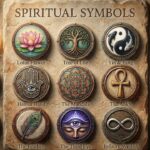
Ankh
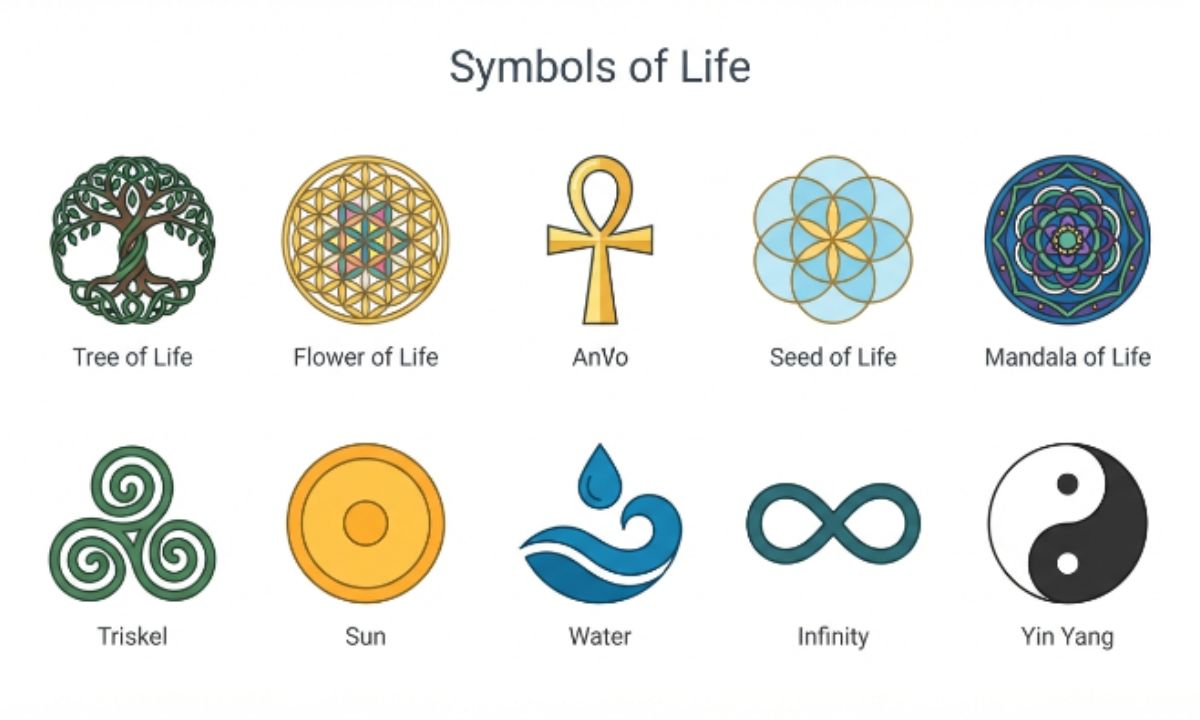
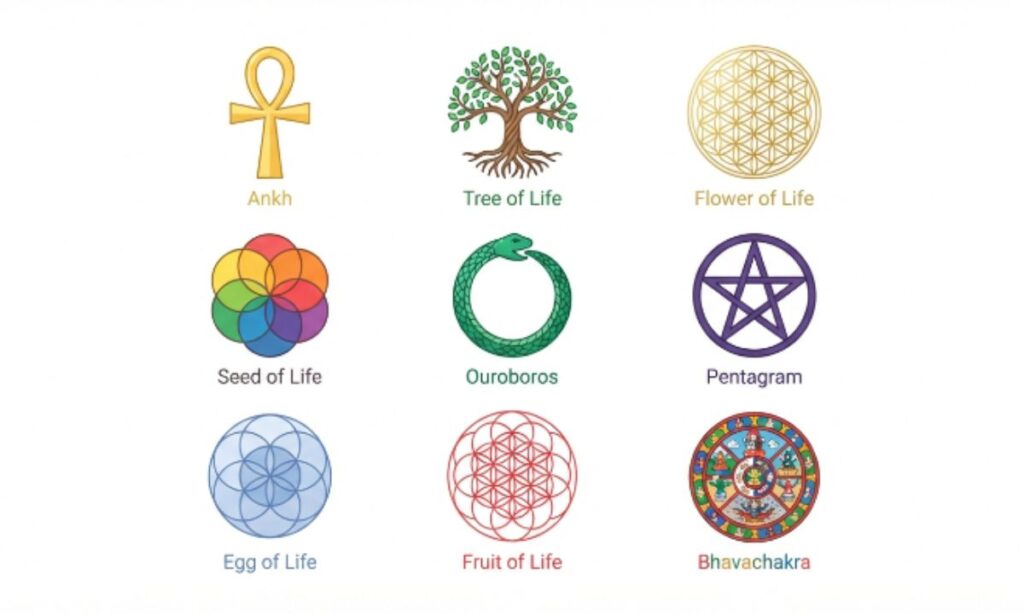
The ankh is an ancient hieroglyph that depicts a cross with a loop at the top. The symbol represents life or breath and was adopted by the pharaohs as a statement of their power and godly status. It was commonly displayed in tombs as an indicator of eternal life. The motif continues to be popular today as a representation of life.
Tree of Life
The Tree of Life is a common symbol in many cultures, depicting a plant with deep roots and large, sprawling branches. The motif is connected to the Norse, Celtic, Hebrew, and Egyptian traditions, among others. The roots symbolize the connection to one’s ancestors, the trunk represents strength, and the branches reach out to depict offspring.
Flower of Life
The Flower of Life is a sacred geometric symbol formed by several intersecting circles arranged in a pattern resembling a blooming flower. The motif is believed to contain information on the fundamental principles of life. Many consider the symbol to possess ancient healing powers, and it has been discovered in many temple constructions in various cultures worldwide.
Seed of Life
The Seed of Life is a sacred geometry pattern formed by seven intersecting circles. The motif is closely related to the Flower of Life, as it is positioned within a hexagon. It can be seen as a symbol of potential being realized as life, and it is present during the formation of an embryo. The Seed of Life is one of the most ancient geometric motifs.
Ouroboros
The Ouroboros is a symbol of a serpent or dragon swallowing its tail, thus forming a circle. The motif is connected to ancient Egyptian and Greek cultures, where it was believed to depict the concept of eternity. The continuous loop suggests the cycle of life and death and the rebirth that follows death, while the swallowing of the tail portrays the cycle of creation itself.
Pentagram
The pentagram is a five-pointed star that has been used as a symbol in various cultures, from ancient Greece to modern pagans. The five points depict the five elements of earth, air, water, fire, and spirit. Before being associated with witchcraft and evil, the pentagram was commonly used as a protection sign and a reminder of the interconnectedness of all life.
Egg of Life and Fruit of Life
The Egg and the Fruit of Life are two sacred geometries that build upon the Flower of Life motif. The Egg of Life is a symbol of new life, as it is similar in shape to an embryo. The Fruit of Life consists of 13 intersecting circles and represents the manifestation of universal patterns in physical form.
Bhavachakra
The Bhavachakra, or the Wheel of Life, is a mandala symbol used in the Tibetan and Indian Buddhist traditions. It is commonly painted on temple walls as a reminder of the cyclical nature of life.
It is connected to the concepts of reincarnation and karma, as it shows the life cycle that all beings undergo, with death leading to rebirth in this or another world depending on one’s actions. The Wheel of Life serves as a reminder that life is continuous, and one should seek to end this cycle by attaining nirvana.
Symbols of Life From Nature
Nature provides humankind with the most straightforward depictions of life, as such universal phenomena as growth, sunlight, and water are directly relatable to each individual’s experiences.
The Sun
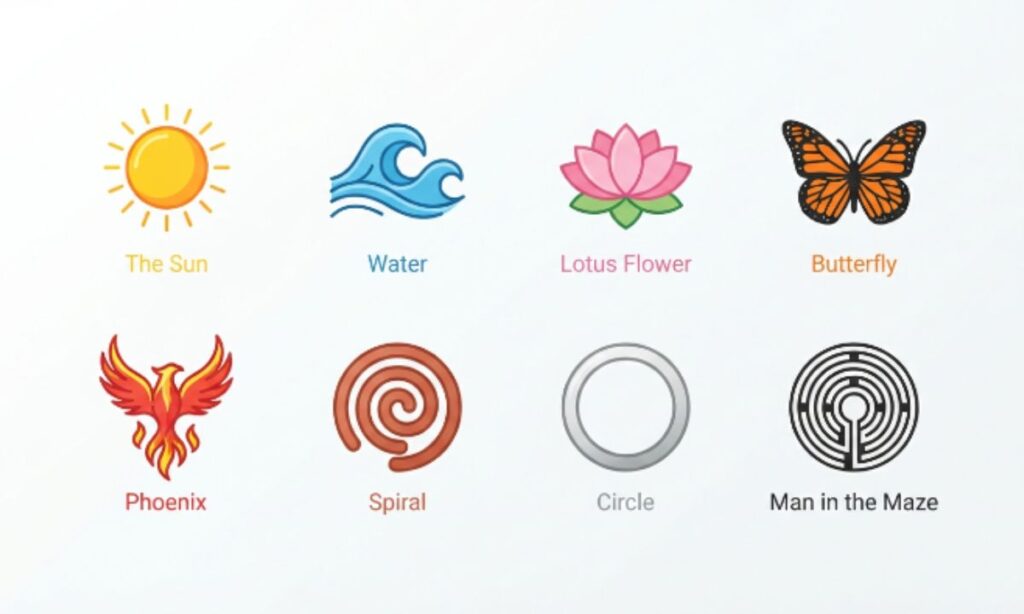
Being referred to as the “star of life,” the sun provides the necessary warmth and light for life to develop on Earth. Beloved by the ancient Egyptians, who worshiped the sun god Ra, it was thought to possess power over water and fertility. The solar symbol, which probably originated in Egypt, represents life in general, as reflected by the sacred importance it holds in numerous cultures’ mythologies.
Water
Ubiquitous and indispensable, water is one of the four classical elements, believed to sustain all known forms of life. It holds symbolic significance, as it is associated with creation, baptisms, purification rituals, and the birth of children. Moreover, due to its presence in the human body and the fact that all living creatures require it to survive, water has long been linked with physical and spiritual beginnings.
Lotus Flower
A potent symbol of rebirth, the lotus flower blooms from the mud of the waters, opening up to reveal a pristine blossom. Associated with creation, rebirth, and fertility, it has been deeply revered by Buddhists and Hindus for centuries. Likewise, the ancient Egyptians connected it with life and resurrection, believing that its petals closing at night signified the journey of the spirit.
Butterfly
Metamorphosis makes butterflies one of the most recognizable symbols of transformation, for which they are admired by cultures worldwide. Symbolizing new beginnings, they are thought to possess extraordinary beauty, representing both female attractiveness and the power of change. Their transformation from caterpillars, during which their bodies are entirely rebuilt, is believed to be the reason why they signify a new stage of life.
Phoenix
The phoenix is a mythical bird that is said to cyclically undergo death and resurrection. A prominent symbol of life, it is prominently featured in Egyptian and Greek mythology, where it is depicted as a bird that vanishes in flames before being reborn from its own ashes. Therefore, the phoenix is also a highly coveted symbol of hope and endurance, signifying an individual’s journey after experiencing a severe tragedy.
Spiral
Spirals are found in nature all over the globe, as diverse manifestations of it, including seashells, hurricanes, and the stems of ferns, possess this pattern. As a symbol, it represents the notion of progression, growth, and life’s journey, signifying a continuous path one takes throughout their lifetime.
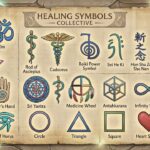
Circle
A fundamental shape with no beginning and no end, the circle has served as a powerful abstract symbol of life’s cycle. Frequently used in the world’s most renowned cultural milestones, from mandalas to wedding rings, it reflects the continuous nature of life.
Man in the Maze
This intricate symbol originates from the Pueblo tribes of the American Southwest, where it was thought to depict a man’s path through his life. It presents a single man at the maze’s entrance, from within which he has to navigate through its winding trails. With a dark spot in the center signifying either death or rebirth, it is believed to symbolize the struggles all individuals face throughout their lifetime.
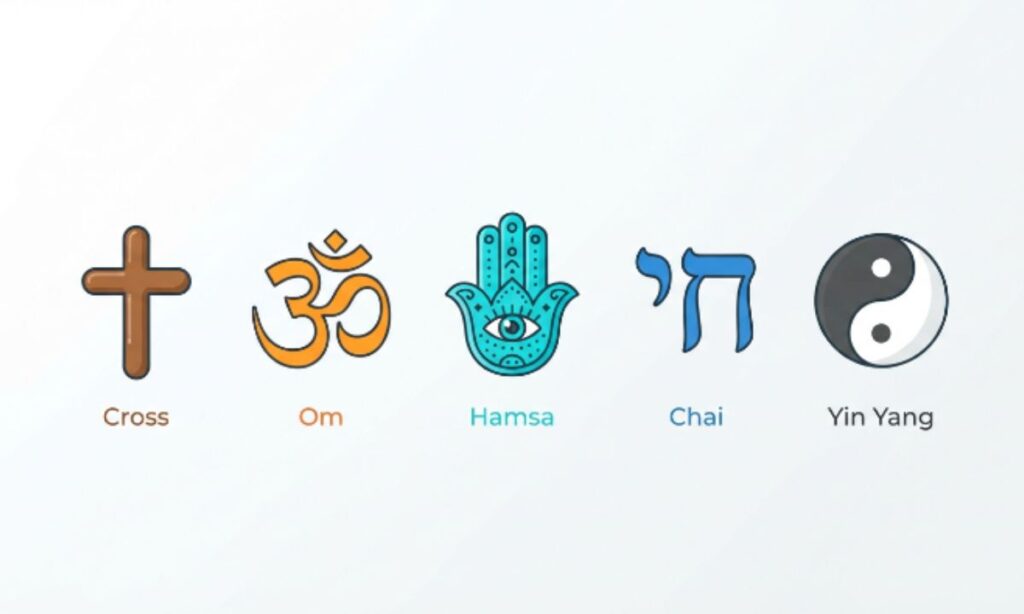
Symbols of Life in World Religions
Representatives of various religious traditions have developed and promoted a wide range of powerful visual symbols that have become popular among different social groups. Even outside the religious context, many people use them frequently since they are supposed to convey certain affirmations or meanings.
Cross
The cross is a Roman instrument of capital punishment that was adopted by the followers of Christ. The symbol is strongly associated with the idea of finding new life through faith in God and has become one of the most widespread signs in the world. For Christians, it signifies the sacrifice of Jesus, who suffered on the cross and saved humanity from sins.
Om (Aum)
This mystic sign is believed to be the first sacred sound in the universe; hence, it is the most significant symbol in Hinduism. It unites people’s souls with the power of the universe. When chanting “Om,” one visualizes the movement of air and the connection between their body and the natural environment. The symbol reminds its observers that they are part of the cosmic power.
Hamsa
Also called the hand of Fatima or the hand of God, this amulet from Judaism and Islam wards off evil spirits and brings peace and prosperity to its owners. The five fingers of the hand represent the five senses or the five books of the Torah, and the symbol protects people from harmful spirits or subconscious demons.
Chai
This Jewish symbol comes from the Hebrew word for “life” or “living.” It is a meaningful sign that Jewish people use to celebrate their lives and promote positivity around themselves. The chai is part of the Jewish toast to life, L’chaim, and it reminds the people of the Creator’s blessing in their lives.
Yin Yang
This ancient Chinese symbol depicts two interlocking mythical creatures that represent the concepts of darkness and light. The Yin and Yang are two opposing forces that are necessary for the survival of each other. The symbol signifies the balance between two powerful forces of the world, such as positive-negative, dark-light, and inactive-active.
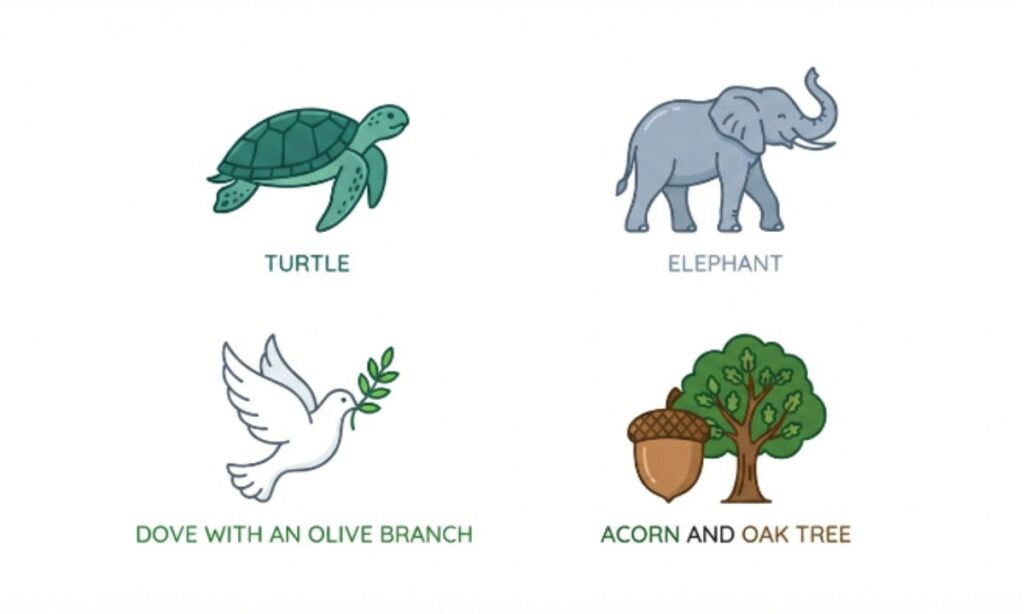
Animal and Nature Symbols of Life
Animals and living creatures also have significant value as symbols of life because observing their breeding and caring for offspring taught the first humans about the cyclical nature of reproduction.
Turtle
In many Native American and Asian cultures, the turtle is considered to carry the world on its shell and is a symbol of patience, longevity, and resilience. The reason for this is the animal’s slow and steady pace, which signifies that a good and full life is not achieved quickly.
Elephant
This large creature symbolizes wisdom, family values, and protective power in many Asian and African cultures. The elephant’s strong loyalty to its family, especially towards its calf, is an expression of the inner strength and protective power every living being possesses.
Dove With Olive Branch
This symbol originates from the biblical story about Noah’s Ark, where the dove brought news that the flood had finished and it was safe to exit the Ark. Today, this symbol is used to convey the meanings of hope, peace, and rebuilding after dark times.
Acorn and Oak Tree
An acorn contains the image of a mighty oak tree inside itself, which makes it a symbol of patience, potential, and a good life that comes slowly. In addition, this symbol teaches us to appreciate the already existing strengths and those things that made us who we are.
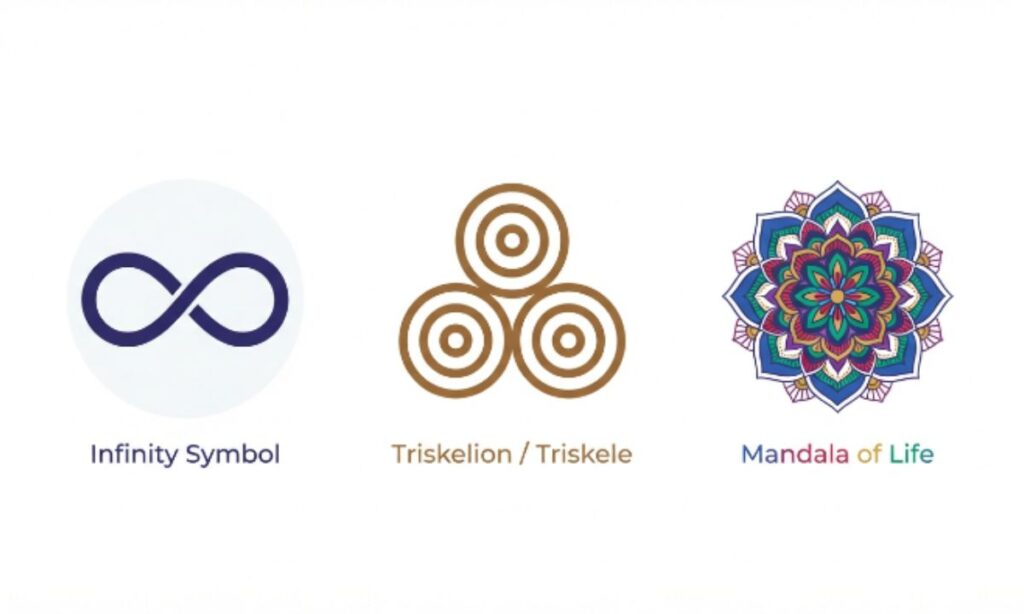
Symbols of Life and Eternity
Some symbols are more about the preservation of growth or the understanding that something will go on regardless of life’s end.
Infinity Symbol
An infinity symbol is an 8 on its side, which signifies endlessness and is used by jewelry-makers and tattoo parlors to this day. Couples get them to symbolize eternity and the infinite nature of their love or energy.
Triskelion (Triskele)
The triskele is a symbol of the endless nature of life in all its forms according to Celtic mythology. This symbol is made of three spirals, which are said to represent the life cycle or the three realms that make up our world. It has long been used as a reminder that no matter how much we try to stand still, we still move with the world around us.
Mandala of Life
A mandala of life is an intricate geometric design that calls for a mindful pause to appreciate the life and growth in all forms around us. It can be used as a tool to help you meditate and acknowledge the connections between minerals, plants, animals, and people.
More Symbols of Life Around the World
Many cultures have created unique symbols to represent life, growth, renewal, and the journey of existence. While each symbol comes from a different tradition, they all share a common message: life is precious and deserves to be celebrated.
Pentagram – Often symbolizes harmony, protection, and the balance between the five elements in many spiritual traditions.
Phoenix Feather – Represents rebirth, transformation, resilience, and the ability to rise stronger after hardship.
Man in the Maze – A Native American symbol that illustrates life’s journey, personal growth, and the lessons learned through challenges.
Bhavachakra Wheel – In Buddhism, this “Wheel of Life” represents the continuous cycle of birth, death, and rebirth.
Feathered Serpent – Found in ancient Mesoamerican cultures, it symbolizes creation, wisdom, life, and the connection between heaven and earth.
Dove with an Olive Branch— A universal symbol of peace, hope, renewal, and the promise of a better future.
Egg of Life – A sacred geometry pattern that represents the beginning of creation and the foundation of all living forms.
Fruit of Life – An extension of the Flower of Life, symbolizing creation, interconnectedness, and the blueprint of the universe.
Acorn – Represents potential, growth, strength, and the promise that small beginnings can lead to great achievements.
Seashell – Often symbolizes life’s journey, protection, renewal, and the connection between humanity and nature.
Turtle – In many Indigenous and Eastern cultures, the turtle represents longevity, wisdom, stability, and enduring life.
Elephant – Symbolizes strength, intelligence, good fortune, family bonds, and a long, prosperous life.
Heartbeat Line – A modern symbol that represents vitality, love, resilience, and the precious nature of every moment we are alive.
Together, these symbols show that although cultures express the meaning of life in different ways, they all reflect the same timeless truth: life is valuable, interconnected, and worth honoring.
Why Symbols Still Matter Today
Unlike the world of internet information, people like to have a sign of something meaningful and important in their lives. This can be a tree of life necklace, ankh tattoos, or a hamsa hung over the front door. People identify themselves with certain signs by using them as a reminder of their personal principles and ideals.
Symbols are often used in the practice of disciplines such as meditation, journaling, and interior design, and in each case, the choice of a particular symbol depends on the values and meanings that it represents and with which the person identifies, and how these symbols can contribute to their growth or service.
Symbols are also used to mark important events and transitions in life. In this case, a phoenix tattoo can symbolize the healing process after a long illness or difficult times, and a tree of life pendant can carry the meaning of maternity and paternity.
Thus, a hamsa brought into the new home will signify that the inhabitants have crossed out another step on their path and now move further, trusting their luck and skills since they have assured themselves of their strength and created the necessary symbol of protection and good fortune.
Frequently Asked Questions
What symbol represents life and strength?
The Tree of Life and the sun are two of the most common symbols used to represent both life and strength.
Are symbols of life religious or spiritual?
They can be either. Many people started with religion, but today they use them for personal or spiritual reasons without following a specific faith.
Can anyone use the Flower of Life or the ankh?
Yes, though it helps to learn the history and meaning first so the symbol is used with respect, not just as decoration.
What is the oldest known symbol of life?
The ankh, dating back to ancient Egypt over five thousand years ago, is one of the oldest recorded life symbols.
What is a good symbol of life for a tattoo?
Popular choices include the Tree of Life, the ankh, the infinity symbol, the lotus flower, and the butterfly, each tied to growth, eternity, or transformation.
Final Words
Symbols of life have been a part of human culture throughout history, ranging from prehistoric petroglyphs to contemporary tattoos. They encapsulate the fundamental mystery of life in a form that is understandable to us all. Whether it is a tree, a flame, or a simple circle, each symbol serves as a reminder of life’s beauty and mystery. Next time you encounter a symbol of life, on a pendant or a painting, remember the generations of people who have found meaning and inspiration in it before you.