People have always needed pictures to explain big ideas like fairness and truth. Justice is one of those ideas that feels too large for words alone, so cultures gave it shapes, tools, and figures instead. A blindfold, a scale, a sword. These small images carry centuries of belief about right and wrong. In this guide, we look at over 25+ justice symbols and what each one truly means.
Justice is more than a legal word. It stands for balance, honesty, and fairness between people. Across history, humans have used symbols to show that no one is above the law, and that truth should win over lies.
These symbols also carry emotional and spiritual weight. They remind people that wrongs can be made right, and that fairness is something worth protecting. From ancient temples to modern courtrooms, justice symbols help people trust the system meant to protect them.
Core Symbols of Lady Justice
Lady Justice is the most famous image tied to law and fairness. She is shown in courts, books, and statues around the world, and each part of her image carries deep meaning.
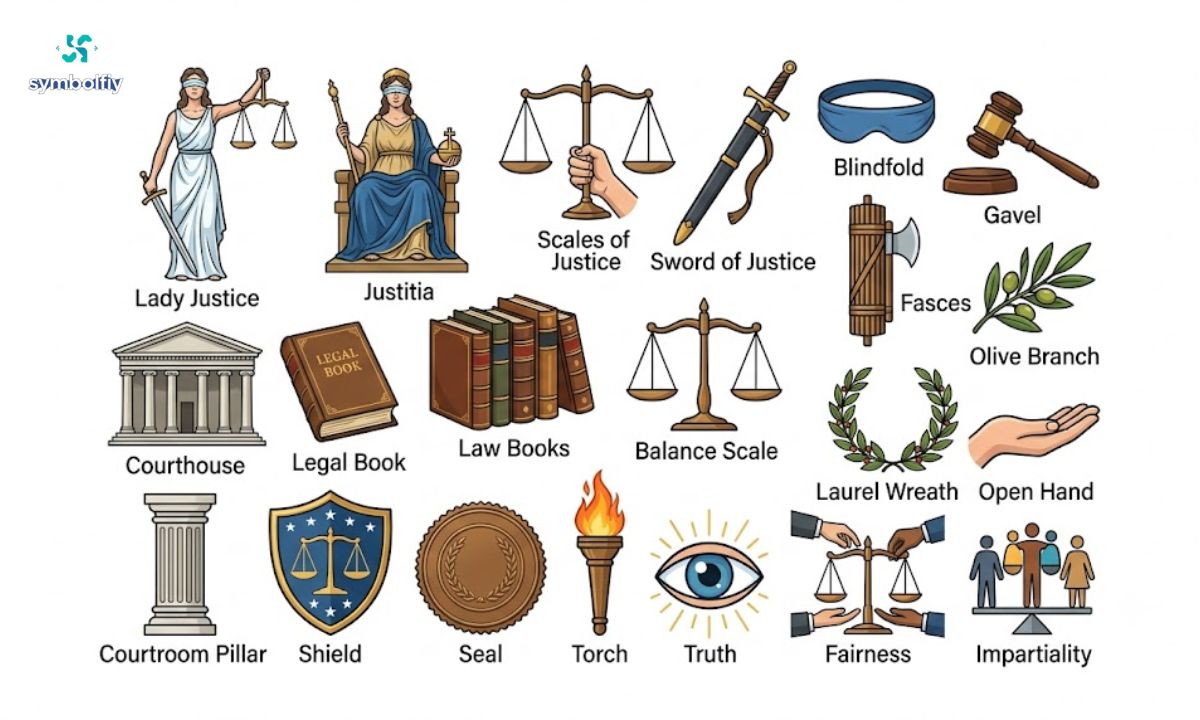
⚖️ The Scales of Justice
The scales show two balanced sides, weighing evidence and truth equally. They came from ancient Egypt, where hearts were weighed against a feather to judge a soul’s worth. Today, they symbolize fairness, balance, and careful judgment without bias toward either side.
🗡️ The Sword of Justice
The sword represents the power to enforce a decision once it is made. It comes from old Roman and Greek images of authority figures holding weapons of power. The sword shows that justice is not only about fairness, but also about strength and final action.
🙈 The Blindfold
The blindfold covering Lady Justice’s eyes means she judges without seeing who stands before her. This idea grew popular in the 1500s to show that justice should ignore wealth, power, or fame. It symbolizes impartiality and the belief that everyone deserves equal treatment.
👩 Lady Justice Herself
Justice is often shown as a woman because ancient cultures linked fairness with feminine goddesses. She represents order, virtue, and moral strength. Her calm, steady pose reflects the idea that justice should stay level-headed, even during conflict.
📜 The Scroll or Law Book
Often held alongside the scales, a scroll or book represents written law and recorded truth. It reminds people that justice depends on clear rules, not personal opinion or emotion.
Mythological Roots of Justice Symbols
Long before courtrooms existed, ancient gods and goddesses represented justice. These mythological figures shaped how later cultures pictured fairness and law.
🏛️ Themis
Themis was the Greek goddess of divine law and order. She symbolizes natural justice, the kind that comes from moral truth rather than written rules. Her name is still used today in legal language and court symbolism.
⚖️ Dikē
Dikē was the Greek goddess of human justice and moral judgment between people. Unlike Themis, she focused on fairness in everyday human conflicts, symbolizing justice in personal relationships and society.
🌟 Astraea
Astraea was a star goddess linked to justice and innocence. Myths say she left earth when humanity became too unjust, becoming a constellation. She represents hope that justice can return even after hard times.
🦅 Jupiter’s Eagle
In Roman belief, Jupiter’s eagle symbolized divine authority watching over fairness and law. It reminded people that justice was protected by powers greater than humans alone.
🐍 The Caduceus (in legal contexts)
Though more linked to medicine, the caduceus also appeared in old legal seals representing negotiation, truth, and fair exchange between two sides.
Ancient Egyptian Justice Symbols
Ancient Egypt had some of the earliest ideas about cosmic balance and moral judgment. Many modern justice symbols actually started here.
🪶 The Feather of Ma’at
This feather represented truth and cosmic balance in ancient Egypt. A person’s heart was weighed against it after death. A heavy heart, full of wrongdoing, meant judgment against the soul. It symbolizes pure truth and moral weight.
☀️ Ma’at Herself
Ma’at was the Egyptian goddess of truth, order, and justice. She represented the idea that the universe itself depended on fairness to function properly, linking justice to spiritual survival.
🪦 The Weighing of the Heart Ceremony
This ritual symbolized final judgment after death. It reminded people that their actions in life mattered, and that justice continued even beyond the physical world.
Roman Symbols of Law and Authority
Rome built much of its identity around law, order, and structured power. Many justice symbols used today trace straight back to Roman tradition.
🪓 The Fasces
The fasces is a bundle of rods tied around an axe, once carried by Roman officials. It symbolized governmental power and the right to enforce punishment. Today, it still appears in courtrooms and government buildings as a sign of legal authority.
🏛️ The Roman Toga
Worn by judges and senators, the toga symbolized civic duty and legal responsibility. It separated lawmakers from common citizens and represented order within Roman society.
📯 The Roman Tribunal Seat
This raised seat symbolized judicial authority. Sitting above the crowd, the judge represented a higher view of truth, separate from personal bias or emotion.
Symbols Found in Courtrooms Today
Modern courts still use strong visual symbols to remind people of fairness, structure, and seriousness. These images shape how society views justice every day.
🏛️ Courthouse Columns
Tall columns outside courthouses symbolize strength, stability, and lasting order. They borrow heavily from ancient Greek and Roman architecture, linking modern law to old traditions of fairness.
🔨 The Gavel
A gavel symbolizes authority and finality in a courtroom. When it strikes, it represents a decision that must be respected and followed.
👨⚖️ The Judge’s Robe
Usually black, the robe symbolizes neutrality and seriousness. It hides personal identity, much like the blindfold, helping judges appear impartial and focused only on the law.
🪑 The Witness Stand
This symbolizes truth-telling under pressure. Sitting there represents responsibility, honesty, and the weight of speaking facts clearly before others.
📑 The Oath and Raised Hand
Raising a hand while swearing an oath symbolizes honesty and personal accountability. It connects truth-telling to something deeper than just legal duty, often tied to personal or spiritual belief.
Symbols of Punishment and Consequence
Justice is not only about fairness. It also involves consequences. These symbols represent the harder side of law and order.
⛓️ Chains
Chains symbolize captivity and loss of freedom as punishment for wrongdoing. They remind people that actions carry consequences within a justice system.
🚪 The Prison Door
A closed prison door symbolizes separation from society and a pause for reflection. It represents both punishment and, ideally, a path toward change.
🔒 The Lock
Locks symbolize control and restriction. In legal symbolism, they represent boundaries placed on freedom when laws are broken.
🩸 The Red Seal (Historical Use)
In some old legal traditions, red wax seals symbolized serious authority and binding decisions, especially in royal or government documents.
Spiritual and Religious Justice Symbols
Many cultures linked fairness to spiritual belief, showing that justice was not only a human idea but a sacred one too.
✝️ The Christian Cross (in legal halls)
In many older courthouses, the cross symbolized moral law and divine accountability, reminding judges that fairness was tied to a higher spiritual order.
🕉️ Dharma Wheel
In Buddhist belief, the Dharma wheel symbolizes moral law and the natural balance of right and wrong, similar to legal justice but rooted in spiritual growth.
🐉 Yama, Lord of Justice (Hindu and Buddhist belief)
Yama judged souls after death based on their actions in life. He symbolizes ultimate accountability and the belief that truth always comes to light eventually.
🌕 The Moon as a Witness (Folk Belief)
In many old folk traditions, the moon symbolized a silent witness to truth and wrongdoing, watching over people even when no human did.
Symbols of Equality and Fairness
Justice is closely tied to equality. These symbols highlight balance, shared rights, and protection for all people equally.
🤝 The Handshake
A handshake symbolizes agreement, trust, and fair resolution between two sides. It often appears in legal logos representing settlement and cooperation.
🔗 The Unbroken Chain (Positive Use)
Unlike punishment chains, an unbroken chain can symbolize unity and equal connection between people under the same law.
🌐 The Globe
In modern legal symbolism, a globe represents universal human rights and the idea that fairness should apply everywhere, not just in one country.
🕊️ The Dove (in Justice Reform Contexts)
The dove symbolizes peace through fair resolution, often used in restorative justice movements that focus on healing rather than only punishment.
Modern and Cultural Justice Symbols
Justice symbolism keeps evolving. New images now represent fairness in everyday culture, activism, and personal belief systems.
✊ The Raised Fist
This modern symbol represents standing up against unfairness and demanding equal treatment. It is common in protests and social justice movements worldwide.
🟣 The Color Purple (Justice Movements)
Purple is often used in modern justice and equality movements, symbolizing dignity and a call for fair treatment.
📢 The Megaphone
This symbolizes voice and visibility, representing the idea that justice often requires speaking up loudly for change.
🌈 The Rainbow (Equality Symbol)
In modern contexts, the rainbow symbolizes fairness and equal rights for all people, regardless of background or identity.
🧭 The Compass
A compass symbolizes moral direction, guiding people toward what is right even when situations feel confusing or unclear.
🪞 The Mirror (Symbolic Use)
In some symbolic interpretations, a mirror represents self-judgment and honesty, reminding people that fairness starts with truth about oneself.
Ancient Cultures That Used These Symbols
Justice symbolism did not come from one single place. Many old cultures shaped how we picture fairness today.
Egyptian culture – Gave us Ma’at and the feather of truth, linking justice to spiritual balance after death.
Greek mythology – Introduced Themis, Dikē, and Astraea, shaping the scales and blindfolded figure we still use today.
Roman traditions – Brought the fasces, tribunal seats, and formal legal structure into Western law.
Christianity – Added moral accountability and divine judgment themes into courtroom symbolism.
Buddhism – Connected fairness to natural moral law through the Dharma wheel and karma.
Hindu beliefs – Gave us Yama, representing final judgment based on a person’s actions in life.
Why Justice Symbols Still Matter Today
People still wear scales of justice jewelry, get blindfolded Lady Justice tattoos, or display gavel artwork in their homes and offices. These symbols are not just decoration. They represent personal values like honesty, fairness, and standing firm in hard situations.
Justice symbols also help people process real emotions, like anger over unfair treatment or hope for change. Many use them in activism, meditation, or personal reflection to stay grounded in their own sense of right and wrong. As long as people care about fairness, these symbols will keep their meaning alive.
Frequently Asked Questions
What do the scales of justice symbolize?
They symbolize fairness and balance between two sides of an argument or case.
Why is Lady Justice blindfolded?
The blindfold shows that justice should be given without bias toward wealth or status.
What does the sword in Lady Justice mean?
The sword represents the power to enforce a final legal decision.
Who is Lady Justice based on?
She is based on ancient goddesses like Themis, Dikē, and the Egyptian goddess Ma’at.
What does the fasces symbolize in justice imagery?
It represents governmental power and the authority to enforce law and order.
Conclusion
Justice symbols carry far more meaning than simple courtroom decoration. They hold thousands of years of belief about fairness, truth, and accountability. From the scales of ancient Egypt to the raised fist of modern protest, each symbol shows how deeply humans care about doing what is right. Understanding these symbols helps us see justice not just as a legal system, but as a value people have protected across every culture and age.