Humans have always used symbols to express what words struggle to carry. A small image, color, or shape can hold decades of pain, hope, and healing. Mental health symbols work the same way — they give people a quiet way to say “I understand,” “I’m still here,” or “I’m fighting.”
Whether worn as a tattoo, pinned to a shirt, or shared online, these symbols carry powerful meaning for millions of people around the world.
Mental health symbols represent the invisible battles people face every day. They stand for hope, recovery, strength, and the courage it takes to keep going when everything feels heavy. Each symbol carries its own story — some born from personal loss, others from ancient wisdom or cultural tradition.
These symbols also break silence. Mental illness has been misunderstood for centuries, and stigma has kept people from speaking up. Symbols give people a way to show solidarity without saying a single word. They remind both the person wearing them and the people around them that mental health is real, it matters, and healing is possible.
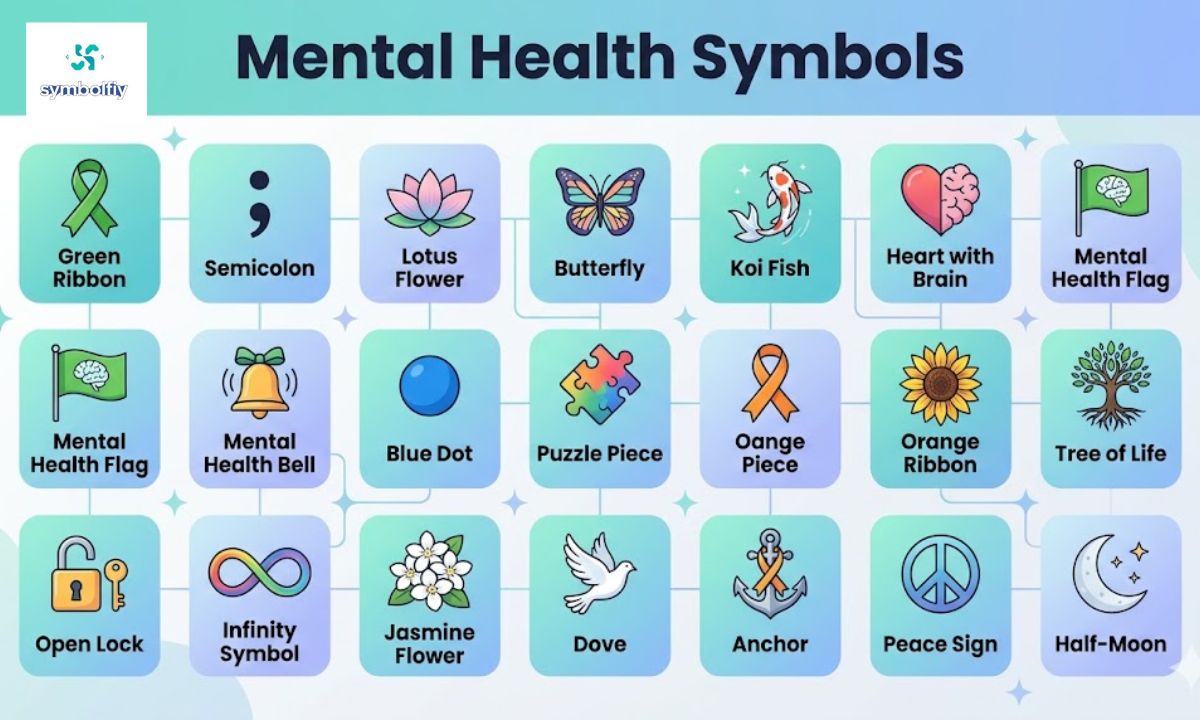
25+ Mental Health Symbols and Their Meanings
Ribbon Symbols
Ribbons are among the most recognized awareness symbols in the world. Each color carries a specific meaning and represents different conditions or causes within the broader mental health movement.
🟢 Green Ribbon
The green ribbon is the official international symbol of mental health awareness. It represents hope, growth, and the strength needed to survive mental illness. Green was chosen because it connects to renewal and new beginnings — the same energy that drives recovery.
🟠 Orange Ribbon
The orange ribbon represents awareness for depression, anxiety, and schizophrenia. Orange is a warm, visible color that signals urgency and compassion. It encourages people to speak openly about these specific conditions without shame.
🩵 Teal Ribbon
Teal represents anxiety disorders. The calming mix of blue and green in teal mirrors what anxiety sufferers often seek — peace and stillness. This ribbon is worn to show support and raise awareness about how widespread anxiety truly is.
Punctuation Symbols
; Semicolon
The semicolon is one of the most powerful mental health symbols in the world. In grammar, a semicolon connects two sentences that could have ended — but didn’t. For mental health, it means: your story isn’t over yet. Project Semicolon started in 2013 when Amy Bleuel used it as a tribute to her father who died by suicide. Today, millions of people wear semicolon tattoos as a quiet reminder of their own survival.
Flower Symbols
Flowers have symbolized healing and hope across nearly every culture in history. Several flowers have become strongly connected to mental health awareness and emotional recovery.
🌸 Lotus Flower
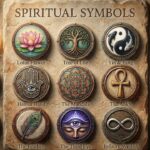
The lotus grows in muddy, dark water — yet it rises to bloom in full beauty above the surface. This is exactly why it became such a powerful mental health symbol. It represents resilience, personal growth, and the ability to rise from pain. In Buddhism, the lotus stands for spiritual awakening and purity of the mind.
🌻 Sunflower
The sunflower always turns its face toward the sun. For people struggling with mental health, this represents the daily choice to seek light even on dark days. It symbolizes positivity, faith in the future, and the quiet strength of keeping hope alive.
🌺 Jasmine
Jasmine has deep roots in Eastern medicine and aromatherapy. Its calming scent has been used for centuries to reduce stress, ease anxiety, and improve sleep. As a mental health symbol, jasmine represents emotional peace, self-care, and the gentle healing that comes from slowing down.
Animal Symbols
🦋 Butterfly
The butterfly’s journey from caterpillar to winged creature perfectly mirrors the path of mental health recovery. It represents transformation, hope, and the beauty that can come after a period of darkness and struggle. The monarch butterfly in particular has become a recognized symbol of mental health recovery worldwide.
🐟 Koi Fish
In Japanese and Chinese culture, koi fish are famous for swimming upstream against powerful currents. They represent perseverance, courage, and the strength to keep moving through difficulty. As a mental health symbol, koi fish remind people that fighting against struggle is not weakness — it is bravery.
🕊️ Dove
The dove is a universal symbol of peace across nearly every culture and religion. In mental health contexts, it represents the inner peace that people work toward through healing. It also symbolizes hope, freedom from pain, and the possibility of calmer days ahead.
Object Symbols
🔔 The Mental Health Bell (Bell of Hope)
In 1953, Mental Health America melted down the chains and shackles once used to restrain people with mental illness. From that metal, they cast a 300-pound bell. That bell became a symbol of breaking free from the cruel treatment of the past and moving toward compassion and proper care. It rings every year as a reminder that mental health treatment has come a long way — and still has further to go.
🔵 Blue Dot
The blue dot was created in 2017 by a mother who experienced postpartum depression. The soft robin’s-egg blue represents maternal mental health and the silent suffering many mothers experience after childbirth. It has become a symbol of solidarity, especially for women navigating reproductive mental health challenges.
🧩 Puzzle Piece
The puzzle piece most commonly represents autism spectrum disorder, but it has grown into a broader mental health symbol as well. Each puzzle piece is unique and contributes to a larger picture — just as every person’s journey is different but part of a shared human experience. Assembling a puzzle represents the long, non-linear process of healing.
🔓 Open Lock
An open lock symbolizes the moment someone acknowledges their struggle and reaches out for help. Locked = silence and isolation. Open = courage to speak, to seek support, and to let others in. It carries a hopeful message: admitting you need help is not weakness — it opens doors.
⚓ Anchor
The anchor has been used in art and jewelry for centuries to represent stability, grounding, and the ability to hold steady in a storm. For people dealing with anxiety or depression, the anchor symbolizes a mental “safe place” — something to hold onto when emotions feel overwhelming.
♾️ Infinity Symbol
The infinity symbol in mental health represents the never-ending journey of wellness. Recovery is not a straight line with a finish point — it is ongoing, evolving, and lifelong. Many people choose the infinity symbol as a tattoo to honor that continuous commitment to their own well-being.
Color Symbols
💚 Green
Green is the primary color of mental health awareness. It symbolizes hope, renewal, and the natural cycle of growth. Historically, a sprig of green was used to represent both grief and healing — showing that the two can exist together.
🤍 White
White in the mental health flag represents life, light, and acceptance. It reflects the clarity people seek during recovery — a clean, open space where healing is possible without judgment.
🖤 Black
In the mental health flag created by Daniel Quasar in 2020, black represents ending stigma. It acknowledges the darkness that surrounds mental illness — but places it alongside hope and life, showing that the shadow does not have to win.
Nature & Spiritual Symbols
🌳 Tree of Life
The Tree of Life appears in countless cultures — Celtic traditions, Norse mythology, Ancient Egypt, Buddhism, and Christianity. Its roots go deep, its trunk stands strong, and its branches reach toward the sky. As a mental health symbol, it represents resilience, personal growth, connection to others, and the ability to endure even through hardship.
🌙 Half-Moon
The half-moon represents the dual experience of depression — part of the person is still fighting in the light, while another part feels lost in darkness. It captures the complicated reality of living with mental illness: not everything is dark, and not everything is light. The half-moon honors both.
🧬 Serotonin Molecule
The serotonin molecule has become a popular symbol in mental health awareness and tattoo culture. Serotonin is often called the “happy chemical” — a neurotransmitter that influences mood, sleep, and emotional balance. Using this symbol sends an important message: mental illness is a biological reality, not a personal failure or weakness.
☮️ Peace Sign
While widely recognized as an anti-war symbol, the peace sign also carries meaning in mental health contexts. It can represent the inner peace people seek through therapy, meditation, and healing. It also sometimes symbolizes the quiet loneliness of depression — an abstract expression of needing stillness.
🧭 North Direction / North Star
In some mental health symbolism, north represents a difficult concept: isolation, darkness, and the feeling of being lost. But the North Star — used for centuries by travelers — has also been reclaimed as a symbol of direction, guidance, and finding your way back when you feel most disoriented.
Cultural & Spiritual Symbols
🪷 Origami Crane
In Japanese culture, folding 1,000 origami cranes is believed to grant a wish — most commonly a wish for healing. The crane represents longevity, good fortune, and the patience required to heal slowly and gently. In mental health, it symbolizes the small, daily acts of self-care that eventually add up to recovery.
☀️ Heart with a Brain
The heart-and-brain symbol represents the connection between emotional and mental well-being. It acknowledges that mental health is not separate from feeling — thoughts and emotions are deeply intertwined. This symbol encourages people to honor both their intellectual and emotional needs equally.
🌊 Water / Ocean Wave
Water has represented the unconscious mind, emotional depth, and the flow of mental states across cultures for thousands of years. In mental health symbolism, the ocean wave reflects how emotions rise and fall — sometimes overwhelming, but never permanent. It encourages people to ride the wave rather than fight it.
Ancient Cultures That Used These Symbols
Mental health symbols did not appear overnight. Many of them have deep roots in ancient traditions that understood the connection between mind, spirit, and health long before modern medicine existed.
Ancient Egypt: Used the lotus as a symbol of rebirth and healing. Egyptian healers recognized the mind-body connection and treated mental illness with ritual and natural medicine.
Buddhism: The lotus, tree of life, and dove all carry strong Buddhist meaning. Buddhism centers mental wellness through mindfulness, acceptance, and the cultivation of inner peace.
Celtic Traditions: The tree of life was central to Celtic spirituality — representing the connection between the living world and the spiritual realm, and the strength needed to stand through seasons of hardship.
Greek Mythology: Doves were sacred to Aphrodite and symbolized love, peace, and healing. The anchor was used as a spiritual symbol of hope by early Christians in the Greek world.
Native American Traditions: Butterflies were seen as messengers of transformation and the spirit world. Many tribes used nature-based symbols to represent the healing journey of the mind and soul.
Japanese Culture: Koi fish and origami cranes both carry deep spiritual meaning — perseverance through adversity and the healing power of patience and care.
Christianity: The dove represents the Holy Spirit, peace, and divine comfort. The anchor was used as a secret symbol of hope by early Christians during persecution.
Why Symbols Still Matter Today
In a world full of noise, symbols cut through. A small green ribbon on a lapel, a semicolon tattooed on a wrist, or a lotus pendant around someone’s neck — these say something without requiring a single word to be spoken. They create instant connection between people who understand the same struggle, even as strangers.
Today, mental health symbols appear in tattoos, jewelry, social media campaigns, corporate events, and clinical settings. They help people express their healing journey publicly or privately.
For many, choosing a mental health symbol is a turning point — a moment of choosing their story rather than being defined by their illness. These symbols carry history, culture, spirituality, and science all at once, and that is exactly what makes them so powerful.
Frequently Asked Questions
What is the most recognized mental health symbol?
The green ribbon is the official and most widely recognized international symbol for mental health awareness.
What does a semicolon tattoo mean?
It means “your story isn’t over” — a symbol of survival, suicide prevention, and the choice to keep going.
What flower best represents mental health?
The lotus flower is the most recognized mental health flower, representing resilience and rising from difficulty.
What does the Mental Health Bell represent?
It was cast from melted chains once used to restrain mental patients and symbolizes freedom, hope, and progress in mental health care.
What color represents mental health awareness?
Green is the primary color — it represents hope, growth, and support for those living with mental illness.
Conclusion
Mental health symbols are more than just images — they are stories, promises, and quiet declarations of survival. From the ancient lotus to the modern semicolon, each symbol carries the weight of human experience and the lightness of hope.
Whether you wear one, display one, or simply recognize one, these symbols remind the world that mental health matters, healing is real, and no one has to face their journey alone.