Humans have always looked to the natural world for meaning. Long before books or language, people used nature symbols to explain life, death, love, and everything in between. A tree, a storm, a butterfly — each one told a story.
These symbols still show up in art, tattoos, dreams, and spiritual practices today because they speak to something deep inside us that never changes.
Nature symbols carry meaning that goes beyond what we can easily put into words. A mountain is not just a mountain. It can mean struggle, or growth, or a spiritual journey depending on who is looking at it and why.
Across every culture and every time period, people have used these symbols to make sense of their inner lives. They connect the physical world to the emotional one. That is why nature symbols show up in ancient myths, religious texts, poetry, and modern wellness culture all at once.
25+ Nature Symbols and Their Meanings
Tree and Plant Symbols
🌳 Oak Tree
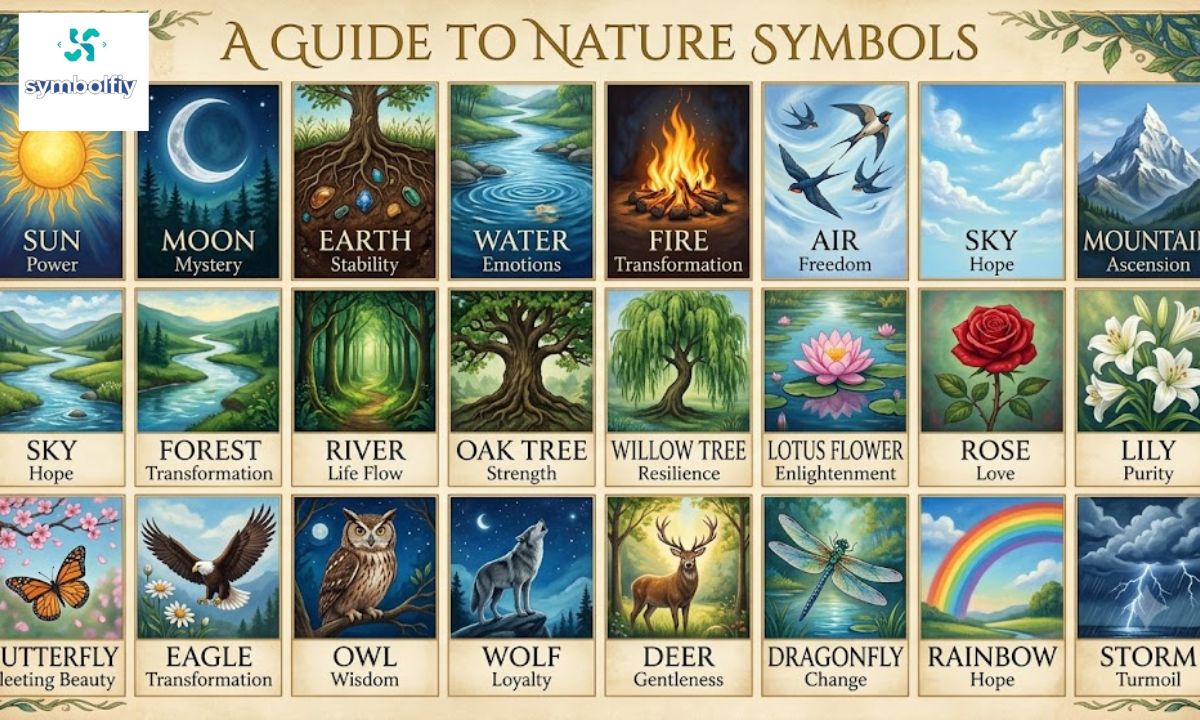
The oak tree is one of the oldest symbols of strength and wisdom. It grows slowly, lives for centuries, and weathers every storm. In European and Native American traditions, it stands for endurance and deep inner power.
🌿 Willow Tree
The willow bends in the wind but never breaks. That is exactly what it symbolizes — flexibility and emotional resilience. It is often connected to healing, grief, and the ability to keep going after loss.
🌲 Tree of Life
Found in Norse, Egyptian, and Kabbalistic traditions, the Tree of Life represents the connection between earth and sky, body and spirit. Its roots go deep and its branches reach wide — a symbol of unity and eternal existence.
🌸 Cherry Blossom
In Japanese culture, cherry blossoms bloom for only a short time. They symbolize the beauty of life and the fact that nothing lasts forever. They are a reminder to appreciate what you have right now.
🌹 Rose
The rose is probably the most recognized nature symbol in the world. Red roses mean passionate love, white means purity, and yellow means friendship. Across Western and Eastern cultures, the rose has carried these meanings for thousands of years.
🌸 Lotus Flower
The lotus grows from muddy water and blooms clean and bright above the surface. In Buddhist and Hindu traditions, it symbolizes purity, spiritual awakening, and the ability to rise above difficult circumstances.
⚜️ Lily
The lily is tied to purity, innocence, and new beginnings. In Christian symbolism, it is connected to the Virgin Mary and divine grace. In many cultures, it also appears at funerals as a symbol of the soul’s return to peace.
🌻 Sunflower
Sunflowers always turn toward the light. They symbolize optimism, loyalty, and the search for truth. Their bold, open face has made them a modern symbol of happiness and positive energy.
🌿 Ivy
Ivy clings and climbs and keeps growing even in cold weather. It symbolizes loyalty, friendship, and eternal life. In ancient Greece, ivy was linked to the god Dionysus and celebrations of life.
🌾 Wheat
Wheat represents abundance, harvest, and the cycle of life. It has been central to farming cultures for millennia. Spiritually, it often symbolizes nourishment — both physical and soul-level.
Animal and Bird Symbols
🦅 Eagle
The eagle flies higher than almost any other bird. It symbolizes freedom, vision, and spiritual power. In Native American traditions, the eagle is a messenger between humans and the divine. In Rome, it stood for imperial strength.
🦉 Owl
The owl sees in the dark. That is why it has always been linked to wisdom, intuition, and hidden knowledge. In Greek mythology, the owl sat with Athena, goddess of wisdom. Many Native American traditions see the owl as a guide to the spirit world.
🦋 Butterfly
A butterfly starts as a caterpillar, wraps itself in darkness, and emerges transformed. It is one of the most powerful symbols of change, hope, and personal growth. Across nearly every culture, the butterfly represents the soul and the possibility of becoming something new.
🐺 Wolf
The wolf is complex — fierce but deeply loyal to its pack. It symbolizes strength, freedom, and family bonds. In Norse mythology, wolves were tied to the god Odin. In Native American traditions, the wolf is a teacher and a guardian.
🦌 Deer
The deer moves gently through the world. It represents grace, intuition, and a quiet kind of courage. Many cultures see the deer as a spiritual messenger, connected to innocence and sensitivity.
🐉 Dragonfly
The dragonfly spends most of its life underwater before flying. This makes it a symbol of transformation, adaptability, and seeing through illusions. In Japanese culture, it is tied to courage and strength.
🐍 Snake
The snake sheds its skin and starts fresh. It has symbolized both danger and healing across history. In ancient Egypt and Greece, the snake represented medicine and rebirth. In many spiritual traditions, it stands for wisdom and transformation.
🐝 Bee
The bee is a symbol of hard work, community, and connection to the divine. In ancient Egyptian culture, bees were connected to the soul. They also represent creativity, fertility, and the sweetness of life.
🦁 Lion
The lion has symbolized royalty and courage for as long as humans have told stories. It appears on flags, crests, and religious texts worldwide. Spiritually, the lion represents inner strength and leadership.
🐢 Turtle
The turtle carries its home on its back and lives for a very long time. It symbolizes patience, protection, wisdom, and endurance. In many Indigenous and Asian traditions, the turtle holds up the world — it is a foundation symbol.
Natural Element Symbols
💧 Water
Water takes the shape of whatever holds it. It flows, cleanses, and sustains life. Water symbolizes emotions, intuition, and the subconscious mind. A calm river can mean peace. A stormy ocean can mean overwhelming feelings.
🏔️ Mountain
Mountains are hard to climb and impossible to ignore. They symbolize challenges, spiritual ascension, and hidden strength. Many religious traditions place gods or enlightenment at the top of a mountain — the journey upward is the point.
☀️ Sun
The sun rises every morning without fail. It symbolizes life, energy, power, and renewal. In countless cultures, the sun is connected to divine masculine energy, clarity, and truth.
🌙 Moon
Where the sun is consistent, the moon changes. It waxes, wanes, and disappears. The moon symbolizes mystery, feminine energy, cycles, and the unconscious. It is tied to intuition, dreams, and the rhythm of time.
🔥 Fire
Fire can destroy or it can warm. It symbolizes transformation, passion, and purification. In spiritual traditions, fire burns away the old to make room for something new. It is also connected to courage and raw energy.
🌍 Earth
Earth is the ground beneath our feet — stable, solid, and nourishing. It symbolizes rootedness, fertility, and the physical body. Earth energy is about feeling safe, grounded, and connected to the present.
💨 Wind / Air
You cannot hold wind, but you feel it. Air symbolizes intellect, communication, and freedom. In many traditions, breath is the first act of life. Air also represents invisible forces that shape the world around us.
⚡ Lightning
Lightning strikes fast and without warning. It symbolizes sudden insight, unexpected change, and divine power. In Greek mythology, Zeus carried lightning. In many traditions, it is a sign of the gods speaking.
Season and Weather Symbols
🌱 Spring
Spring is the season of new beginnings. After winter’s silence, life returns. It symbolizes hope, renewal, and fresh starts. Spring is when possibilities feel real again.
☀️ Summer
Summer represents abundance, growth, and fullness of life. Everything is in bloom. It is the peak of energy — warm, expansive, and generous.
🍂 Autumn
Autumn is the season of letting go. Leaves fall, harvests come in, and things slow down. It symbolizes reflection, gratitude, and the wisdom that comes from experience.
❄️ Winter
Winter is quiet and still. It symbolizes rest, introspection, and the inner life. It is not dead — it is waiting. Many spiritual traditions see winter as a time for deep inner work.
🌈 Rainbow
The rainbow appears after rain and before full sun. It symbolizes hope, promise, and the bridge between different worlds or states of being. In many cultures, it connects the human world to the divine.
Ancient Cultures That Used These Symbols
Nature symbols did not start with Instagram or tattoo culture. They go back thousands of years.
Egyptian culture — used the lotus for rebirth, the snake for healing, and the sun as the eye of Ra, their most powerful deity.
Celtic traditions — the oak tree, mistletoe, and animals like the stag and the crow all carried deep spiritual meaning in Celtic life.
Greek mythology — the owl belonged to Athena, the eagle to Zeus, and the laurel wreath meant victory and glory.
Christianity — the lily symbolized the Virgin Mary, the dove meant peace and the Holy Spirit, and the fish became an early symbol of faith.
Buddhism — the lotus is central to Buddhist teaching about rising above suffering to reach enlightenment.
Native American traditions — animals were spirit guides. The wolf, eagle, bear, and deer each carried specific teachings about how to live well.
Why Symbols Still Matter Today
We live in a world full of screens and information, but people still get butterfly tattoos and hang dreamcatchers and plant flowers with meaning.
That tells you something. Nature symbols connect us to something older than language — an instinct to find meaning in the world around us.
They show up in meditation, in jewelry, in art, and in everyday choices. Someone who hangs a moon print in their bedroom is not doing it for decoration alone.
They are expressing something about their inner world. Symbols give us a quiet, visual language for things we feel but sometimes cannot say out loud.
Frequently Asked Questions
What is the most universal nature symbol?
The sun. Every culture on earth has used it to represent life, power, and divine energy.
What does a butterfly symbolize spiritually?
Transformation and the soul. It represents the idea that change leads to something more beautiful.
Which flower means purity?
The lotus and the lily are both widely recognized symbols of purity across different cultures.
What does the moon represent in nature symbolism?
Mystery, feminine energy, cycles, and the unconscious or emotional self.
Why do people use nature symbols in tattoos?
Because they carry deep personal meaning — a visual shortcut for values, experiences, or spiritual beliefs they want to carry with them.
Conclusion
Nature symbols have been with us since the beginning of human history. A tree, a wave, a butterfly — they carry more meaning than they seem to on the surface. Learning what these symbols represent helps you connect more deeply with the natural world and with yourself.
Whether you are drawn to the strength of the oak or the quiet wisdom of the owl, there is a reason certain symbols feel personal. They are speaking to something real in you.