Symbols are how people pass down stories, faith, and identity across generations. In Mexico, symbols carry centuries of meaning — from ancient Aztec gods to colorful folk art. They connect the living to the past, the spiritual to the everyday. Understanding Mexican symbols helps you understand the heart of one of the richest cultures in the world.
Mexican symbols are more than just pretty images. They carry deep roots going back thousands of years to the Aztec, Maya, and other ancient civilizations. Many of these symbols were sacred. They were used in rituals, ceremonies, and to honor gods.
Over time, Spanish colonial influence blended with indigenous traditions, creating a unique cultural identity that is still alive today.
On an emotional level, Mexican symbols speak about life, death, strength, faith, and pride. They tell the story of a people who survived conquest, built great cities, and never lost their spirit. Today, these symbols show up in tattoos, murals, art, clothing, and national identity.
25+ Mexican Symbols and Their Meanings
National and Official Symbols of Mexico 🏛️
The Mexican Flag 🇲🇽
The flag of Mexico has three vertical stripes — green, white, and red. Green stands for hope and victory. White means unity and purity. Red honors the blood of national heroes. The coat of arms sits in the center. It is the most recognized symbol of Mexican national pride.
Coat of Arms 🦅🌵🐍
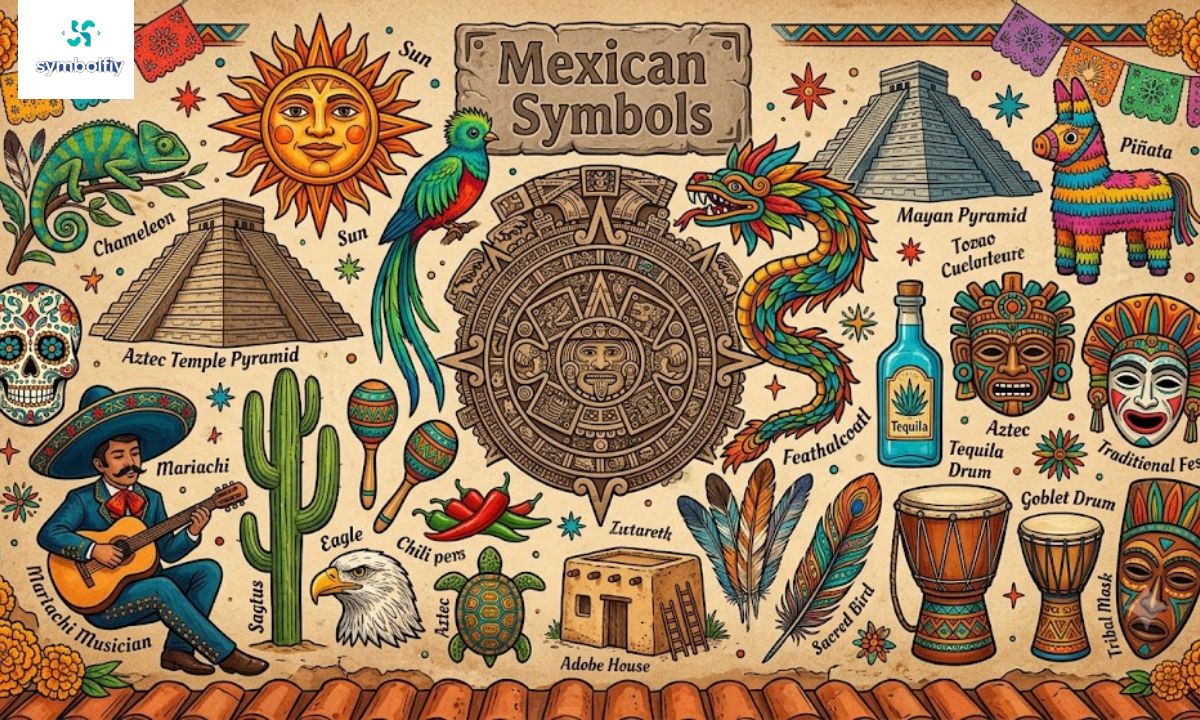
The coat of arms shows an eagle standing on a cactus and eating a serpent. This image comes from the Aztec legend of Tenochtitlán — the founders were told to build their city where they saw this sign. It represents strength, resilience, and the birth of Mexico.
Mexican Eagle 🦅
The golden eagle is a powerful national symbol. In Aztec culture, the eagle represented the sun and war. Warriors called “Eagle Warriors” wore eagle costumes. Today it stands for freedom, vision, and national sovereignty.
The Serpent 🐍
The serpent in the coat of arms is often linked to chaos and the enemy of the sun. But in Aztec culture, serpents were also sacred. The feathered serpent Quetzalcoatl was one of the most important gods. The serpent represents the duality of life — both danger and wisdom.
The Nopal Cactus 🌵
The prickly pear cactus, or nopal, grows where others cannot. It survives in the harsh desert. In the founding legend of Mexico, it marked the sacred spot for Tenochtitlán. Today, it symbolizes Mexican resilience and the idea that strength comes from difficult conditions.
Ancient and Indigenous Mexican Symbols 🏺
Quetzalcoatl — The Feathered Serpent 🐦🐍
Quetzalcoatl is one of the most important Aztec gods. His name means “feathered serpent.” He was the god of wind, learning, and creation. He is shown as a serpent with bright feathers. This symbol represents wisdom, rebirth, and the connection between earth and sky.
The Aztec Sun Stone ☀️
Also called the Calendar Stone, this massive carved disc shows the Aztec view of time and the cosmos. It was not actually used as a calendar but as a ceremonial altar. It represents the five suns or worlds the Aztecs believed existed. Today it is one of the most recognized symbols of ancient Mexico.
The Jaguar 🐆
The jaguar was the most powerful animal in Mesoamerican mythology. It was sacred to both the Aztecs and the Maya. Jaguar Warriors were an elite class of Aztec soldiers. The jaguar represents earthly power, spiritual strength, and transformation. It was seen as a guardian of the underworld.
Maize (Corn) 🌽
Maize is sacred in Mexican culture. The Maya believed humans were created from corn. The Aztecs dedicated rituals and temples to corn gods. Even today, corn is the heart of Mexican food and culture. It symbolizes life, sustenance, and the deep bond between people and the earth.
The Sun and Moon 🌞🌙
In Aztec mythology, the sun and moon were two sacrificed gods — Tonatiuh and Tecuciztecatl. Their sacrifice brought light to the world. The sun stood for life, energy, and warmth. The moon represented night, mystery, and the feminine. Together they symbolize balance and the cycle of existence.
Xolotl — The Hairless Dog 🐕
Xolotl was the Aztec god of lightning and death. He took the form of a hairless dog, much like the Xoloitzcuintli dog breed that still exists today. It was believed this dog guided souls through the underworld. It represents loyalty, protection, and the journey of the soul after death.
Tlaloc — The Rain God 🌧️
Tlaloc was the Aztec god of rain, water, and fertility. He was both feared and worshipped because rain could bring crops or destroy them. He had large goggle-like eyes and fangs. And he symbolizes the power of nature, life-giving water, and the unpredictability of the natural world.
The Tree of Life 🌳
The Árbol de la Vida (Tree of Life) is a deeply spiritual symbol in Mexican folk art. It connects the underworld below, the living world in the middle, and the sky above. In Mexican art, it is shown as a colorful tree filled with flowers, animals, and figures. It represents the connection between all living things and the cycle of life and death.
The Obsidian Mirror 🪞
Tezcatlipoca, the Aztec god of night and sorcery, carried a smoking obsidian mirror. It was said to show people their true nature and reveal hidden truths. Obsidian was a sacred stone used in blades and rituals. The mirror symbolizes self-reflection, divine power, and the mysteries of the dark.
The Skull (Calavera) 💀
Long before Day of the Dead, the skull was sacred in Aztec culture. It represented death as part of life, not something to fear. Skulls appeared on temples and altars as reminders of the cycle of existence. Today, the calavera lives on in colorful sugar skull art as a joyful symbol of memory and love for the dead.
Day of the Dead and Celebration Symbols 🌸
Sugar Skull (Calavera de Azúcar) 🍬💀
The sugar skull is one of the most iconic Day of the Dead symbols. These sweet, decorated skulls are made to honor family members who have passed away. They are placed on ofrendas (altars). The colorful decorations show that death is celebrated, not mourned. They symbolize love, memory, and the joy of reunion.
Marigold (Cempasúchil) 🌼
The bright orange marigold is the flower of the dead in Mexico. Its strong scent is believed to guide the souls of the deceased back to the living world during Día de los Muertos. Petals are scattered from graves to homes to create a path. The marigold symbolizes grief turned into beauty, and the eternal connection between the living and the dead.
The Ofrenda (Altar) 🕯️
The ofrenda is the altar built during Day of the Dead celebrations. It is decorated with photos, marigolds, candles, food, and objects loved by the deceased. It is not a symbol of sadness — it is a welcoming table. The ofrenda represents respect, love, and the belief that family bonds continue beyond death.
La Catrina 👒💀
La Catrina is the elegant female skeleton figure created by artist José Guadalupe Posada in the early 1900s. She wears a fancy European hat, mocking the upper class who forgot their indigenous roots. Today she is a beloved icon of Day of the Dead. She symbolizes the equality of death — that all people, rich or poor, face the same end.
The Monarch Butterfly 🦋
Every autumn, millions of monarch butterflies migrate to Mexico. The Aztecs and local people believed these butterflies carried the souls of the dead returning for Día de los Muertos. The butterfly is a powerful symbol of transformation, the cycle of life, and spiritual travel between worlds.
Mexican Folk Art and Cultural Symbols 🎨
Papel Picado 🪄
Papel picado means “perforated paper.” It is colorful tissue paper cut into delicate, lacy designs. It is hung at festivals, weddings, and Day of the Dead. Different colors carry different meanings — orange for mourning, white for children, purple for religion. Papel picado symbolizes the fragility and beauty of life.
Alebrijes 🐉🎨
Alebrijes are wildly colorful wooden or papier-mâché sculptures of fantastical creatures. They were created in the 1930s by Pedro Linares after he dreamed of strange animals during an illness. Each one is hand-painted with intricate patterns. They represent imagination, the spirit world, and the power of dreams.
Talavera Pottery 🏺
Talavera is a type of ceramic art from Puebla. It blends Spanish and indigenous pottery traditions. Pieces are hand-painted with bright blue, yellow, and white designs featuring flowers and animals. Talavera symbolizes the cultural blending at the heart of Mexican identity — indigenous roots and European influence working together.
The Piñata 🪅
The piñata is a brightly decorated paper-mâché figure traditionally filled with candy and fruit. Originally, the traditional piñata had seven points, each representing a deadly sin. Breaking the piñata meant defeating temptation. Today it is a beloved symbol of celebration, joy, and the reward for courage and effort.
The Sombrero 👒
The wide-brimmed sombrero is both a practical hat and a cultural symbol. It shades workers in the hot Mexican sun. It became a symbol of Mexican national pride, especially during the Revolution era. The sombrero represents everyday Mexican life, rural identity, and hard work.
The Sarape 🧣
The sarape is a colorful woven blanket worn over the shoulders. Its bold stripes and patterns vary by region. It became a symbol of Mexican cultural identity, especially in the north of Mexico. It represents warmth, craftsmanship, and the richness of regional Mexican traditions.
The Virgin of Guadalupe 🙏
The Virgin of Guadalupe is one of the most powerful religious symbols in Mexico. She appeared to a peasant named Juan Diego in 1531, soon after the Spanish conquest. Her image blends Catholic Mary with indigenous symbols — a dark-skinned virgin surrounded by rays of light. She represents faith, hope for the poor, and the soul of Mexican Catholicism.
Frida Kahlo’s Image 🌺
Frida Kahlo is not just a painter — she has become a cultural symbol. Her image, with flower crowns and traditional Tehuana dress, represents Mexican women’s strength, pain, and identity. She used indigenous symbols in her work to reclaim native culture. Today she symbolizes feminism, resilience, and pride in Mexican heritage.
Nature-Based and Spiritual Mexican Symbols 🌿
The Hummingbird 🐦
In Aztec belief, fallen warriors were reborn as hummingbirds. The hummingbird was sacred to Huitzilopochtli, the Aztec god of war and the sun. Its quick, fearless nature made it a symbol of courage and vitality. Today it is seen as a sign of good luck and love in Mexican culture.
The Owl (Tecolote) 🦉
In Mexican and Aztec belief, the owl was a messenger of death and the underworld. Hearing an owl call at night was seen as a warning. In some regions, the saying goes: “Cuando el tecolote canta, el indio muere” — “When the owl sings, the Indian dies.” The owl symbolizes mystery, the unknown, and messages from the spirit world.
The Corn God (Centeotl) 🌽
Centeotl was the Aztec god of corn and a symbol of fertility and harvest. Corn was not just food — it was divine. Rituals and offerings were made to ensure a good harvest. Centeotl symbolizes abundance, the gift of the earth, and the sacred relationship between humans and their food source.
Ancient Cultures That Used These Symbols
Many Mexican symbols come from ancient civilizations that shaped the country’s cultural soul.
Aztec (Mexica) civilization — Used symbols like the eagle, serpent, sun stone, and jaguar in religion, war, and daily life. Their cosmology was deeply embedded in their symbolism.
Maya civilization — Known for astronomy and sacred math, the Maya used symbols connected to time, nature, and the gods, including the corn god and celestial bodies.
Olmec culture — One of the oldest Mesoamerican civilizations, the Olmecs used jaguar imagery and large carved heads as sacred symbols.
Zapotec and Mixtec traditions — These cultures of Oaxaca contributed symbols linked to rain gods, death, and ancestor worship that influenced later civilizations.
Spanish colonial influence — When Spain colonized Mexico in the 1500s, Catholic symbols merged with indigenous ones. The result was a unique spiritual and cultural blend seen in the Virgin of Guadalupe and folk Catholicism.
Modern Mexican identity — Symbols like La Catrina, Frida Kahlo’s image, and the sarape reflect how Mexico continues to create new symbols that honor the old while speaking to the present.
Why Symbols Still Matter Today
Mexican symbols are just as powerful today as they were centuries ago. You see them everywhere — in tattoos, street murals, fashion, jewelry, and home décor.
People use symbols like the sugar skull or the eagle to express pride in their heritage. For the Mexican diaspora living abroad, these symbols become a way to stay connected to their roots. They say: I remember where I come from.
On a spiritual and personal level, symbols like the Virgin of Guadalupe give people hope and strength. The marigold reminds us to honor those we have lost.
Alebrijes inspire imagination. In a world that moves fast and often forgets the past, Mexican symbols serve as anchors — keeping culture, identity, and spirit alive across generations.
Frequently Asked Questions
What is the most important symbol of Mexico?
The eagle devouring a serpent on a cactus — shown on the coat of arms — is the most official and historically important symbol of Mexico.
What do the colors of the Mexican flag mean?
Green means hope, white means unity and peace, and red honors the blood of national heroes.
What symbols are used in Day of the Dead celebrations?
Key symbols include the sugar skull, marigold flowers, the ofrenda altar, La Catrina, and the monarch butterfly.
What did the jaguar symbolize in ancient Mexico?
The jaguar represented power, the underworld, and spiritual transformation in both Aztec and Maya cultures.
Are Mexican symbols used in tattoos?
Yes — very commonly. The sugar skull, eagle, Aztec sun stone, Virgin of Guadalupe, and marigolds are among the most popular Mexican tattoo symbols.
Conclusion
Mexican symbols are windows into one of the world’s richest cultures. From the sacred eagle on the flag to the colorful sugar skulls of Day of the Dead, each symbol carries history, spirituality, and emotion.
They are not relics of the past — they live in daily life, in celebrations, in faith, and in art. Whether you are exploring Mexican heritage for school, travel, art, or personal meaning, these symbols open a deeper understanding of a people who have always used beauty and imagery to tell their story.