Throughout human history, whenever words weren’t enough, people turned to symbols. A soaring bird, a broken chain, a lit torch — these images have carried the weight of entire revolutions.
Symbols of freedom speak a language that crosses borders, time periods, and cultures. They show up in ancient carvings, national flags, tattoos, and protest signs for the same reason: some feelings are too big for sentences, and the hunger for freedom is one of them.
At their core, freedom symbols represent one of the oldest human needs — the desire to live without being controlled, limited, or silenced. They point to something both personal and collective.
On one level, they mark moments in history when people fought to break free from slavery, colonial rule, or oppression. On another level, they speak to something quieter: the inner freedom that comes from knowing yourself and living honestly.
Spiritually, these symbols are about release. Many traditions teach that the deepest form of freedom isn’t political — it’s the freedom from fear, ego, and attachment. Emotionally, they trigger something instinctive. When you see a bird flying or chains snapping apart, something in you responds before your mind has a chance to catch up.
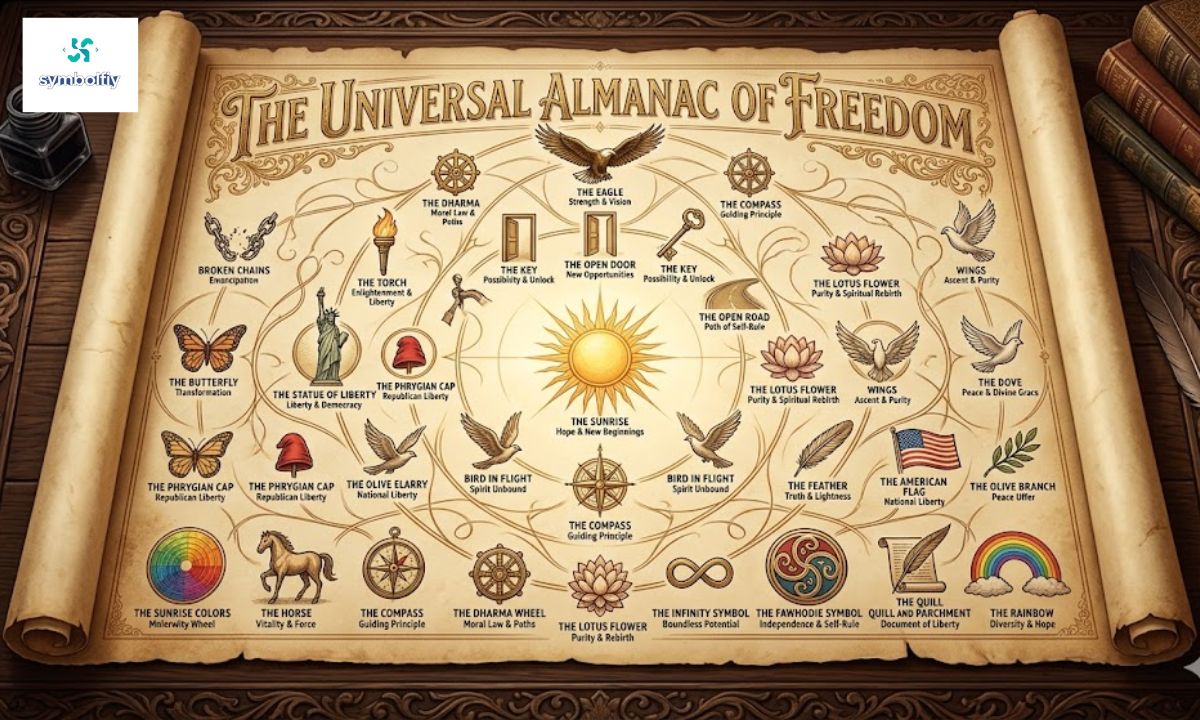
25 Symbols of Freedom and Their Meanings
1. The Eagle
Origin: Used across ancient civilizations including Rome, Persia, and the Americas as a symbol of divine power
Spiritual meaning: Rising above earthly limits, connecting the human world to the heavens
Historical background: Adopted as the U.S. national emblem in 1782 to represent strength and sovereignty
Cultural connection: Ancient Romans carried eagle standards into battle; Native American tribes regarded it as a messenger of the Great Spirit
Modern interpretation: Appears on national seals, currency, and military insignia across multiple countries
Emotional symbolism: The feeling of perspective — seeing your situation from high enough above that you stop being afraid of it
2. Broken Chains
Origin: Emerged as a symbol during abolitionist movements in the 18th and 19th centuries
Spiritual meaning: Liberation from what once bound the soul — fear, trauma, or spiritual oppression
Historical background: Closely tied to the abolition of slavery, particularly in American and British history
Cultural connection: Appears at the base of the Statue of Liberty and in the visual language of civil rights movements worldwide
Modern interpretation: Used today in art, tattoos, and protest imagery representing any form of personal or political liberation
Emotional symbolism: The specific relief of finally escaping something that held you for far too long
3. The Dove
Origin: Ancient Near Eastern cultures used the dove as a symbol of peace and divine favor
Spiritual meaning: Peace, purity, and the presence of the divine after conflict
Historical background: In the Biblical story of Noah, a dove returned with an olive branch to signal that the floodwaters had receded and life could begin again
Cultural connection: Christianity adopted the dove as the symbol of the Holy Spirit; Pablo Picasso’s 1949 dove lithograph became an international peace symbol
Modern interpretation: Used universally by peace organizations, humanitarian groups, and in diplomatic contexts
Emotional symbolism: The exhale after a long fight — the moment when tension finally breaks into quiet
4. The Statue of Liberty
Origin: Gifted to the United States by France in 1886, designed by sculptor Frédéric Auguste Bartholdi
Spiritual meaning: Enlightenment guiding people out of darkness — the torch she holds is a light for those who are lost
Historical background: She faces the Atlantic, welcoming immigrants arriving by sea to a new life and new possibility
Cultural connection: The figure is modeled on Libertas, the Roman goddess of freedom; her broken chains are intentionally visible at her feet
Modern interpretation: One of the most globally recognized symbols of democracy, hope, and refuge
Emotional symbolism: The feeling of being accepted somewhere after a long journey
5. The Butterfly
Origin: Symbolic across ancient Greek, Chinese, and Mesoamerican cultures
Spiritual meaning: Transformation and the soul’s journey — in ancient Greek, the word for butterfly and soul is the same: psyche
Historical background: Native American traditions viewed the butterfly as a carrier of messages between the human world and the spirit world
Cultural connection: In Japanese culture, the butterfly represents joy and longevity; in Celtic tradition, it symbolizes the human soul
Modern interpretation: One of the most popular freedom tattoo designs, representing personal change and new beginnings
Emotional symbolism: The proof that change, even painful change, can produce something beautiful
6. The Torch
Origin: Ancient Greece, where the Olympic torch relay symbolized passing knowledge and life from the gods to humanity
Spiritual meaning: Enlightenment, guidance, and the courage to carry light into dark places
Historical background: The torch has represented revolution and truth across French, American, and numerous other independence movements
Cultural connection: Prometheus, the Titan of Greek mythology, stole fire from the gods to give to humanity — making the torch an ancient symbol of defiance in service of others
Modern interpretation: Carried in the Olympic Games opening ceremony and held permanently by the Statue of Liberty
Emotional symbolism: Hope that keeps burning even when everything around it goes dark
7. The Open Road
Origin: Took on symbolic weight in American culture with westward expansion and the rise of road trip literature in the 20th century
Spiritual meaning: The path of one’s own choosing — no destination forced, no route assigned
Historical background: Jack Kerouac’s On the Road (1957) cemented the open highway as a cultural symbol of personal liberation and American identity
Cultural connection: Route 66 became iconic as a literal and metaphorical path to reinvention for generations of Americans
Modern interpretation: Still used in films, music, and advertising to represent independence, self-discovery, and escape from routine
Emotional symbolism: That specific feeling of leaving something behind without knowing exactly what’s ahead
8. The Bird in Flight
Origin: Universal across virtually every human culture since prehistoric times
Spiritual meaning: The soul’s ability to transcend the physical world — to move beyond what holds it down
Historical background: Ancient Egyptians depicted the soul as a bird called the Ba, which could leave the body and travel freely after death
Cultural connection: Appears in Sufi poetry, Celtic mythology, Native American spirituality, and Hindu iconography as a symbol of liberation
Modern interpretation: The most common freedom tattoo design worldwide — often depicted as birds breaking from a cage or flock rising into open sky
Emotional symbolism: The desire to rise above a situation and see it differently
9. The Phrygian Cap
Origin: Ancient Phrygia, a region of what is now Turkey, where it was worn as a common working cap
Spiritual meaning: The dignity of the individual regardless of social rank
Historical background: In ancient Rome, it was given to enslaved people when they were freed, instantly signaling their new status as free citizens
Cultural connection: The French Revolution adopted it as the bonnet rouge, a red cap worn by revolutionaries; it still appears in the official seals of several nations including France, Cuba, and Argentina
Modern interpretation: Less visually prominent today but historically one of the most politically charged freedom symbols in Western civilization
Emotional symbolism: The quiet power of having something that proves you belong to yourself
10. The Key
Origin: Keys as symbols appear across ancient Egyptian, Greek, and Roman religious traditions
Spiritual meaning: Access to truth, wisdom, or liberation — the idea that freedom is something you unlock, not something handed to you
Historical background: In Roman mythology, the god Janus held keys to gates between past and future, and between the mortal world and the divine
Cultural connection: In Christianity, Saint Peter holds the keys to heaven; in Freemasonry, keys represent secret knowledge and earned access
Modern interpretation: A popular tattoo and jewelry motif representing new chapters, opportunities, or freedom from past limitations
Emotional symbolism: The moment you realize you’ve had what you needed all along
11. The Sunrise
Origin: One of the oldest human symbols, appearing in Mesopotamian, Egyptian, and Indigenous art globally
Spiritual meaning: Hope, renewal, and the certainty that darkness is temporary
Historical background: Ancient Egyptians worshipped Ra, the sun god, as the ultimate source of life and freedom from chaos and darkness
Cultural connection: The rising sun appears on the flags of Japan and Bangladesh and in the iconography of numerous independence movements
Modern interpretation: Used in logos, tattoos, and art to represent new beginnings, recovery, and optimism after difficulty
Emotional symbolism: The quiet courage it takes to start again
12. Wings
Origin: Associated with freedom and divinity across ancient Egyptian, Greek, Roman, and Mesopotamian cultures
Spiritual meaning: The ability to transcend physical limitations and reach toward something higher
Historical background: Greek myth gave wings to Hermes (messenger of the gods), Icarus (who flew too close to the sun), and Nike (goddess of victory)
Cultural connection: Angel wings in Christian iconography represent divine freedom from earthly constraints; winged deities appear in Zoroastrian, Hindu, and Aztec traditions
Modern interpretation: Wing tattoos remain among the most requested in the world, representing protection, aspiration, and personal liberation
Emotional symbolism: The wish to go somewhere no one can follow you
13. The Lotus Flower
Origin: Ancient Egypt and India, where it grew in muddy water but bloomed perfectly above the surface
Spiritual meaning: Rising above suffering — the lotus doesn’t avoid the mud, it grows through it
Historical background: Sacred in both Hinduism and Buddhism as a symbol of spiritual awakening and purity
Cultural connection: In Buddhism, the lotus represents the enlightened mind: untouched by the world’s confusion despite being fully immersed in it
Modern interpretation: A popular symbol in meditation communities, yoga culture, and spiritual tattoos
Emotional symbolism: The specific kind of freedom that comes not from escaping difficulty, but from no longer being defined by it
14. The Infinity Symbol
Origin: The mathematical symbol (∞) was introduced by John Wallis in 1655, but the concept predates it by centuries
Spiritual meaning: Limitlessness — a reminder that no boundary is truly permanent
Historical background: Ancient Ouroboros imagery (a serpent eating its own tail) from Egypt and Greece carried the same meaning long before the modern infinity sign
Cultural connection: In Tibetan Buddhism, the endless knot symbolizes infinite wisdom and the interconnectedness of all things
Modern interpretation: Widely used in jewelry and tattoos to symbolize endless possibility, enduring love, or freedom from time itself
Emotional symbolism: The comforting idea that some things go on past the point where you can see them
15. The Feather
Origin: Sacred across Native American, Egyptian, and Celtic cultures
Spiritual meaning: Truth, lightness of spirit, and the freedom that comes from releasing what weighs you down
Historical background: In ancient Egypt, the heart of the deceased was weighed against a feather from Ma’at, the goddess of truth — lightness meant freedom in the afterlife
Cultural connection: Native American tribes used eagle feathers as sacred objects representing honor, bravery, and spiritual connection
Modern interpretation: A common tattoo symbol for those who have let go of grief, relationships, or old versions of themselves
Emotional symbolism: The lightness you feel when you finally stop carrying something that was never yours to carry
16. The Compass
Origin: Navigational compasses were used as early as the 11th century in China and spread through trade routes to the Arab world and Europe
Spiritual meaning: Inner guidance — the idea that you always have a direction if you trust your own instincts
Historical background: For sailors and explorers, a compass was the difference between being lost at sea and finding home
Cultural connection: Freemasonry uses the compass as a symbol of moral guidance and self-determination
Modern interpretation: One of the most common tattoo symbols, representing the freedom to find your own way regardless of where you’ve been
Emotional symbolism: Confidence that you can navigate whatever comes next
17. The Olive Branch
Origin: Ancient Greece, where it was sacred to Athena and used to crown victorious athletes
Spiritual meaning: Peace after conflict, and the freedom that only becomes possible once the fighting stops
Historical background: Used by the dove in Noah’s ark story to signal the end of the flood and the beginning of a new era
Cultural connection: The United Nations logo features olive branches flanking the world map; it’s a universal diplomatic symbol of peaceful resolution
Modern interpretation: Used in political and humanitarian contexts to signal willingness to end hostility and negotiate
Emotional symbolism: The relief of choosing peace instead of continuing a war that costs more than it wins
18. The American Flag
Origin: The first version was adopted on June 14, 1777, with thirteen stars and stripes representing the original colonies
Spiritual meaning: For many, a sacred object representing sacrifices made by those who came before
Historical background: Francis Scott Key described the flag still flying over Fort McHenry during the Battle of Baltimore in 1814 — a sight that moved him to write what became the national anthem
Cultural connection: The flag’s stars represent individual states unified as one nation; its colors — red for valor, white for purity, blue for justice — carry deliberate symbolic weight
Modern interpretation: Flown on homes, schools, and public buildings as a daily act of patriotic identity
Emotional symbolism: Belonging — the complex feeling of being part of something larger than yourself
19. The Horse
Origin: Wild horses roamed freely across ancient steppes and became central to nomadic freedom long before they were domesticated
Spiritual meaning: Untamed power and the right to move without restriction
Historical background: Wild mustangs in the American West became symbols of frontier freedom and the spirit of a landscape that hadn’t yet been fenced in
Cultural connection: Celtic mythology linked horses to sovereignty and the land itself; in Hinduism, the horse is associated with Surya, the sun god
Modern interpretation: Used in art and photography to represent wild spirit, strength, and freedom from conformity
Emotional symbolism: The part of you that resists being contained, even when you know it’s complicated
20. The Open Door
Origin: Universal metaphor appearing in nearly every world religion and philosophical tradition
Spiritual meaning: An invitation to cross from one state of being into another — from fear into courage, from suffering into peace
Historical background: In Christian scripture, Jesus described himself as a door through which people could find life; open doors in temple symbolism represented access to the sacred
Cultural connection: Used across Sufi poetry, Buddhist teaching, and Western literature as a threshold between limitation and possibility
Modern interpretation: A popular symbol in motivational art and personal growth communities
Emotional symbolism: The moment you realize nothing is actually holding you back except the decision to walk through
21. The Dharma Wheel
Origin: One of the oldest Buddhist symbols, dating to the time of the Buddha in the 5th century BCE
Spiritual meaning: Spiritual freedom through understanding — the wheel represents the path that leads out of suffering
Historical background: Emperor Ashoka of India placed the Dharma Wheel on his edicts after converting to Buddhism following a devastating war, symbolizing his commitment to peace and moral governance
Cultural connection: Appears on the national flag of India and represents the country’s foundational commitment to justice and the rule of law
Modern interpretation: Used in Buddhist communities worldwide as a reminder that freedom is found by following a mindful path
Emotional symbolism: The freedom that comes not from doing whatever you want, but from no longer being driven by impulse and fear
22. The Fawohodie Symbol
Origin: An Adinkra symbol from the Akan people of Ghana and Côte d’Ivoire in West Africa
Spiritual meaning: Independence earned through responsibility — freedom that comes with self-respect, not just self-interest
Historical background: The word Fawohodie translates roughly to “independence, emancipation, and freedom” — it was used as a visual declaration of autonomy
Cultural connection: Adinkra symbols were traditionally stamped onto cloth and used in ceremonies; each carried a specific philosophical meaning
Modern interpretation: Gaining recognition globally as a non-Western freedom symbol with a specifically communal and ethical dimension
Emotional symbolism: The dignity of knowing you belong to yourself and choosing to use that freedom responsibly
23. The Sunrise Colors (Saffron, Gold, and Orange)
Origin: Sacred color symbolism found across Hindu, Buddhist, and Indigenous traditions worldwide
Spiritual meaning: Light overcoming darkness, and the warmth that signals a new period of life
Historical background: Saffron is the color of renunciation and spiritual freedom in Hinduism; the orange robes of Buddhist monks represent release from material attachment
Cultural connection: The pan-African flag uses green, black, and gold partly because gold represents Africa’s wealth and the light of a free future
Modern interpretation: Used in branding, art, and ceremony to evoke warmth, energy, and the promise of something new
Emotional symbolism: That first moment of warmth after a long, cold stretch
24. The Quill and Parchment
Origin: Became symbolic during the Enlightenment era, when writers and philosophers used the written word to challenge monarchies and religious authority
Spiritual meaning: The freedom of thought — the idea that the mind, when it can write freely, cannot truly be imprisoned
Historical background: The American Declaration of Independence and French Declaration of the Rights of Man gave the written word a revolutionary power that changed the world
Cultural connection: Freedom of the press, enshrined in the First Amendment, is represented globally by the image of the pen or quill as a tool of liberation
Modern interpretation: Journalists and writers worldwide hold up the pen as a symbol of resistance to censorship and authoritarian control
Emotional symbolism: The quiet courage of saying the true thing even when it’s unwelcome
25. The Rainbow
Origin: A natural phenomenon adopted as a sacred symbol across dozens of cultures throughout human history
Spiritual meaning: Promise, hope after suffering, and the beauty that emerges when different forces meet
Historical background: In Norse mythology, the Bifrost rainbow bridge connected the human world to the realm of the gods; in the Hebrew Bible, the rainbow was God’s covenant of peace with humanity after the flood
Cultural connection: Since the 1970s, the rainbow flag has become a global symbol of LGBTQ+ freedom, identity, and the right to exist without shame or fear
Modern interpretation: Represents both ancient promises and modern civil rights — the overlapping idea that every person deserves the freedom to live as themselves
Emotional symbolism: The feeling that the storm was worth enduring because of what it left behind
Ancient Cultures That Used These Symbols
Ancient Egypt: Egyptians used bird imagery, the sun, and the feather of Ma’at to represent freedom of the soul after death. Their entire spiritual system was built around the concept of liberation from chaos.
Ancient Greece: Democracy itself was a Greek invention, and its symbols — the olive branch, open civic spaces, winged gods — all reflected freedom as both a political and divine right.
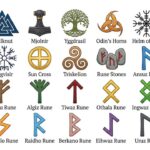
Norse/Germanic traditions: Runes, the eagle, and the Valkyries represented freedom through strength, fate, and the warrior’s choice of how to live and die.
Native American cultures: Eagles, feathers, horses, and open landscapes were sacred symbols of spiritual freedom and the connection between the human spirit and the natural world.
Buddhism: The Dharma Wheel, lotus, and open sky represent inner liberation — freedom from the cycle of suffering through wisdom and compassion.
West African (Akan) traditions: Adinkra symbols like Fawohodie framed freedom as a moral and communal concept, not just a personal one — a balance of rights and responsibilities.
Celtic traditions: The butterfly, horse, and open water were symbols of the soul’s freedom to move between worlds, reflecting a view of life as fluid and interconnected.
Why Symbols Still Matter Today
In an era of constant digital noise, symbols cut through faster than any sentence can. A tattoo of broken chains on someone’s wrist tells a whole story without a caption. A feather hanging in a window communicates something that would take paragraphs to explain.
People continue to use freedom symbols because they do what language sometimes can’t — they hold a feeling and make it visible.
These symbols also matter because freedom itself is never fully settled. People get these images tattooed not just to celebrate liberation, but to remind themselves it’s possible.
They wear them in jewelry, paint them on walls, and carry them into protests because some truths need to be visible — not just believed. A symbol of freedom is both a declaration and a promise: this is what I’m moving toward.
Frequently Asked Questions
What is the most universal symbol of freedom?
The bird in flight is recognized across nearly every culture as a symbol of freedom and limitless possibility.
Why do broken chains symbolize freedom?
They represent the moment of physical liberation from bondage or oppression — the act of breaking free made visible.
What does a butterfly tattoo mean in terms of freedom?
It symbolizes personal transformation and the freedom that follows a period of difficult change.
Are freedom symbols the same in every culture?
No — the imagery varies widely, but the underlying desire for liberation is a consistent human experience across all of them.
Can everyday objects be symbols of freedom?
Yes — a key, an open door, or even an empty road can all carry the meaning of freedom depending on personal and cultural context.
Conclusion
Freedom symbols have outlasted the empires, movements, and moments that created them because they speak to something permanent in human nature. Whether it’s an eagle carved into a coin from 200 BC or a rainbow flag hanging in a window today, these images carry the same essential message: people have always wanted to live without chains — visible ones and invisible ones. These symbols are their way of saying so.