
You’re staring at a tiny icon to determine whether the yellow light on your dashboard is serious. Your car uses that tiny light to communicate with you before a minor issue becomes a costly one. You won’t need to guess after you understand the meaning of each sign.
What Do Yellow Warning Lights Mean?
Car manufacturers employ colour in the way of traffic signals. Yellow ( sometimes called amber ) is in the middle , it ‘s not an emergency but it ‘s not nothing either .
A yellow light is “something to look at soon.” Normally you can keep driving but you should get the problem looked at before it becomes a red light, meaning stop the car now.
Quick Reference Table
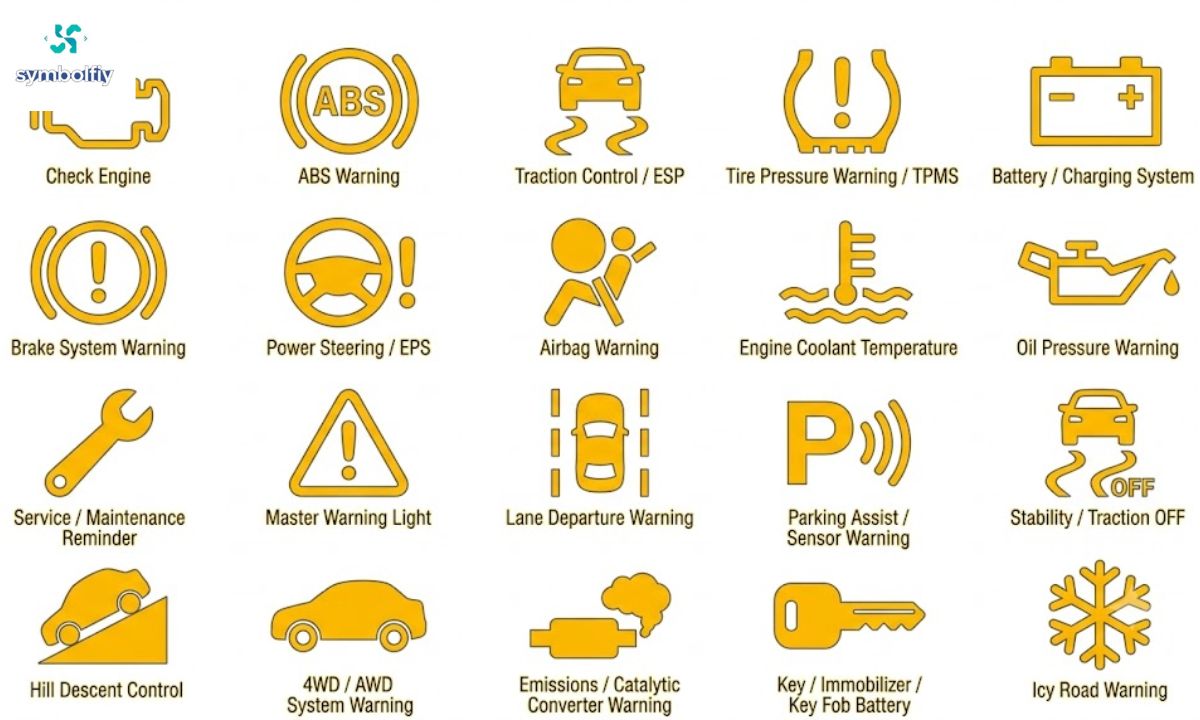
| Symbol Look | Light Name | What It Means |
| 🔧 Engine outline | Check engine | Engine or emissions fault |
| Ⓐ ABS in circle | ABS warning | Anti-lock brakes disabled |
| 🚗〰️ Car with skid lines | Traction/ESP | Stability system issue |
| 🐴❗ Horseshoe with “!” | Tire pressure (TPMS) | Low tire pressure |
| 🔋 Battery shape | Battery/charging | Alternator problem |
| 🚙❗ Steering wheel with “!” | Power steering | Steering assist reduced |
| 🌡️ Thermometer | Coolant temp | Cooling system issue |
| ☁️ Exhaust cloud | Emissions | Catalyst or sensor fault |
| ⭕⋯ Dashed circle | Brake pad wear | Pads near limit |
| 🔧 Wrench | Service due | Maintenance needed |
| ▲❗ Triangle with “!” | Master warning | General alert |
Engine and Drivetrain Warning Lights
These lights cover the heart of your car, the engine and the systems that move power to the wheels. Most of them point to something mechanical or electronic under the hood.
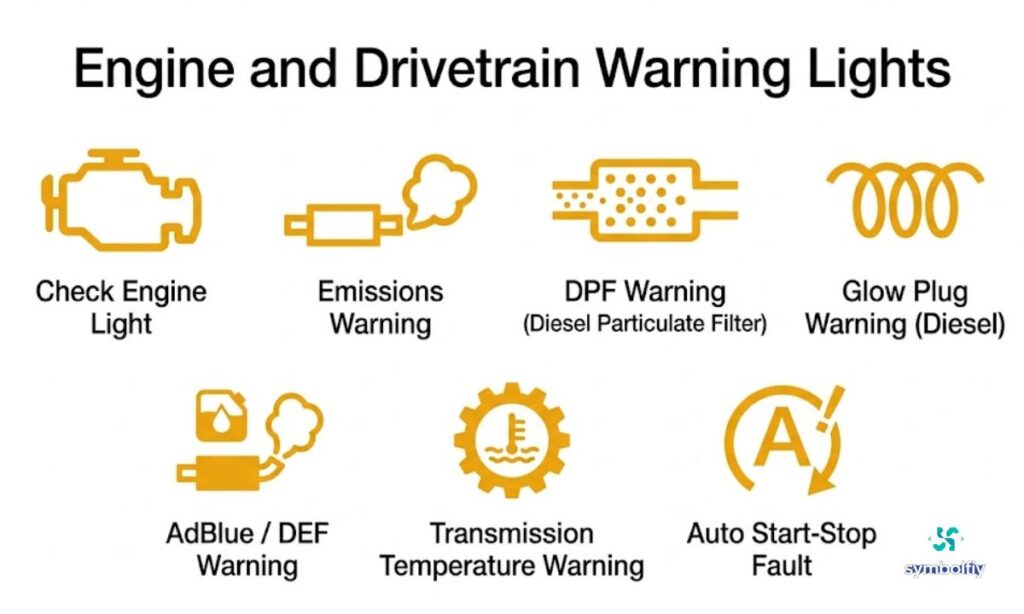
Check Engine Light 🔧
This looks like a small engine block outline, sometimes with the words “CHECK ENGINE.” It can mean something as simple as a loose fuel cap, or something bigger like a misfire. Get it scanned soon so you know which one it is.
A steady light usually means a moderate issue you can drive with for a short while. A flashing check engine light is more urgent and means you should slow down and get it looked at right away.
Emissions Warning ☁️
Shaped like a small cloud or exhaust pipe, this light points to a problem in your emissions system. It could be the catalytic converter, an oxygen sensor, or the EGR valve.
Your car will likely still run fine for now. But emissions faults tend to hurt fuel economy over time, so it’s worth booking a diagnostic scan soon.
DPF Warning (Diesel Particulate Filter) 🧯
This symbol looks like a small filter or cylinder shape, sometimes with dots inside. It shows up mostly in diesel cars and means the particulate filter is clogging up.
A short highway drive at higher speed can sometimes clear a mild clog on its own. If the light stays on, a garage visit is the safer bet.
Glow Plug Warning (Diesel) 🌀
A coiled spring or spiral icon, this one is specific to diesel engines. It usually just means the glow plugs are warming up before you start the car.
If it stays on after starting, or flashes while driving, that points to a glow plug or sensor fault that needs checking.
AdBlue / DEF Warning 💧
This looks like a small droplet, sometimes labeled “AdBlue” or “DEF.” It means your diesel exhaust fluid is running low.
Don’t ignore this one. Some diesel engines will limit performance or refuse to restart if the fluid runs completely empty.
Transmission Temperature Warning 🌡️⚙️
A thermometer next to a gear symbol. This tells you the transmission fluid is running hotter than normal, often from towing or heavy stop-and-go driving.
Pull over when safe and let the car cool down. Repeated overheating can shorten the life of your transmission.
Auto Start-Stop Fault ⓘ🔁
An “A” with a circular arrow, sometimes crossed out. It means the automatic engine start-stop feature isn’t working properly.
This isn’t dangerous, your car just won’t shut off at stoplights to save fuel. A dealer scan can usually sort out the cause.
Braking and Tire Warning Lights
Anything to do with stopping or grip deserves quick attention. These lights are some of the most important ones on the dashboard.
ABS Warning Light Ⓐ
A circle with “ABS” inside. It means your anti-lock braking system has a fault. Your regular brakes still work, but you’ll lose the anti-skid assistance during hard stops.
Drive carefully, especially on wet roads, and get this checked soon. ABS matters most in emergency braking situations.
Traction Control / ESP Warning 🚗〰️
A small car icon with wavy lines underneath, or the letters “ESP.” When it flashes, the system is actively helping you grip the road. When it stays on steady, there’s a fault.
A steady light means the system may not kick in when you need it, so treat wet or icy roads with extra care.
Tire Pressure Warning (TPMS) 🐴❗
Shaped like a horseshoe with an exclamation mark in the middle. This means one or more tires are under-inflated, or the sensor itself has an issue.
Check your tire pressure at a gas station as soon as you can. Driving on low tires wastes fuel and wears them out faster.
Brake Pad Wear Warning ⭕⋯
Usually a circle with dashed lines, sometimes shown as a simple brake icon. It tells you your brake pads are getting thin and will need replacing soon.
Don’t put this off for months. Worn pads take longer to stop the car and can damage your brake rotors if ignored too long.
Brake Fluid Low Warning 🛢️❗
An exclamation mark inside a circle, often paired with “(!)BRAKE” text. It usually points to low brake fluid, which can also mean worn pads pulling fluid down.
Check your fluid level under the hood. If it’s low with no clear reason, have a mechanic check for a leak.
Electronic Parking Brake Fault (P)❗
A “P” with an exclamation mark or circle around it. This means the electronic parking brake system has detected a problem.
You may need to release the brake manually using a backup lever. Get this checked before your next long drive.
Electrical and Battery Warning Lights
Modern cars run on electricity for almost everything, so these lights matter more than people expect.
Battery / Charging System Warning 🔋
A simple battery shape with plus and minus signs. This does not just mean a weak battery, it usually points to the alternator not charging properly.
If this comes on while driving, your car is running on stored battery power only. Head to a garage before it dies completely.
Key / Immobilizer Warning 🔑
A key shape, sometimes with a battery symbol next to it. It means the car isn’t detecting your key fob properly, or the immobilizer system has an issue.
Try moving the fob closer to the start button. If the light stays on, the fob battery may need replacing.
Power Steering Warning (EPS) 🚙❗
A steering wheel icon with an exclamation mark. It means the electric power steering assist is reduced or has switched off.
The car will still steer, but it will feel much heavier. Slow down and drive carefully until it’s checked.
Bulb Failure Warning 💡
A small bulb outline, sometimes with an exclamation point. It tells you one of your exterior lights, like a headlight or taillight, has burned out.
Replace the bulb quickly. Driving with a dead light is both a safety risk and, in many places, against the law.
Driver-Assist and Safety System Lights
Newer cars pack in extra sensors and cameras. These lights cover the smart features that watch the road for you.
Lane Departure Warning 🚗↔️
A car icon between two lane lines, often with small arrows. It tells you the system is either active or that you’re drifting out of your lane without signaling.
If it stays lit constantly, the camera or sensor may need cleaning or recalibrating.
Forward Collision Warning ⚠️🚗
A car icon facing another car, usually in red or yellow depending on the brand. It warns that you’re approaching the vehicle ahead too quickly.
Ease off the gas and check your following distance. A repeated warning with no clear reason may mean a sensor fault.
Blind Spot Monitoring Fault 👁️❗
A car with a wave-like signal on the side mirror area. When this light shows a fault, the blind spot sensors aren’t working correctly.
Rely on manual mirror checks and shoulder checks until the system is repaired.
Parking Assist / Sensor Fault 🅿️〰️
A “P” letter with curved lines, representing sound waves. This means the parking sensors or the parking assist system has a fault.
Park a little more carefully using your mirrors until the sensors are checked.
Adaptive Cruise Control Fault 🚗➡️❗
A car icon with a wavy line in front of it. This shows the radar-based cruise control system can’t currently maintain a safe following distance.
You can still use regular cruise control in most cases, but the adaptive feature will need a service visit.
Adaptive Headlight Fault 💡↔️❗
A headlight beam icon with a curved arrow. It means the headlights that automatically adjust angle aren’t functioning correctly.
Your headlights will still work normally, just without the auto-adjust feature, until it’s fixed.
Drivetrain and Terrain System Lights
Some lights only show up in trucks, SUVs, and all-wheel-drive cars, since they relate to how the car handles rough or slippery ground.
Hill Descent Control / 4WD Warning 🏔️
A car on a slope icon, sometimes labeled “HDC” or “4WD.” It shows either that the system is active or that it has a fault.
If it’s a fault warning, avoid steep descents until you’ve had it looked at, especially off-road.
Air Suspension Warning 🚙⬇️
A car icon with up and down arrows near the wheels. It points to an issue with the air suspension system, often low pressure in the system.
The ride may feel lower or bumpier than usual. Get it inspected to avoid uneven tire wear.
AWD System Warning 🔄🚗
A circular arrow around a car icon. This tells you the all-wheel-drive system has detected a problem and may not distribute power correctly.
Drive gently on slippery surfaces until the system is checked, since grip may be reduced.
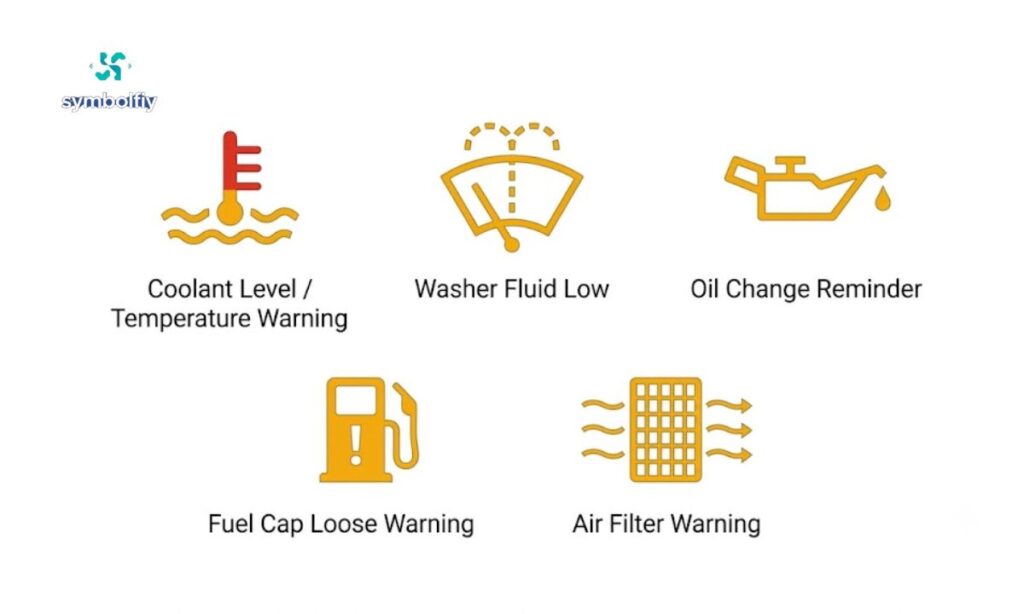
Fluid and Maintenance Warning Lights
These lights are less dramatic, but ignoring them for too long often leads to bigger repair bills.
Read Must: 25+ Mercedes Dashboard Symbols and What They Mean
Coolant Level / Temperature Warning 🌡️〰️
A thermometer over wavy lines, or a coolant symbol. In its yellow stage, this usually means coolant is low, not that the engine is overheating yet.
Check your coolant level once the engine has cooled down. Never open a hot radiator cap.
Washer Fluid Low 🧴💧
A windshield icon with droplets. It simply means your washer fluid reservoir is running low.
Top it up when you can. It’s not urgent, but clean visibility matters for safe driving.
Oil Change Reminder 🛢️🔧
An oil can icon, sometimes paired with a wrench. This is a scheduled reminder rather than a fault, letting you know it’s time for an oil change.
Book a service soon. Old oil loses its ability to protect the engine properly.
Fuel Cap Loose Warning ⛽❗
A gas pump icon with an exclamation mark. This usually means the fuel cap isn’t sealed properly, which can also trigger a check engine light.
Pull over, tighten the cap until it clicks, and the light should clear within a few drives.
Air Filter Warning 🌬️
A filter-shaped icon, sometimes with a fan symbol. It tells you the air filter is due for a check or replacement.
A clogged filter can reduce fuel efficiency, so don’t leave this one too long.
General and Master Warning Lights
Some lights don’t point to one specific system. Instead, they tell you to look elsewhere on the dashboard for more details.
Master Warning Light ▲❗
A triangle with an exclamation mark inside. This is a general alert that usually appears alongside a text message or another icon.
Check your instrument cluster display for more detail on what triggered it.
Service Vehicle Soon 🔧
A wrench icon, sometimes with the words “SERVICE” or “SERVICE ENGINE SOON.” It can mean routine maintenance is due, or that a minor fault has been logged.
It’s not usually urgent, but it shouldn’t be ignored for too long either.
Trailer Connection Fault 🚛❗
A trailer icon with an exclamation mark. This shows up when towing and means the trailer lights or connection aren’t working correctly.
Check your trailer’s light connector and wiring before continuing your trip.
Speed Limiter Indicator 🚗🔢
A car icon next to a speed number. This isn’t a fault, it simply shows the speed limiter feature is currently active.
If you didn’t turn it on, check your settings, since it will cap your speed until switched off.
Icy Road Warning ❄️
A simple snowflake icon. It appears when outside temperatures drop close to freezing, warning you that the road ahead may be slippery.
Slow down and increase your following distance, especially on bridges and shaded roads.
Why These Lights Still Matter Today
Dashboard symbols exist because drivers need information fast, not have to read a paragraph at 60 miles an hour. A shape you see in half a second is better than a statement you have to read twice.
It means more lights not less . New cars have more and more sensors . Once you learn the common ones you won’t be guessing every time something flashes on your dash.
Frequently Asked Questions
What does a yellow warning light mean on my dashboard?
It means a system needs attention soon, but you can usually keep driving for now.
Is it safe to drive with a yellow check engine light on?
Yes, for a short while, but get it scanned soon to find out what’s wrong.
What’s the difference between yellow and red warning lights?
Yellow means caution and check soon, red means stop the car safely right away.
Why do so many warning lights look similar?
Car makers follow shared international symbol standards, so icons stay familiar across different brands.
Can I reset a warning light myself?
Some clear on their own after the issue is fixed, but persistent lights usually need a proper diagnostic scan.
Conclusion
Yellow warning lights are your car’s early warning system that tell you about problems before they become expensive repairs. Knowing what every symbol indicates means you can respond calmly rather than guessing at the wheel. Keep this guide nearby and your dashboard will start to make a lot more sense.