Flowers have carried meaning for thousands of years. Long before people wrote cards or sent texts, they gave flowers to share feelings they could not say out loud. A single bloom could mean love, sorrow, hope, or friendship.
This practice — called floriography — was especially popular in the Victorian era. But even today, the language of flowers speaks to something deep inside us. Understanding flower symbols connects us to history, culture, and the emotions that make us human.
Flowers are nature’s messengers. Each one carries a unique meaning shaped by centuries of culture, mythology, and human emotion. Red roses speak of passion. White lilies whisper of peace. Yellow sunflowers shout pure joy.
These meanings were not invented overnight — they grew slowly through stories, traditions, and the way people naturally connected certain blooms with certain feelings.
The symbolism of flowers goes beyond romance. Flowers mark birth, death, celebration, and healing. They appear in religious rituals, spiritual practices, wedding ceremonies, and funeral rites across every culture on earth.
A flower placed on a grave or handed to a bride carries weight that no greeting card fully captures. That is the true power of flower symbolism.
25+ Flower Symbols and Their Meanings
Rose Symbols and Their Meanings
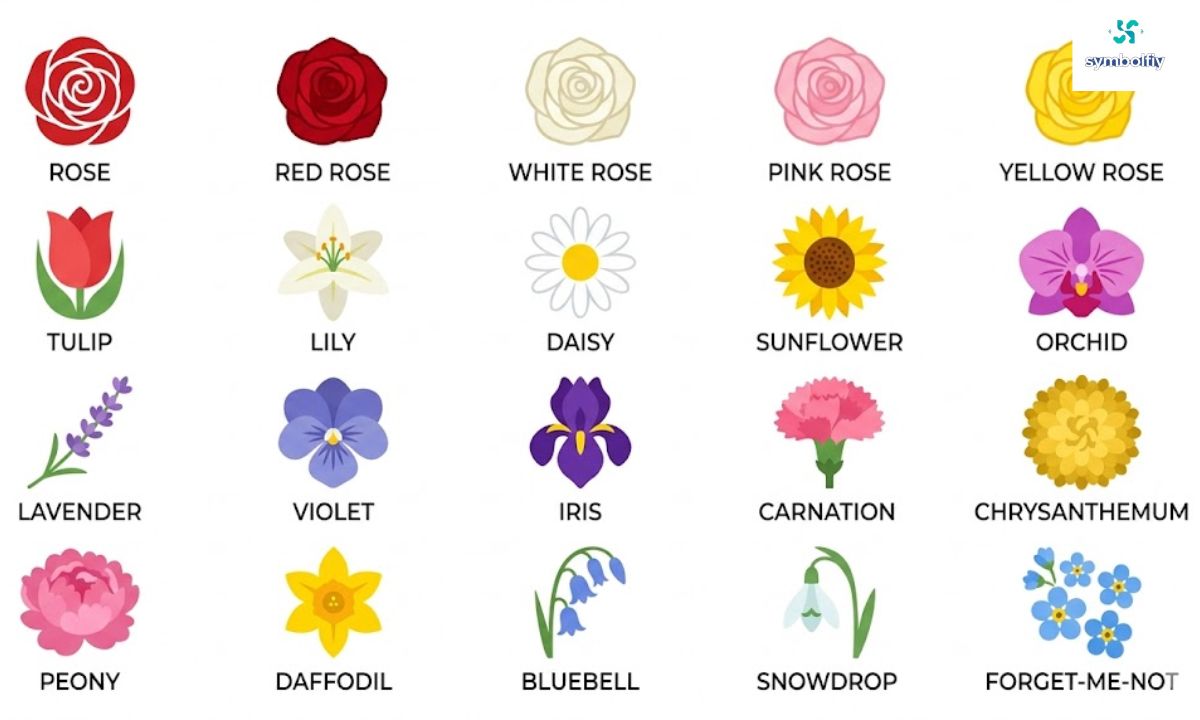
Roses are the most symbolically rich flowers in the world. Their color changes everything — same flower, completely different message. The rose has been used in art, poetry, religion, and romance for over five thousand years.
🌹 Red Rose
The red rose is the universal symbol of deep love and passion. It says “I love you” without a single word. Ancient Romans connected it to Venus, the goddess of love. Today it remains the most popular flower for Valentine’s Day and anniversaries worldwide.
🤍 White Rose
The white rose stands for truth, innocence, and purity. It is common at weddings and funerals alike — representing new beginnings and peaceful endings. In Victorian floriography, sending a white rose meant “I am worthy of you” or “my feelings are pure.”
🩷 Pink Rose
Pink roses carry a softer, gentler message than red. They represent admiration, gratitude, and warm affection. Light pink means sweetness and joy. Deep pink means thankfulness and appreciation. Pink roses are perfect for mothers, friends, and gentle expressions of care.
💛 Yellow Rose
Yellow roses once meant jealousy in Victorian times — but their meaning shifted completely. Today they are a bright symbol of friendship, happiness, and caring. They are perfect for a cheerful “thinking of you” or a warm “congratulations.”
🧡 Orange Rose
Orange roses sit between red and yellow — they carry both passion and friendship. They represent enthusiasm, energy, and desire. An orange rose says “I am fascinated by you” or “I admire your spirit.” They are bold, warm, and full of life.
🟣 Purple Rose
Purple roses symbolize luxury, elegance, and enchantment. In mythology, purple was a color reserved for royalty. A purple rose says “you are special and rare.” They are also connected to love at first sight and deep admiration.
Lily Symbols and Their Meanings
Lilies are one of the oldest cultivated flowers in the world. They carry powerful spiritual meanings across many religions and cultures. Their tall, elegant form makes them a natural symbol of grace.
🌸 White Lily
The white lily is one of the most spiritually significant flowers. In Christianity, it represents the Virgin Mary and is called the “Madonna Lily.” It symbolizes purity, virtue, and the soul’s connection to the divine. White lilies are common at Easter and funerals to represent eternal life.
🌷 Pink Lily
Pink lilies carry warmth, prosperity, and feminine energy. They symbolize love and admiration without the intensity of red. In some Eastern traditions, pink lilies are connected to abundance and good fortune, making them popular wedding flowers.
🟠 Orange Lily
The orange lily represents confidence, passion, and a bold spirit. It is sometimes called the “Tiger Lily” and carries a fierce, vibrant energy. It says “I dare you to notice me.” In some older traditions, it was connected to pride and hatred — but modern usage leans toward celebration.
Tulip Symbols and Their Meanings
Tulips became famous through the “tulip mania” of 17th-century Holland, when they were worth more than gold. This history makes them natural symbols of worth, rarity, and deep feeling.
❤️ Red Tulip
The red tulip is a bold declaration of love. In the language of flowers, it says “believe me” and “I love you deeply.” It carries the same passionate energy as a red rose but with a fresher, more direct feeling.
🤍 White Tulip
White tulips symbolize forgiveness and new beginnings. They carry a quiet, hopeful energy. Sending white tulips says “let us start fresh” or “I ask for your forgiveness.” They are also used to represent worthiness and pure intentions.
💜 Purple Tulip
Purple tulips are connected to royalty, admiration, and luxury. They say “you are extraordinary.” They carry a regal quality and are often given to express deep respect or strong admiration for someone special.
💛 Yellow Tulip
Yellow tulips mean cheerful thoughts and sunshine. They are a hopeful, joyful symbol. Unlike yellow roses (which once meant jealousy), yellow tulips have always carried happy energy — they represent brightness and optimism for the future.
Other Popular Flower Symbols
These beloved flowers each carry their own unique symbolic story rooted in history, mythology, and emotion.
🌻 Sunflower
The sunflower follows the sun — and that movement is its core symbol. It represents adoration, pure thoughts, and dedication. A sunflower says “I only have eyes for you.” It also symbolizes loyalty, positivity, and the strength to always face the light even in dark times.
💜 Lavender
Lavender is the flower of devotion and calm. Its purple-grey color and soothing scent make it a symbol of serenity, loyalty, and spiritual peace. In older traditions, lavender was given to show undying devotion. Today it also represents healing, relaxation, and mindfulness.
🌼 Daisy
The daisy is innocence in flower form. It represents pure, childlike happiness and simple, honest love. The game “he loves me, he loves me not” uses daisy petals for a reason — the daisy has always been connected to playful, hopeful love. It also symbolizes new beginnings and fresh starts.
🌸 Cherry Blossom
Cherry blossoms are deeply symbolic in Japanese culture. They represent the beauty and fragility of life — beautiful but brief. The Japanese concept of “mono no aware” (the bittersweet awareness of impermanence) is captured perfectly in the cherry blossom. They also symbolize renewal each spring.
🌺 Orchid
Orchids represent elegance, longevity, and rare beauty. In ancient Greece, orchids were connected to virility and fertility. In Chinese culture, they symbolize refinement and the friendship of scholars. Today they represent luxury, strength, and the beauty that comes from being truly unique.
🔵 Forget-Me-Not
The forget-me-not is exactly what its name says — a symbol of true love, remembrance, and loyalty. In the language of flowers, it says “please do not forget me.” It is used in memorial designs, farewell gifts, and as a symbol of bonds that survive even separation and loss.
❄️ Snowdrop
The snowdrop blooms in the middle of winter — making it a powerful symbol of hope. It represents the promise that spring will come, that hard times will end, and that new life is always on the way. In spiritual traditions, snowdrops are connected to purity and the light returning after darkness.
🌿 Lily of the Valley
Lily of the valley is delicate, sweet, and deeply meaningful. It symbolizes the return of happiness, humility, and purity of heart. In Christian tradition, it is associated with the Virgin Mary. It is also the birth flower for May and a classic choice for wedding bouquets.
🌸 Peony
The peony is a symbol of bashfulness, good fortune, and romance. In Chinese culture, it is called the “king of flowers” and represents prosperity and honor. In Western floriography, it carries a more modest meaning — the feeling of shyness when something beautiful catches you off guard.
🌸 Cherry Blossom (Sakura)
Already covered above — but worth noting that in China, cherry blossoms also represent feminine beauty, power, and love. Different cultures read the same bloom through their own lens.
🌿 Bluebell
Bluebells represent consistency, gratitude, and “forgive and forget.” In Celtic folklore, bluebells were connected to fairies and the magical world. They also carry the meaning of humility and everlasting love. Fields of bluebells are considered enchanted places in British tradition.
🌼 Chrysanthemum
Chrysanthemum meanings vary dramatically by culture. In China and Japan, they represent longevity, rejuvenation, and noble character. In Europe, especially France and Belgium, white chrysanthemums are placed on graves as symbols of grief. A red chrysanthemum says “I love you” in the Victorian flower language.
🌸 Carnation
Carnations carry detailed color meanings. Red carnations say “my heart aches for you” — a deep, sorrowful love. Pink carnations represent a mother’s undying love. White carnations mean pure love and good luck. Purple carnations signal unpredictability. In Spain, carnations are closely tied to flamenco culture and passion.
🌼 Daffodil
The daffodil is one of the most hopeful flowers. It symbolizes new beginnings, rebirth, and chivalry. As one of the first flowers to bloom in spring, it naturally carries the energy of fresh starts. In Wales, seeing the first daffodil of the season is believed to bring more gold than silver in the coming year.
🌸 Iris
The iris carries rich symbolic layers. Its name comes from the Greek goddess Iris, who was the messenger of the gods and personified rainbows. Yellow iris represents the flame of love. Purple iris symbolizes wisdom and compliment. Blue iris conveys hope and faith. White iris stands for purity and reverence.
🌼 Poppy
The red poppy is one of the most emotionally powerful flower symbols in the modern world. In the United Kingdom and Commonwealth nations, red poppies are worn in November to remember soldiers who died in war. This tradition started after World War I. Beyond remembrance, poppies also symbolize peaceful sleep and imagination.
🌸 Freesia
Freesias represent friendship, trust, and thoughtful care. Their delicate fragrance makes them popular in bouquets. Sending freesias says “I trust you completely” or “our friendship is something I treasure.” They are also connected to innocence and lasting bonds.
🌸 Gladiolus
The gladiolus gets its name from the Latin word for sword — “gladius.” It symbolizes strength of character, integrity, and sincerity. Sending gladioli says “you pierce my heart” in the most positive way. It also represents moral integrity and the courage to stand up for what is right.
🌼 Narcissus
The narcissus carries a complex meaning rooted in Greek mythology. Narcissus was a young man who fell in love with his own reflection. The flower now symbolizes self-esteem, female ambition, and deep inner reflection. In some traditions, it also means “stay as sweet as you are” — a compliment to someone’s good nature.
🌸 Pansy
The pansy symbolizes thoughtfulness and loving remembrance. Its name comes from the French word “pensée” meaning “thought.” Sending pansies says “I am thinking of you.” In Victorian times, pansies were frequently given as tokens of affection and remembrance between friends and lovers.
🌿 Hawthorn
The hawthorn is the birth flower for May and is deeply tied to Celtic and British folklore. It represents hope, motherhood, and protection. Hawthorn was often planted around homes to ward off evil. In Celtic tradition, the hawthorn tree was considered a gateway between the human world and the fairy realm.
🌸 Magnolia
The magnolia represents nobility, perseverance, and love for nature. In the American South, it is a symbol of regional pride and enduring beauty. In Chinese culture, magnolias symbolize purity and dignity. Because the magnolia is one of the oldest flowering plants on earth, it also carries a sense of deep, ancient strength.
🌼 Zinnia
Zinnias represent lasting affection and the memory of absent friends. They say “I think of you always, even when you are far away.” Their bright, bold colors also connect them to joy, endurance, and the kind of friendship that survives distance and time.
Ancient Cultures That Used Flower Symbols
Ancient Egypt — Egyptians used lotus flowers in religious ceremonies. The lotus rising from muddy water represented creation, rebirth, and the sun god Ra. It appeared on temple walls, jewelry, and royal crowns.
Greek mythology — The Greeks connected flowers to their gods. The narcissus came from a tragic myth about vanity. Hyacinths grew from the blood of the fallen youth Hyacinthus, beloved by Apollo. Flowers explained the origin of natural beauty.
Roman culture — Romans scattered rose petals at celebrations and funerals. Venus, goddess of love, was inseparable from the rose. The phrase “sub rosa” (under the rose) meant something told in secret — a direct nod to rose symbolism.
Victorian England — The Victorians turned flower symbolism into a full language called floriography. Books were published to decode flower messages. Giving the wrong flower could send an unintended message. It was the era’s most elegant form of emotional communication.
Chinese culture — Peonies, plum blossoms, chrysanthemums, and orchids are the “Four Gentlemen” of Chinese art. Each represents a season and a virtue: integrity, resilience, nobility, and refinement. Flowers were deeply tied to moral character.
Japanese culture — The Japanese art of Hanakotoba assigns meanings to flowers in a quiet, subtle way. Cherry blossoms represent impermanence. Chrysanthemums represent the Emperor and longevity. The entire practice reflects Japan’s cultural love for nature and mindful beauty.
Celtic traditions — Celts saw flowers as magical gateways. Bluebells invited fairy intervention. Hawthorn marked sacred spaces. Flowers were tools for protection, healing, and connecting with the spirit world.
Christianity — White lilies represented the Virgin Mary. Red roses connected to Christ’s blood and sacrifice. The passion flower depicted the crucifixion in its petals. Flowers became living scripture in Christian symbolism.
Why Flower Symbols Still Matter Today
Flowers have not lost their power — they have just found new homes. People get flower tattoos to carry meanings permanently on their skin. A rose tattoo might honor a lost loved one.
A lotus tattoo can mark a personal transformation. A wildflower design might represent freedom and growth. These old symbols live on through modern self-expression in the most personal way possible.
In everyday life, flowers still shape how we communicate emotion. We send bouquets at funerals, weddings, graduations, and hospital visits because no card says it quite as well.
In mindfulness and spiritual practice, flowers like lavender and lotus are used in meditation, healing rituals, and altar arrangements. The language of flowers is not dead — it is woven into everything we do when we want to say something from the heart.
Frequently Asked Questions
What is floriography?
It is the Victorian-era practice of using flowers to send coded emotional messages without speaking.
What flower best symbolizes love?
The red rose is the most universal symbol of deep romantic love across cultures worldwide.
What do white flowers represent at funerals?
White flowers symbolize purity, peace, and the hope of eternal life for the deceased.
What does the red poppy symbolize?
It is a powerful symbol of remembrance for soldiers who died in war, especially in British tradition.
Which flower represents friendship?
Yellow roses and freesias are the most recognized symbols of friendship, trust, and warm affection.
Conclusion
Flowers speak a language older than any written word. From red roses that declare love to white snowdrops that promise hope, each bloom carries a story rooted in myth, culture, and human emotion.
Learning these meanings helps you give flowers with greater intention and receive them with deeper appreciation. Whether you choose blooms for a wedding, a grave, a tattoo, or a morning walk — the language of flowers is always speaking. All you have to do is listen.